

Stainless Steel Threaded Rod Distributor Tips for Choosing Corrosion Resistant Fasteners
2026-10-31
Choosing the right stainless steel threaded rod isn’t just about diameter and length—it’s about surviving salt spray, chemical exposure, and years of stress without a hint of rust. For distributors, a single wrong grade can lead to costly failures and lost trust. Wanluo understands that corrosion resistance is where the real test begins. In the tips ahead, we’ll cut through the noise and show you exactly what to look for when sourcing fasteners that hold up when it matters most.
Match the Alloy to the Actual Corrosive Conditions
Corrosion data sheets rarely tell the whole story. A grade that performs brilliantly in a lab spray test can crumble within months when exposed to the mixed chemistry of a real processing line. The only reliable way to match an alloy to a service environment is to document every variable that touches the metal surface: chloride levels, pH swings, temperature cycles, crevice geometry, microbial activity, and even the frequency of washdowns.
Start by listing the specific corrosive agents present, then compare them against the alloy's actual resistance window. For example, 316 stainless handles coastal salt mist but will pit quickly in stagnant seawater; a duplex grade like 2205 often survives where 316 fails, yet it too has limits with hot concentrated acids. If the conditions fluctuate, choose an alloy that tolerates the worst expected event, not the daily average.
Field testing beats guesswork. Expose candidate alloys in the real environment for a full operating cycle before committing to large-scale fabrication. Track weight loss, pitting depth, and stress-corrosion cracking over time. Adjust the alloy chemistry or switch families when the data shows even one unacceptable failure mode. Matching the alloy to actual conditions is an iterative discipline, not a one-time specification decision.
Thread Engagement Plays a Bigger Role Than You Might Think
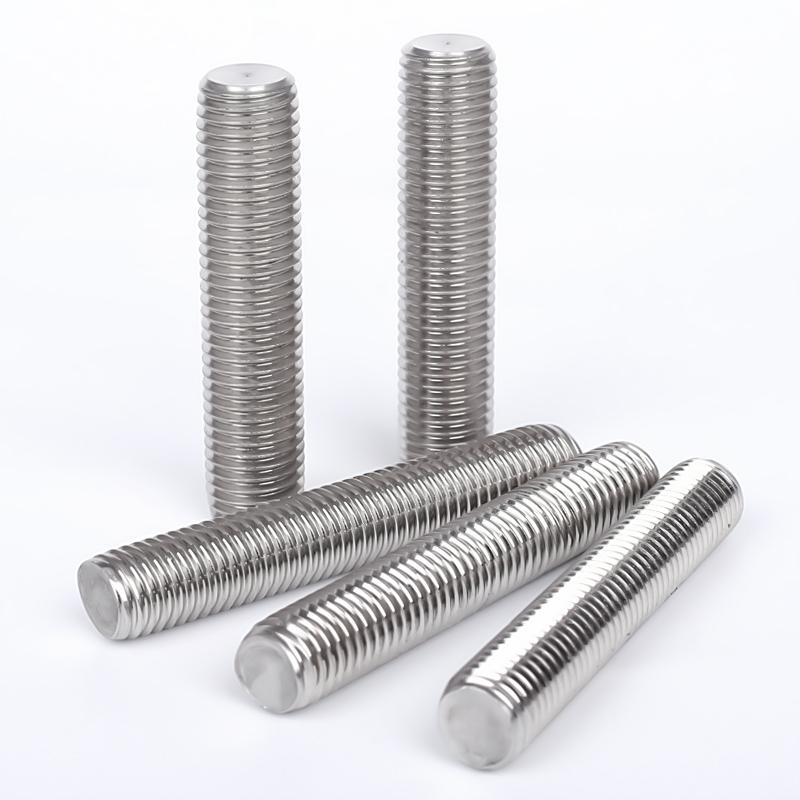
Most people assume a thread succeeds because of the original post alone. In reality, the conversations unfolding beneath it often carry far more weight. When someone takes the time to reply, ask a follow-up question, or push back on a point, the thread stops being a one-way announcement and starts functioning like a live discussion. That shift changes how others perceive the content—and how likely they are to contribute themselves.
Engagement also reshapes the thread's reach in ways that aren't immediately obvious. A single thoughtful reply can extend the conversation into new circles, pulling in perspectives that the original author never anticipated. The back-and-forth format makes the whole exchange feel less curated and more human, which is exactly what keeps people scrolling, reacting, and adding their own take.
What often gets overlooked is how this dynamic rewards threads that welcome disagreement or nuance. A thread full of shallow agreement tends to fade quickly, while one with genuine tension or an unexpected detour keeps attracting attention. The lesson is simple: don't treat the comment section as an afterthought. The energy below the post is frequently what turns a decent thread into one that people keep talking about long after it was published.
Ask About Passivation Before the First Order Ships
Passivation doesn't always get the attention it deserves until a batch of stainless parts shows up with flash rust or discoloration. Before your first order leaves the shop floor, ask how passivation is handled—what bath chemistry they use, whether parts are cleaned properly beforehand, and how they verify the passive layer. This isn't about adding paperwork; it's about catching a skipped step before it becomes your problem.
A quick conversation can reveal a lot. Do they passivate in-house or send it out? If it's outsourced, who checks the work? Ask for a sample coupon or test report from the same lot if the parts are going into medical, food, or marine environments. You want to hear specifics like citric or nitric acid type, temperature, and time—not just "we passivate everything."
One more thing worth confirming: what happens if the first batch fails a copper sulfate or salt spray test? A supplier that can walk you through their rework process before anything ships is usually one that has thought past the packing slip.
Distributors That Skimp on Traceability Leave You Exposed
When a distributor cuts corners on traceability, the first casualty is your ability to verify a component's origin. A lot number that dead-ends in a spreadsheet or a certificate that can't be matched to a physical reel means you're essentially trusting a promise instead of a paper trail. In industries like medical, aerospace, or automotive, that gap isn't just an inconvenience—it's a direct route to counterfeit parts slipping into your production line. Once a suspect batch reaches the board, the cost of tracing it back often dwarfs the savings from buying through a low-overhead channel.
Traceability also plays a quiet role in warranty and recall scenarios. If a distributor cannot tell you which customer received which date code, you inherit the full burden of a field failure investigation. Without that granular lineage, you may be forced into a broader, more expensive recall than necessary, or worse, discover that your supplier's records are too thin to support an insurance claim. Solid distributors maintain batch-level photos, incoming inspection logs, and tamper-evident labels—not because they're required to, but because they know exposure compounds when the chain breaks.
A Coating Can Trap Moisture and Accelerate Failure
Coatings are often applied as a barrier to keep moisture away from the substrate, but they can backfire when they trap water instead. Even a small breach or a poorly prepared surface allows liquid or vapor to seep beneath the film. Once there, the coating acts like a lid, slowing evaporation and holding the moisture against the metal or concrete. The result is a persistently damp microenvironment that would not exist if the surface were left bare.
This trapped moisture drives several degradation mechanisms that accelerate coating failure. Water can condense at the coating-substrate interface, weakening adhesion and leading to blistering or peeling. In steel structures, the combination of water, oxygen, and ions under the film creates a corrosion cell that eats away the metal invisibly. The coating may look intact from the outside while the substrate loses thickness and strength underneath.
The problem is worse when the coating has low permeability to water vapor. In some cases, moisture from the substrate itself—such as from curing concrete or residual humidity—gets locked in. Temperature swings then force the water to expand and contract, stressing the bond line and eventually causing delamination. A coating that cannot breathe or release moisture becomes a contributing factor to the very failure it was meant to prevent.
Surface Pitting Is an Early Warning Worth Reading
Surface pitting rarely announces itself with drama. Tiny voids and microscopic craters form at contact points where stress concentrates just below the skin of a component. These defects often go unnoticed because machines keep running, and the damage looks almost cosmetic. But once pits appear, the boundary layer has already started losing its ability to carry load evenly.
In bearings and gear teeth, pitting is not a surface blemish but a fatigue signal. Cyclic loading pushes microcracks outward from inclusions or machining marks until small flakes detach. Each pit then becomes a stress riser, inviting more cracks and accelerating wear. A routine inspection that dismisses these marks as normal aging misses a chance to intervene before spalling spreads.
Reading pitting early means looking at shape, density, and location rather than just counting defects. A few isolated pits in a low-load area may be harmless; clusters near the pitch line or contact band often point to misalignment, lubrication breakdown, or overload. Recording those details over time builds a pattern that predicts when a component will move from rough running to outright failure, making the warning hard to ignore.
FAQ
They assume all stainless steel is the same. Grade 304 works fine for mild conditions, but anywhere near salt water or chemical exposure really calls for 316 or 316L. The extra molybdenum in 316 is what gives it the edge against pitting and crevice corrosion.
Ask for the mill test report, not just a verbal promise. A reliable distributor should be able to show documentation for the heat analysis and mechanical properties. If they hesitate, that’s a red flag. Also check the rod’s surface finish—smooth, passivated surfaces resist corrosion better than rough ones.
Yes, and it matters a lot. 18-8 usually refers to 304 grades, which can handle some moisture but will eventually show rust staining near salt spray. For actual coastal or marine exposure, you want 316 because the molybdenum content helps it resist chlorides far better.
Definitely. Stainless is more noble than aluminum, so if they touch in a wet environment, the aluminum will sacrifice itself. A simple fix is to use an insulating washer or barrier material between the two metals. Otherwise the stainless stays fine while the aluminum corrodes quickly.
They’ll typically stock multiple grades and diameters, offer cut-to-length services without messing up the threads, and keep the rods stored indoors to avoid surface contamination. The best ones also label the alloy clearly and can tell you exactly where the material came from.
Not necessarily. Moisture alone isn’t the only factor—temperature, chloride levels, and even oxygen availability can change how stainless behaves. In a constantly wet, low-oxygen crevice, even 316 can corrode. That’s why proper drainage and joint design matter as much as the alloy choice.
Most stainless threaded rods don’t need coatings, but in aggressive environments some people use passivation treatments or even PTFE coatings to reduce galling and improve chemical resistance. Just keep in mind that a coating shouldn’t be a substitute for choosing the right base alloy.
Conclusion
Choosing corrosion-resistant stainless steel threaded rods starts with more than a generic “316 stainless” label. A distributor worth keeping will ask where the fasteners actually live—chloride-heavy coastal air, acidic washdowns, or high-temperature chemical exposure all demand different alloy adjustments. Thread engagement is the quiet failure point: a partially engaged nut on a rod creates crevices that hold moisture and aggressive ions long after everything looks dry. Before the first shipment, ask whether passivation is standard or just an option. Proper passivation removes free iron from machining and restores the chromium oxide layer that gives stainless its self-healing reputation. Without it, even a good alloy can rust at the cut edges and thread roots.
Traceability matters more than a certificate in a binder. If a distributor can’t tie a heat number to the exact rods on your shelf, you have no way to verify the alloy composition when a failure shows up. Coatings may sound like extra protection, but on stainless threaded rod they often trap moisture against the surface and create a hidden corrosion cell that eats the metal from underneath. Pay attention to early surface pitting—those tiny dark specks are the first visible sign that the passive layer has broken down locally, not a cosmetic flaw. A distributor who understands these warning signs will help you choose rods that hold up in the actual environment rather than just on the spec sheet.
Contact Us
Contact Person: Shane
Email: [email protected]
Tel/WhatsApp: 8613357785029
Website: https://www.wanluohardware.com