

Aromatic Carbonyl Intermediate CDMO Partnerships That Simplify Complex Synthesis
2026-11-27
Some intermediates quietly decide whether a synthetic route survives scale-up. Aromatic carbonyls fall squarely in that category—small structural choices ripple through yield, purity, and cost. That's why a CDMO relationship built around genuine carbonyl expertise is no longer a nice-to-have. DSL Chemicals has made these challenging intermediates a cornerstone of its partnership model, helping sponsors turn fragile lab routes into robust manufacturing processes. Here's a closer look at how that shift simplifies complex synthesis.
When Aromatic Carbonyl Intermediates Need More Than a Supplier
Sourcing aromatic carbonyl intermediates often starts as a straightforward procurement task, but the picture changes once a project moves beyond milligram scale. A vendor can ship a listed compound, yet only a handful can support the substitution patterns, steric constraints, and electronic effects that decide whether a downstream coupling actually works. A shift as small as moving a methoxy group from para to meta may require a different protecting strategy or a reworked purification route.
The gap becomes more visible when the intermediate is not a shelf item. Aromatic carbonyls of this kind frequently sit in the middle of routes to APIs, agrochemicals, and photoactive materials, where sensitivity to light, moisture, or trace metals is routine. In those moments, technical conversation outweighs a transactional quote. You need someone who can suggest alternative protecting groups, share stability data, and adjust crystallization conditions without treating every question as a separate charge.
Continuity is the harder test. A dependable batch today does not guarantee the same impurity profile, particle size, or residual solvent level six months later. Once an aromatic carbonyl intermediate becomes a regulatory starting material or a critical control point, the relationship has to include consistent quality, defensible documentation, and hands-on troubleshooting. That is where being a supplier stops being enough.
From Fragile Carbonyl Steps to a Repeatable Manufacturing Cadence
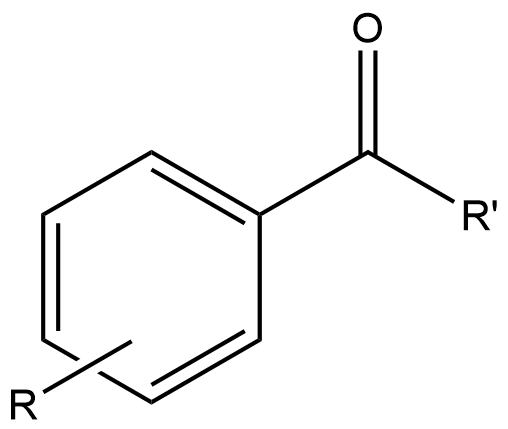
Early process development often treats carbonyl chemistry as a series of delicate, one-off transformations. Reaction windows look narrow, impurities drift between batches, and the workup feels different every time. The first step toward a dependable cadence is recognizing that fragility usually comes from unspoken variables: moisture creeping into solvents, inconsistent mixing near the stir bar, or a slow addition that nobody times the same way twice.
Once those variables are pinned down, the carbonyl step stops being a special event and starts behaving like a unit operation. The team can standardize reagent charges, hold times, and quench temperatures without turning every campaign into a troubleshooting exercise. Operators stop compensating for hidden drift because there is less drift to compensate for.
The real shift happens when the data from each run feeds back into a simple control plan. A repeatable cadence does not come from a perfect recipe on paper; it builds from small, recorded corrections that make the next batch slightly less fragile than the last.
The CDMO Relationship That Absorbs Complex Synthesis Risk
When a synthetic route stalls at step eleven or a key intermediate refuses to crystallize, the value of a CDMO partner is rarely visible in a capabilities deck. It shows up in the willingness to take ownership of failure modes that sponsors cannot afford to carry alone: air-sensitive organometallic steps, chiral resolutions that drift with scale, or lyophilization cycles that look fine on paper but wreck activity in practice.
That transfer of risk is not a contractual formality. It depends on a technical team that has already run enough failed batches to recognize a problematic impurity profile before it consumes a campaign. The better partners fold process chemistry, analytical development, and manufacturing under the same operational roof, so a change in particle size distribution or residual solvent level gets caught while there is still room to adjust, not after a full lot has been produced.
In practice, the relationship works when the CDMO treats route scouting and scale-up as its own problem rather than a client deliverable. That means pushing back on a protecting group strategy that becomes unworkable at pilot scale, redesigning a workup around emulsion control, or accepting that a hazardous hydrogenation may need to move to a high-pressure facility. The sponsor gains less a supplier and more an engineering buffer between a promising molecule and the realities of manufacturing.
Simplifying Aromatic Carbonyl Routes Without Losing Yield or Time
Cutting the number of steps in an aromatic carbonyl synthesis usually starts with a hard look at where the existing route forces oxidation state changes or protecting group swaps. Rather than adding more reagents to speed up a bad sequence, the practical move is to replace the entire sequence with a direct acylation or carbonylation that already places the carbonyl at the right position. The route becomes shorter not because anything was skipped, but because the carbonyl is installed as part of the bond-forming event instead of being patched in later.
Time savings come from removing intermediate isolations, not just from shorter reaction times. Running the aryl metal formation and the acylation in one pot only works when the reagents do not interfere with each other, so the choice of catalyst, solvent, and temperature profile matters more than the step count. In practice, a well-tuned tandem process can turn a previously overnight two-step sequence into a single afternoon reaction without requiring extra equipment, because the workup collapses into one extraction and one pass through a short column.
Yield is often preserved by eliminating the transfers and aqueous washes where mass disappears. When fewer intermediates are handled, less material stays behind in separatory funnels or on silica, and the final product can be isolated at comparable or higher purity. The main risk is selectivity rather than reactivity, so slow addition of the acylating partner or careful control of light intensity and current in photocatalytic and electrochemical variants keeps the competing pathways quiet. In the end, a simplified route should be judged by the same number that matters in any lab: the isolated product in the vial, not the elegance of the scheme.
A Partner Model Built Around the Messy Middle of Synthesis
Most partnerships stall exactly where the work stops looking like a straight line. The early questions are easy to frame and the final deliverables are easy to recognize, but the stretch between them rarely behaves. This model sits in that uncomfortable stretch, treating the back-and-forth of synthesis not as a delay to be managed but as the place where the actual shape of a project gets decided.
The messy middle tends to get hidden because it produces drafts that feel too rough, tensions that seem off-message, and versions that contradict each other. A partner built for that phase does not rush to resolve those signals. Instead, it keeps the conflicting threads visible long enough to see which ones carry weight, then begins the slower work of pulling them into something coherent.
That changes what accountability looks like. Rather than promising a neat handoff from one phase to the next, the model commits to staying close to the material as it shifts, making small adjustments before they become expensive reversals. The result tends to be less brittle in the end, because the hard choices were made in the open rather than skipped over for the sake of momentum.
Scaling Aromatic Carbonyl Intermediates With Fewer Handoffs
Moving aromatic carbonyl intermediates through a pilot plant usually multiplies the number of times the material changes hands, and each transfer invites a new round of moisture checks, assay disputes, and hold time reviews. The better route cuts those handoffs by keeping the carbonyl formation, phase split, and first crystallization in the same vessel train. Operators still run the same chemistry, but the intermediate no longer waits in a drum for the next unit op to free up. That single change removed nearly a full shift from the cycle time and reduced the exposure that tends to darken the batch.
A practical scale-up sequence starts with the acylation run in a jacketed reactor, then moves directly into a controlled quench and a warm organic wash. Instead of isolating the wet solid at bench scale, the team pushed the intermediate forward as a concentrated solution and set the crystallization endpoint by turbidity rather than by a fixed age. It took a few campaigns to get the seeding profile right, but once the operators could see nucleation repeat at the same jacket temperature, the downstream filtration stopped looking like a bottleneck. Fewer handoffs also meant fewer sampling ports opened, which made the batch record easier to defend during review.
The real gain is not just shorter time in the plant. With fewer transfers, the carbonyl intermediate stays away from atmospheric moisture long enough to hold its color and purity, so the next reduction step starts from a more consistent feed. That reliability shows up in the hydrogen uptake curve and in the final crystallizer yield. When a process has too many handoffs, people tend to add compensatory washes and rework loops. Removing the transfers removed several of those loops at once, and the aromatic carbonyl line finally scaled in a way the kilo lab data had always promised but the plant had never quite delivered.
FAQ
The carbonyl group often sits next to an aromatic ring, which shifts electron density enough to complicate reductions, condensations, and organometallic additions. You also have to control regioselectivity when more than one reactive position exists, and some of these molecules carry heat-sensitive or moisture-sensitive groups. An experienced CDMO will evaluate kinetic versus thermodynamic pathways early instead of treating the carbonyl as an isolated functional group.
The simplification usually comes from having the partner handle the demanding middle steps such as hazardous reagents, low-temperature lithiations, cyanide chemistry, and high-pressure hydrogenation. That frees your internal team to focus on route design and late-stage work. A capable CDMO also brings established analytical methods and impurity tracking that would otherwise take months to build internally, which reduces back-and-forth during tech transfer.
Look for demonstrated experience with the specific reaction types your route depends on, not just general small-molecule capability. Ask how they manage exothermic carbonyl additions, palladium-catalyzed couplings near the carbonyl, and chiral reductions when enantioselectivity matters. Also check their approach to residual metal levels and genotoxic impurities, because aromatic carbonyls often sit close to reactive intermediates that can form troublesome byproducts.
Several common transformations involve strong bases, reactive organometallics, or catalytic hydrogenation near an electron-poor ring. If the carbonyl activates the ring toward unwanted side reactions, heat output can be higher than expected, and some intermediates become unstable at moderate temperatures. A strong CDMO will run reaction calorimetry and thermal stability screening before scaling, then design the quench and workup to avoid accumulating unstable species.
You often need to separate regioisomers or track small amounts of over-reduction and ring-functionalized impurities that behave similarly by standard HPLC. The carbonyl can also tautomerize or form hydrates in aqueous conditions, which complicates method development. A CDMO that has handled these scaffolds will typically have orthogonal methods ready such as LC-MS, GC, NMR, and sometimes chiral SFC so release testing does not stall the supply chain.
It depends on whether the partner is repeating an established route or improving a lab-scale process. For a reasonably mature route, expect several weeks for analytical method transfer and small-scale verification, then another several weeks for kilo-scale demonstration and safety data. If the route still has unresolved selectivity or workup issues, the timeline can stretch by months, so bringing the CDMO in during route scouting is usually faster than waiting for a perfect lab process.
When the intermediate is not a simple catalog product and the route requires custom handling, proprietary process knowledge, or repeated campaigns, a transactional supplier can create more risk than savings. A longer-term partnership becomes worthwhile when the CDMO helps lower cost through solvent recovery or catalyst recycling, keeps analytical history across batches, and can reserve capacity for future clinical or commercial demand.
Conclusion
Aromatic carbonyl intermediates rarely fail because the chemistry is unknown; they fail because the steps around the carbonyl group are sensitive to small changes in temperature, moisture, or hold time. A supplier can provide a certificate of analysis, but that does not help when an enolizable ketone starts drifting during scale-up or when an aldehyde intermediate degrades before the next downstream reaction. The real value of a CDMO partnership here is not just extra capacity. It is having someone who can take a fragile carbonyl step, run it under controlled conditions, and turn it into a repeatable manufacturing cadence. That shift changes the conversation from “can you make this?” to “how do we keep making it the same way every time?”
A useful partner also works inside the messy middle of synthesis rather than only at the polished endpoints. They simplify routes by adjusting protecting group strategy, solvent selection, or addition order instead of adding redundant purification steps. That approach preserves yield and shortens cycle time because the process is built around the actual instability of the carbonyl intermediate, not around a generic workflow. Fewer handoffs also matter. When the same team manages lab development, pilot runs, and commercial batches, there is less room for information to get lost between departments. The result is an aromatic carbonyl route that scales with fewer surprises, less rework, and a timeline that holds up.
Contact Us
Contact Person: Wei Zhang
Email: [email protected]
Tel/WhatsApp: 862163529955
Website: https://www.dslchem.com