

Best Fully Automatic Paper Bag Machine for High-Speed Packaging Needs
2026-11-16
Ask any packaging manager what keeps them up at night, and high-speed paper bag production will likely top the list. Demand for sustainable bags is soaring, yet most machines still crawl when you need them to sprint—jamming at the worst moments and wasting rolls of kraft paper. That’s exactly where ROKIN changes the game. This post breaks down the best fully automatic paper bag machine built for real high-speed packaging needs: one that holds its pace through long shifts, switches bag sizes without a headache, and delivers crisp, square-bottom bags your customers expect. If you’re tired of settling for ‘good enough’ output, keep reading.
How a Fully Automatic Paper Bag Machine Keeps Pace with High-Volume Orders
The real bottleneck in high-volume paper bag production isn't the forming or gluing—it's the transitions. A fully automatic machine sidesteps this by running inline from roll to finished bag, with servo-driven feeders that adjust tension on the fly. When a rush order for 50,000 bags lands at 9 a.m., the operator doesn't recalibrate for each size; the system recalls stored parameters, swaps the bottom patch roll without stopping the line, and keeps the stacking conveyor synchronized. That continuity is what turns a standard eight-hour shift into a 20,000-bag surplus without extra labor.
Speed alone is meaningless if jams eat into uptime. Modern automatic machines use optical sensors at the gusset and cuff stages—not just to detect misfeeds, but to predict them. For example, if the paper's moisture content shifts slightly, the machine adjusts creasing pressure before a wrinkle becomes a tear. This self-correcting behavior matters most when running thin kraft or recycled stock, which tends to deform under constant high speed. The result is fewer micro-stops and a consistent output rhythm that matches the pace of downstream packing lines.
What often gets overlooked is changeover. In a high-volume environment, switching from a flat-bottom grocery bag to a satchel handle bag can eat 45 minutes on a semi-automatic setup. Fully automatic systems compress this to under ten by using quick-release die cassettes and pre-programmed glue patterns. The machine doesn't just produce faster—it produces more of the right bag per shift, because the time between the last bag of one order and the first bag of the next shrinks to almost nothing. That's how you keep a promise of next-day delivery without stockpiling half-finished inventory.
Speed Ratings vs. Real Throughput on the Packaging Floor
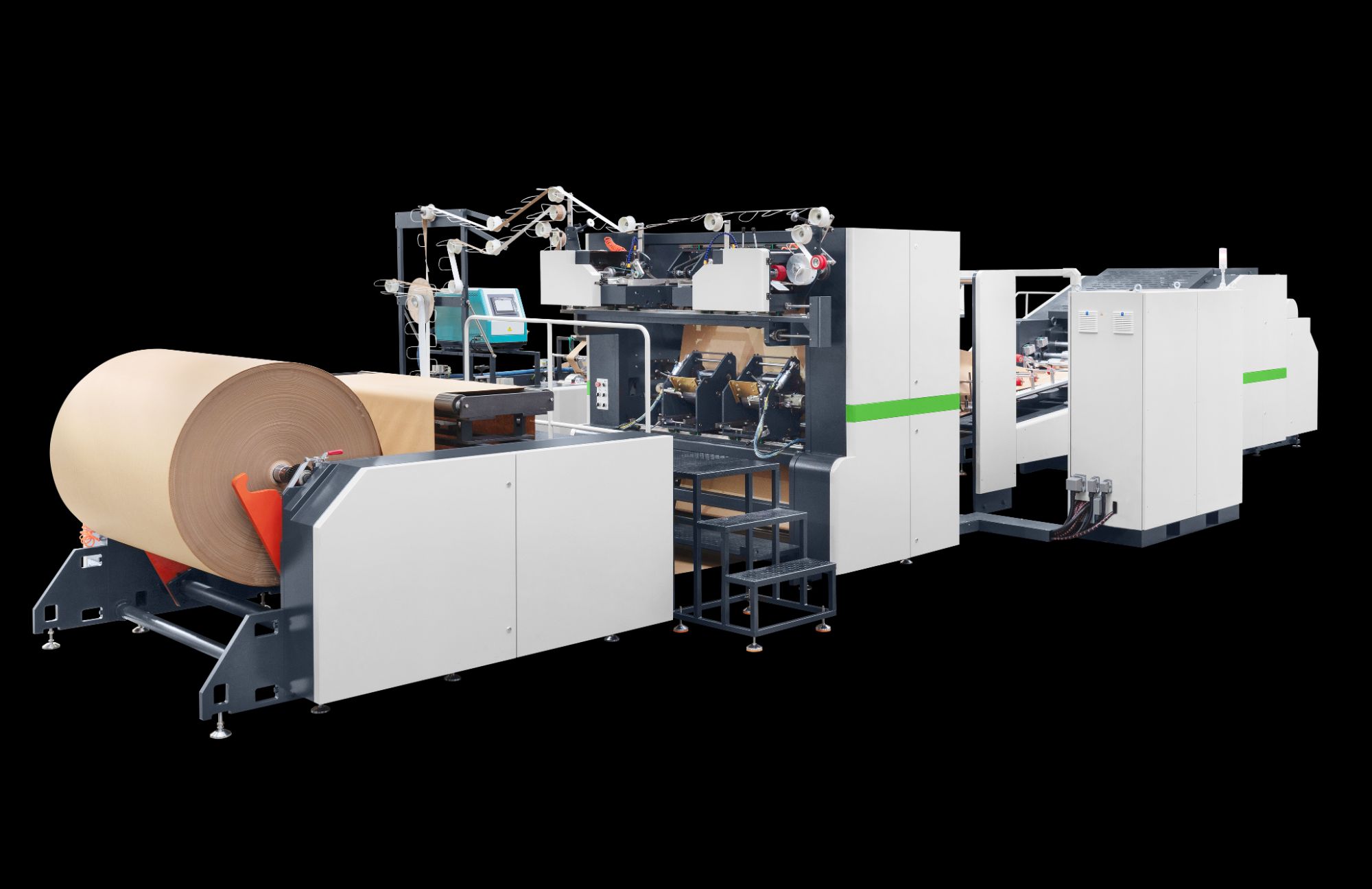
Machine catalogs love to lead with theoretical speed ratings—often measured in cycles per minute under ideal lab conditions. Step onto an actual packaging floor, and those numbers rarely survive contact with reality. Start-stop patterns, film changes, product slips, and operator pauses all carve into the headline figure until the true throughput settles far lower. One high-speed wrapper we tracked was rated at 120 packs per minute, yet its daily average hovered around 68 once we subtracted downtime, rejects, and transition delays.
The gap between rated speed and real throughput usually comes down to three quiet thieves: micro-stops, material variability, and accumulation logic. A sensor that trips twice an hour for half a second, a roll of film with slightly uneven tension, a buffer conveyor that runs empty after a label swap—each one alone seems trivial, but together they can erase 20–30% of nominal output. Smart teams stop chasing the maximum RPM and start mapping the minute-by-minute rhythm of the line, then target the most frequent small interruptions first.
What separates a reliable packaging line isn't a faster motor but a more honest measurement system. Counting good packages per shift, not impressions per minute, forces attention onto changeover efficiency and defect rates. When operators and engineers compare rated speed to actual cases shipped, the conversation shifts from "can it go faster?" to "why did it slow down?". That simple reframing usually uncovers more throughput than any servo upgrade ever could.
Material Changeovers That Don't Slow Down Production
Most changeover strategies assume a hard stop—lines down, tools swapped, settings dialed back in. The plants that avoid this treat changeover as a running process, not a pause. They stage materials on wheeled carts positioned within arm's reach, pre-load the next batch's parameters into the control system, and use quick-release clamps instead of bolted fixtures. One food packaging line cut changeover from forty minutes to nine simply by having two operators work from opposite ends of the machine, each owning a specific set of tasks rather than both fumbling through the same checklist.
Another overlooked lever is material sequencing. If you schedule runs so that the next product's raw material is a slight variation of the current one—same base resin, different colorant, or same sheet gauge, different print—you can often purge while the line keeps moving. Some injection molders use a hot-runner valve gate that lets them switch colors on the fly, flushing the old pigment through a side channel instead of shutting down. The key is designing the changeover around the material's flow path, not just the machine's mechanical parts.
What ultimately keeps production humming is treating changeover time as a design input rather than an operational afterthought. That means asking during tooling and layout decisions: can the die be swapped without a crane? Can the hopper be refilled without stopping the screw? Can the conveyor be rerouted in under a minute? Plants that embed these questions into their capital requests rarely need heroic maintenance crews or weekend overtime to hit output targets.
Sensor-Driven Adjustments That Keep Every Bag Uniform
On the line, small deviations in drop speed, product density, or film tension can stack up fast. Sensor-driven adjustments attack that drift at the source. Load cells and optical gates sample fill weight and bag length every few milliseconds, feeding that data into a closed control loop. If one fill chamber runs light by a few grams, the auger or vibratory feeder gets an immediate correction signal\u2014not a scheduled tweak, but a real-time nudge that keeps the next bag inside the same tight window as the last.
The same principle extends beyond weight. Seal-bar temperature, jaw pressure, and film registration are all watched by sensors that compare live readings against a running baseline. When packaging material shifts slightly due to humidity or roll tension, the sensor array flags it and the drive adjusts the film index on the fly. This constant, low-latency correction is what makes bag-to-bag consistency feel invisible\u2014no manual trimming, no periodic rework, just uniform output hour after hour.
Which Industries See the Fastest Payback from High-Speed Bagging
High-speed bagging pays off fastest in sectors where the volume of small, uniform products is enormous and the cost of manual packing has become a bottleneck. Food processing and commodity agriculture often see equipment pay for itself within 12 to 18 months because the machines handle thousands of bags per shift without fatigue. Pet food producers and fertilizer suppliers, for instance, frequently report that the reduction in overtime and temp labor alone covers monthly financing costs.
Building materials and chemicals are close behind, mainly because their products are heavy, dusty, or hazardous enough to make manual bagging slow and prone to injury claims. Automated lines cut fill time per bag from several seconds to under one, while integrated checkweighers reduce giveaway and scrap. In bulk cement, mortar, and industrial salts, a single high-speed line can replace two or three manual stations, which shortens the payback window to roughly one year in many plants.
Surprisingly, the fastest payback often comes not from the biggest corporations but from mid-sized co-packers and specialty food brands. They run frequent changeovers for different bag sizes and materials, and modern high-speed baggers with tool-less adjustments let them switch over in minutes instead of hours. Because these operations charge by the unit, every extra cycle per minute flows directly to the bottom line, and many owners recover the full investment within nine to fourteen months.
Maintenance Habits That Extend the Life of a High-Speed Machine
Many operators overlook how quickly heat and friction break down grease in high-speed spindles. Instead of lubricating on a fixed calendar, track actual running hours and temperature trends to adjust the interval. Use a grease formulated for high-speed bearings, and record each amount added—over-lubricating can raise temperatures as much as under-lubricating.
Alignment and balance get far less attention than they deserve. Even slight misalignment or residual imbalance at tens of thousands of RPM turns into aggressive vibration that wears bearings and seals prematurely. After changing a tool or fixture, take a few minutes to check runout and radial clearance. A quarterly vibration analysis can catch early wear signals long before they become a shutdown.
Cleanliness is not just about appearance. Tiny chips and dust around high-speed moving parts get pulled into cooling passages or settle on guideways, causing localized hot spots or binding. Use low-pressure dry air and soft brushes for critical areas, and avoid spraying high-pressure water directly at spindles or electrical connections. Keep coolant concentration and pH stable to prevent internal corrosion.
FAQ
A fast cycle means little if the machine stops every few minutes for roll changes or jam clearing. The best setups combine servo-driven feeders with automatic splicing and a star wheel delivery that keeps bags moving without bunching. I've seen 400-bag-per-minute machines lose half their output simply because the outfeed conveyor couldn't clear finished bags fast enough. You need to look at sustained throughput over a full shift, not the theoretical maximum.
Light paper tends to buckle if the vacuum suction is too aggressive or the guide rollers aren't aligned. Many machines now use air flotation tables and adjustable vacuum zones so you can reduce hold-down force in the forming area. Also check that the paper roll has even tension from the unwind stand. A slight edge waviness will cause wrinkles at the gusset plates, which snowball into jams at the V-fold section.
Flat and satchel bags are usually possible on the same frame if you swap the former and adjust the bottom patch unit. Twisted handle bags or square bottom bags often need dedicated modules or a separate line because the folding sequence changes. Don't trust marketing that says 'all styles' - ask for a recorded changeover on the exact material thickness you plan to run.
One trained operator can typically manage two machines if the roll lift and splice are automated. The real workload comes from loading new rolls, clearing occasional jams, and refilling glue pots or hot melt tanks. If you're running printed paper, an additional person may be needed to monitor registration and adjust the photoelectric sensor between batches.
The nip rollers that feed the paper past the cutter drum are often ignored because they're hidden behind guards. Worn rollers slip slightly and cause inconsistent bag length, which triggers rejects. Also, the perforation blades need sharpening or replacement every 40 to 60 hours of continuous cutting, not just when bags start tearing. I recommend keeping a log of blade changes and roller checks tied to the machine's hour meter.
Some servo-driven models can adjust the length and width on the fly within a limited range, but changing the bottom fold depth usually requires a short stop. Machines with recipe storage can pre-set parameters, but the operator still needs to verify the first few bags after a size change because paper thickness affects the actual dimensions more than the control software suggests.
Most lines in the 300-500 bag per minute range need around 25-40 kW for the main drive and heaters, plus a clean, dry air supply of at least 6 bar with 500 liters per minute flow for pneumatic cylinders and vacuum generators. Don't forget a dedicated exhaust for the hot melt adhesive fumes, especially if the machine runs in a closed hall.
Wet-strength additives and light starch coatings can help, but they change the friction coefficient and may require adjusting the folding rollers and glue application. I've found that a thin acrylic coating on one side reduces fiber dust and keeps the bag opening easier at the filling station, but it also increases the drying time for water-based adhesives, so you might need to switch to hot melt for the bottom patch.
Conclusion
A fully automatic paper bag machine becomes genuinely useful when a packaging floor faces sudden spikes in order volume. Rather than trusting a glossy speed rating, experienced operators measure real throughput: the number of square, sealed bags stacked per minute after roll changes, glue application, and bottom forming all run in sync. Quick-change modules for different paper weights and sizes keep a shift productive, because tool-less guides and saved recipes let a crew switch from thin bakery bags to heavy hardware sacks in under ten minutes. That kind of flexibility matters more than a top speed that only appears in ideal lab conditions.
Consistency at high speed comes from sensor-driven corrections that track paper tension, edge alignment, and seal temperature hundreds of times per second, fixing drift before a single bad bag leaves the line. Food delivery, quick-service retail, and e-commerce fulfillment often recover their investment fastest because they run long, uniform batches. Still, a high-speed machine asks for disciplined care: daily adhesive nozzle cleaning, weekly belt checks, and scheduled wear-strip replacement all prevent slow degradation. When those habits become routine, downtime falls and the line keeps moving through peak seasons—turning a strong spec sheet into dependable daily output.
Contact Us
Contact Person: CARA
Email: [email protected]
Tel/WhatsApp: +8619519778302
Website: https://www.rokinmachinery.com