

Best Open Type Fiber Laser Cutting Machines for Precision Metal Fabrication
2026-10-10
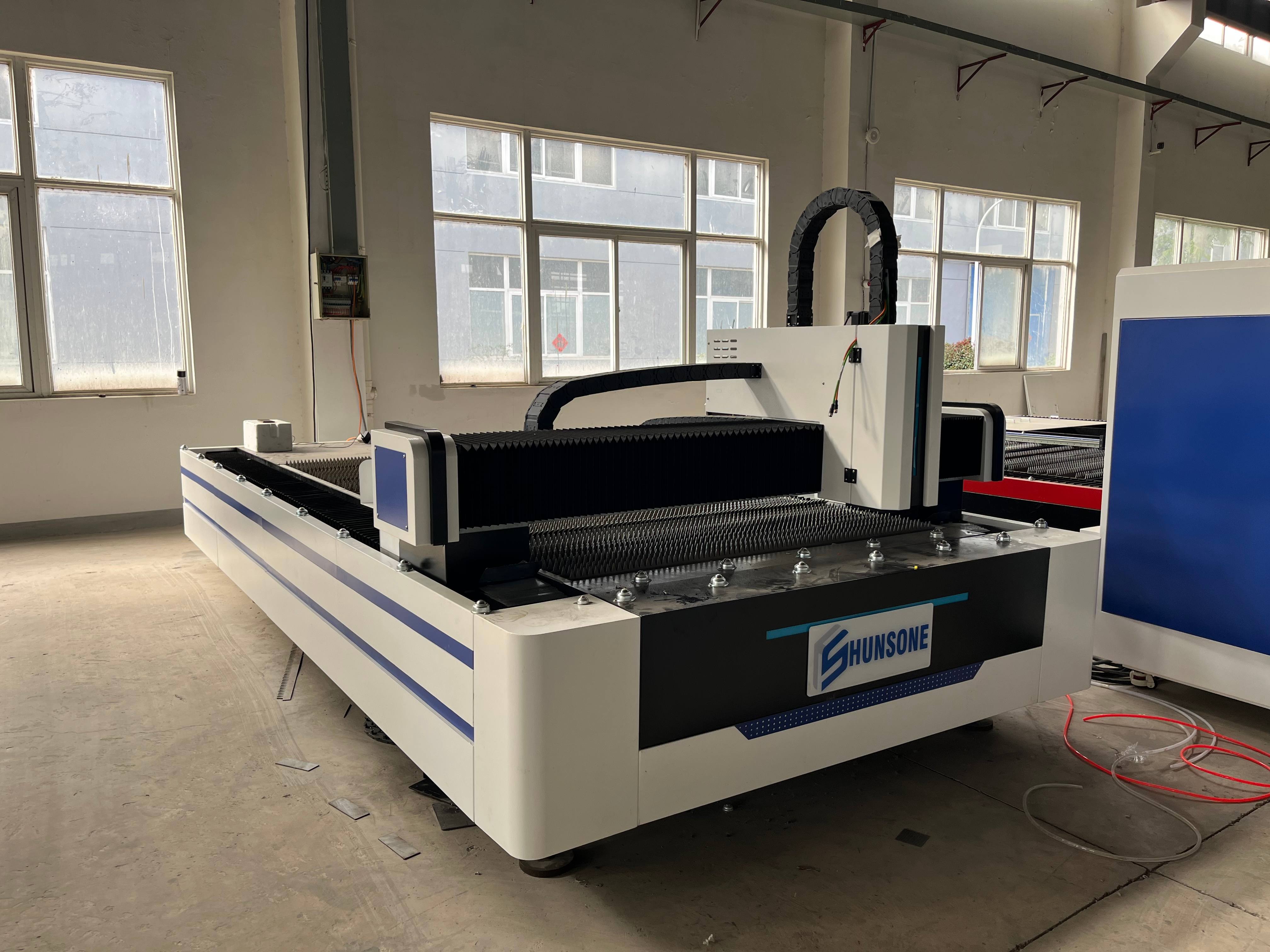
Precision metal fabrication demands more than just power—it demands control, repeatability, and the right open-type fiber laser cutting machine. In this guide, we cut through the noise to spotlight the top options that actually earn their place on the shop floor. From high-speed cutting heads to adaptive beam delivery, each pick is evaluated for real-world performance. And when it comes to balancing innovation with rugged reliability, HUNSONE keeps proving why fabricators trust its open-type fiber laser systems for tight-tolerance work. Let’s dive into the machines that turn difficult cuts into everyday output.
What an Open Frame Actually Does for Cutting Accuracy
The open frame isn't just about easier loading or a lighter machine. It changes how cutting forces travel. With fewer enclosed panels and a more direct path from the gantry rails to the workpiece, the frame can shed vibration faster. That reduction in residual oscillation matters most on tight corners, small holes, and rapid direction changes, where even a tiny wobble shows up as a visible error.
Because the sides stay open, heat from the motors and spindle has room to escape instead of building up around the motion system. A closed cabinet can trap that warmth, causing the rails and bearing blocks to expand unevenly over a long job. An open frame keeps the temperature swing smaller, so the zero point stays put and circles come out round rather than slightly oval.
Debris and fumes also behave differently in an open layout. Without a full enclosure funneling chips or smoke back across the cutting area, the gantry has a cleaner path. Fewer micro-skips from stray particles under the rails means the tool head tracks more consistently, which is especially noticeable when cutting full sheets or running long straight lines.
The Metal Grades That Push Fiber Lasers to Their Limits
Copper, brass, and certain aluminum grades reflect so much of the beam that a fiber laser can end up fighting its own photons. The issue isn't raw power—it's the back-reflected light sneaking into the resonator and stressing the diodes. Shops that take on these materials quickly learn that beam shaping, shorter pulses, or even shifting to a green wavelength matters more than cranking up the wattage.
High-strength structural steels and titanium alloys bring a different test. These metals demand tight heat control because their microstructures degrade fast if the laser lingers too long. A fiber laser's high power density can cut them quickly, but the real skill lies in managing assist gas pressure, feed rate, and focal position so the edge stays clean without drawing temper colors or brittle phases into the heat-affected zone.
Then there are the nickel-based superalloys and tungsten-heavy grades used in aerospace and energy work. Their low thermal conductivity and sticky melt pools make smooth cuts or welds hard to maintain. Small adjustments to pulse frequency, ramp-down timing, and even the nozzle standoff distance become critical—otherwise microcracking and porosity show up long after the part has cooled.
How Assist Gas Choices Quietly Affect Your Cut Quality
On the shop floor, the hiss of assist gas often fades into background noise. Yet the choice between oxygen, nitrogen, or compressed air silently steers the outcome of every cut. Oxygen, for instance, doesn't just blow away molten metal—it feeds the cut with an exothermic reaction that can boost speed but also roughens the edge with oxide scale. Nitrogen, by contrast, acts as a pure shield. It keeps the kerf cool and clean, leaving a bright, almost polished surface that needs no secondary finishing. Most operators notice the difference instantly when they run a stainless part with air instead of nitrogen: the edge turns brown, the dross clings harder, and the dimensional tolerance drifts just enough to fail a fit-up.
The subtlety emerges over time. A shop might switch to a cheaper assist gas to trim costs, only to find the real expense buried in post-cut grinding, deburring, or rejected parts. Compressed air, while virtually free, carries moisture and oil that contaminate the plasma or laser focus. That contamination doesn't announce itself loudly—it shows up as micro-porosity in the cut face or a slight undercut near the top edge. Welders then burn extra filler rod chasing porosity that never quite disappears. Meanwhile, nitrogen's higher price per cylinder often pays for itself because the cut quality stays consistent across an entire shift, not just the first ten parts.
Pressure and flow rate add another quiet layer. Too little oxygen pressure and the slag hardens in the kerf like stubborn concrete. Too much nitrogen flow and the gas turbulence can deflect the arc or laser beam, creating a beveled edge that looks straight until you put a square against it. Experienced operators learn to read the sound—a crisp, steady roar versus a fluttering whistle—as a real-time gauge of cut health. Even the nozzle gap plays a part: a 0.5 mm change can shift the assist gas from laminar to turbulent, turning a smooth cut into a rippled mess. These variables don't scream for attention, but they quietly determine whether the next weld passes inspection or the next assembly jams on a burr.
Shop Floor Tests for Repeatable Precision
On the shop floor, repeatable precision isn't a marketing promise—it's a daily ritual of measurement and adjustment. We run a series of quick, targeted checks at the start of every shift: dial indicators on critical spindles, test cuts on sample stock, and thermal stabilization runs after any tool change. These aren't just pass-or-fail gates; each result feeds into a running log that operators use to spot drift before it becomes scrap.
One of the most telling tests involves cutting the same feature ten times in a row without altering offsets. We measure the spread across those ten parts with a micrometer, not just the average. If the range exceeds a few microns, we know something is loose or warming unevenly. That kind of immediate feedback keeps the machine honest and the operator confident.
These floor-level checks are deliberately simple—no fancy software or long downtime. A magnetic base, a tenths indicator, and a known-good gauge block can tell you more about a machine's true condition than any spec sheet. When every operator can perform the test and read the result without ambiguity, repeatable precision stops being an abstract target and becomes part of the shop's muscle memory.
Why Some Fabricators Stick With Open-Type Systems
A lot of fabricators keep choosing open-type systems for one simple reason: they don't fight the machine when loading odd-shaped parts. An enclosed cabinet forces you to slide material through a narrow throat or remove panels for a long beam, but an open frame lets you drop a sheet from above, slide a channel in from the side, or reach in with a crane without calling an engineer. For shops that handle everything from bent plate to full-length tube, that access saves real hours every week.
There's also the maintenance side. When a drive belt slips or a lens needs cleaning, you want the problem in plain view, not buried behind interlocked doors. Open-type designs expose rails, bearings, and optics so a sharp operator can spot wear before it becomes downtime. And because you're not paying for a sealed enclosure, the initial price tag tends to be lower, which matters for smaller job shops that need a capable machine without the extra housing.
Finally, visibility matters more than many people admit. Seeing the cut head arc across the plate lets an experienced fabricator catch nozzle issues, wrong focal settings, or material lift before a full sheet is ruined. Enclosed systems rely on cameras and sensors, but a direct line of sight still beats a screen for quick judgment calls.
A Practical Look at Payback Periods and Daily Running Costs
When switching to a heat pump or solar array, many homeowners focus on the upfront price tag and miss the quieter math that happens every single day. Payback periods are often quoted as a single number—seven years, nine years, twelve years—but that figure hides a lot of assumptions about energy prices, usage habits, and local weather. A more practical approach is to pull out your last twelve utility bills and calculate your actual cost per kilowatt-hour, including fixed charges. Only then does the payback period start to mean something concrete.
Daily running costs are easier to ignore because they arrive in small increments, but they compound quickly. For example, a poorly sized system might save you money in summer yet cost more in winter due to auxiliary heating or grid imports. Track a typical weekday and weekend separately: morning and evening peaks often drive the real expense, not the total daily average. If your system covers 80% of your usage but forces you onto a higher tariff for the remaining 20%, the payback math can shift by several years.
Instead of chasing the shortest possible payback period, look at the overlap between your daily consumption curve and your system's generation or efficiency curve. A system with a longer nominal payback but lower daily running costs during your actual high-use hours will often feel cheaper month to month—and that monthly feeling is what keeps people from regretting the purchase. Recalculate once a year with real bills, not installer estimates, and the payback period becomes a living number rather than a sales pitch.
FAQ
An open type machine has the cutting head and worktable exposed without full cabin enclosures, making it easier to load oversized sheets or odd-shaped parts. A fully enclosed unit seals the work area for fume extraction and laser safety, but open designs trade some containment for quicker access and lower upfront cost.
Shops that regularly process large plates or need frequent manual repositioning often prefer the open layout because operators can reach the workpiece from multiple sides. It also simplifies integration with cranes or automated loading arms, and the absence of an enclosure reduces both floor space and initial investment.
With the right fiber laser power, open type machines cut mild steel, stainless, aluminum, brass, and copper. For precision work, they typically excel on thin to medium gauges—up to around 12 mm for stainless and 20 mm for mild steel depending on wattage, though edge quality starts to demand more careful gas and focus tuning beyond that.
Fiber sources produce a small, stable beam with high beam quality, which allows a tiny focused spot and minimal heat-affected zone. That precision means fine features, sharp corners, and narrow kerfs remain consistent across long production runs, as long as the source power is matched to the material thickness.
Very important. The gantry, rails, and drive system must stay rigid and vibration-free even without an enclosure to damp movement. High-quality helical rack and pinion or precision ball screws, along with servo motors and a solid welded frame, keep the cutting head tracking accurately at high acceleration.
Regular cleaning of the protective window and lens, checking nozzle alignment and condition, draining moisture from the air supply, and lubricating linear guides are the core tasks. Because the work area is open, dust and debris settle more easily on moving parts, so more frequent wipe-downs and inspections keep positioning errors from creeping in.
Yes, the exposed beam path means you need strict laser safety interlocks, protective eyewear, and a controlled area to prevent accidental exposure. Fume and spatter can escape the cutting zone, so a high-capacity extraction system or local exhaust hood near the head is essential to protect workers and keep the workshop air clean.
Look beyond the sticker price to include laser source lifespan (often 50,000 hours or more), power consumption, assist gas usage, and replacement lenses/nozzles. Open designs usually lower the initial purchase and installation cost, but if your shop lacks good ventilation you may need to invest more in fume extraction and operator safety gear.
Conclusion
Open-type fiber laser cutters earn their keep in shops where precision is non-negotiable. The open frame itself does more than make loading easier—it allows the gantry to move with less vibration and thermal drift, which directly shows up in tighter tolerances on long runs. When you pair that with the right metal grades, from thin stainless to high-strength alloys, the machine really proves itself. But the quiet variable many overlook is assist gas. A quick switch from oxygen to nitrogen can change edge oxidation and dross levels enough to matter on mirror-finish parts. Run a simple test grid on scrap material before committing to full production, and you’ll see where the sweet spot sits.
On the floor, repeatability isn’t a spec sheet claim—it’s checked with dial indicators and a few dozen nested parts cut at different corners of the table. That’s why some fabricators refuse to move away from open-type systems; they’ve learned the access and visibility cut setup time without hurting accuracy. The financial side backs this up when you track daily gas, power, and nozzle wear against throughput. Payback periods on open fiber lasers often shrink once operators stop fighting the machine and start using the open layout to their advantage. It’s not flashy, but it works.
Contact Us
Contact Person: James Chen
Email: [email protected]
Tel/WhatsApp: 86 13770803946
Website: https://www.hunsone.com/