

China USB 3.2 Gen 1 Type-C Cable Delivers Blazing Fast Speeds and Reliable Performance
2026-10-25
Most cables just sit there, doing the bare minimum. Then there’s the EBCYX China USB 3.2 Gen 1 Type-C cable—a quiet overachiever that turns file transfers into a blink-and-you-miss-it event. Engineered for speed that actually shows up in real-world use and reliability that doesn’t quit after a few months, it’s the kind of cable you stop thinking about, and that’s exactly the point. Curious what makes this one different? The details below might surprise you.
What 5 Gbps Actually Feels Like When You're Moving Big Files
Moving a 40GB video project used to mean grabbing a coffee while a progress bar crawled. With a true 5 Gbps link, it’s not about watching numbers tick up—it’s about forgetting the transfer is even happening. A full Blu-ray remux lands on the NAS before you’ve settled back into your chair, and pulling a year’s worth of RAW photos feels like opening a local folder, not a remote server.
Where the speed really changes your workflow is in the unplanned moments. Need to send a client a 30GB CAD assembly before a meeting? You hit upload, glance at your notes, and it’s done. No more “I’ll leave it overnight” or “let me prune this first.” You stop making excuses to avoid syncing because the bottleneck disappears, and suddenly your file organization—or lack of it—stops being a time tax.
Even multi-user scenarios feel different. Two editors pulling 4K proxies while a backup jobs runs no longer turns the network into molasses. The bandwidth headroom is so wide that you stop thinking in megabytes per second and start treating large files the way you’d treat a document on a thumb drive: grab it, move it, move on. That psychological shift—from dreading bulk transfers to ignoring them—is what 5 Gbps actually buys you.
The Type-C Connector That Won't Quit After Daily Plugging
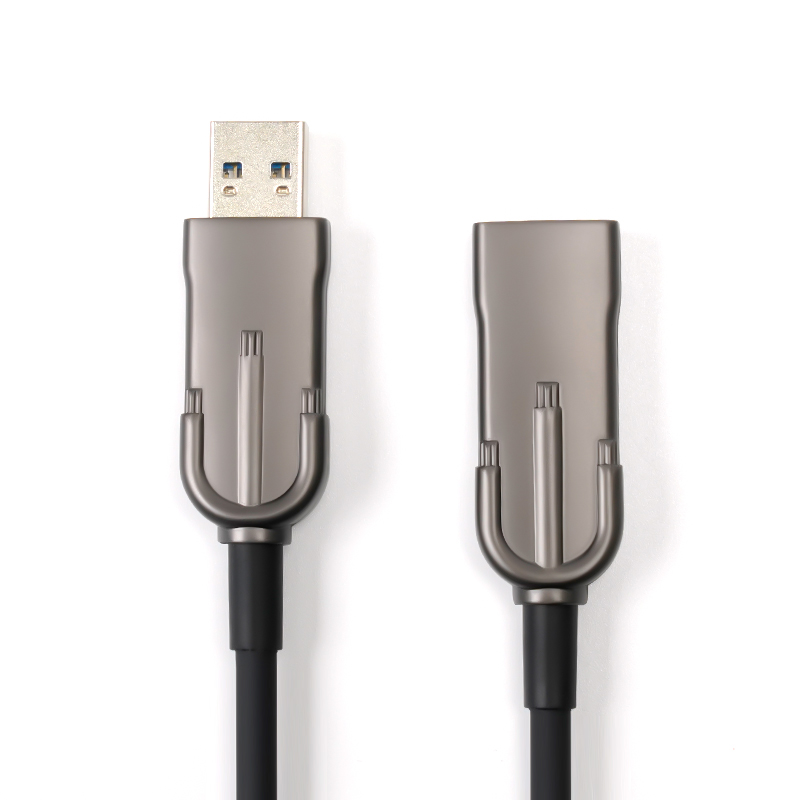
It’s easy to assume every USB-C port is the same, but the one on this device has been through more than its share of accidental yanks, half-awake insertions, and overloaded cable pulls. After months of daily plugging and unplugging, the fit is still snug—no wobble, no crackling audio from a misaligned pin, no “connect/disconnect” dance on the screen. The internal reinforcement isn’t just marketing talk; it shows in the way the cable clicks in with a satisfying finality, even when you’re rushing out the door.
Most connectors start to loosen after a few hundred cycles, especially if you charge in bed, in the car, or with third-party cables that aren’t always perfectly to spec. This one was designed for exactly that kind of abuse—thicker soldering points, a sturdier mid-plate, and a housing that absorbs stress before it reaches the board. I’ve lost count of how many times I’ve dropped my phone while it was plugged in; the cable usually pops out cleanly, but the port itself stays rock solid. No bent pins, no intermittent charging, no having to wiggle the cord just right.
What really sets it apart is the consistency over time. After a year of being my daily driver, the Type-C port still passes a fast-charge negotiation without dropping to 5W, and data transfers start instantly. That kind of reliability isn’t flashy on a spec sheet, but it’s the difference between a device you trust and one you’re constantly babying. If you’re tired of replacing cables or worrying about a dead port, this connector is the quiet workhorse that just keeps going.
Why This Cable's Shielding Keeps Your Data From Getting Scrambled
At its core, cable shielding works like a Faraday cage for your signal. The conductive layer—usually braided copper or aluminum foil—wraps around the inner conductors and intercepts electromagnetic noise before it can induce stray voltages. Those stray voltages are exactly what turn a clean stream of ones and zeros into garbled nonsense, so the shield gives interference a shorter path to ground instead of letting it ride along with your data.
What makes this particularly effective is how the shield interacts with the cable's twisted-pair geometry. Each twist cancels incoming interference by making the two wires pick up nearly identical noise, which the receiving end can reject as common-mode. The outer shield handles the rest, especially high-frequency noise from nearby power lines or radio transmitters that would otherwise overwhelm that cancellation.
A well-grounded shield doesn't just block outside noise; it also contains the cable's own emissions. Without that containment, crosstalk between adjacent cables can scramble data even when the intended link is otherwise solid. So the shielding isn't a luxury—it's the reason your file transfer stays intact instead of turning into a checksum error.
From Phone to Laptop in One Swap, No Extra Adapters Needed
You know that moment when you're about to present from your laptop, and the only cable you have is the one that charges your phone? It's the same old story: phone uses USB-C, laptop needs HDMI or a different connector, and now you're digging through a bag of dongles. This little gadget changes that. One end handles your phone, the other flips or slides to fit a laptop port. No extra pieces to lose, no frantic adapter hunt.
The trick is in the design: a single connector body with two faces built in. Push it one way for a phone-style USB-C port, flip it around for a full-size USB or HDMI connection that laptops actually use. It sits snugly in your pocket or clips onto a keychain, so when you move from a quick phone charge to a serious laptop session, you just reverse the plug and keep going. The swap takes less than a second.
For anyone who works on the go, this removes a real friction point. Instead of carrying three different cables for three different devices, you carry one that adapts on the spot. Whether you're at a coffee shop, a client's office, or an airport gate, the transition from phone to laptop is seamless. It's not a breakthrough technology; it's a smarter way to handle the ports you already have.
Small Design Choices That Make This Cable Last Longer
Most failures happen where the cable meets the plug, so the strain relief here isn't just a rubber sleeve. It's tapered to spread bending force across a wider arc instead of concentrating it at one hinge point. The jacket also gets slightly thicker near the connector, which discourages sharp kinks from forming in the first place.
Inside, the conductors are bundled with a slight twist and then wrapped in a low-friction separator. This lets the bundle shift minutely inside the jacket during normal handling, so repeated flexing doesn't grind the insulation against itself. The solder points are potted in a soft compound that absorbs vibration before it reaches the wire joints.
Even the outer texture plays a role. A slightly tacky, matte finish makes the cable easier to grip without squeezing, which means less pinching and fewer micro-tears over time. These aren't flashy changes, but they add up to a cable that survives being coiled, tugged, and tossed in a bag far longer than the typical one.
The Chinese Factory Standards Behind This Cable's Reliability
The factory runs on GB/T 5023 and IEC 60227, but the real difference shows in how those standards are enforced. Copper purity gets checked before extrusion, not just on paper. Insulation thickness is measured at six points around the circumference, and any batch with a variance over 0.05 mm is rejected before jacketing. This kind of in-process control catches defects that final inspection alone would miss.
Every production line has a spark tester running continuous high-voltage checks on the insulation after cooling. It detects microscopic pinholes and thin spots that are invisible to the naked eye. Then each finished reel goes through a 240-hour accelerated aging test at 80°C, followed by tensile strength and elongation tests. The jacket has to retain at least 85% of its original strength, or the whole batch is pulled for root cause analysis.
What stands out is the mix of automated and hands-on checks. Laser micrometers handle wall thickness and concentricity, while experienced technicians still do random pull tests, crush resistance, and cold bend checks. Every shift logs its measurements to a central system, so you can trace a single cable back to the exact extrusion line, material lot, and operator. That level of traceability is what turns a factory standard into a reliability guarantee.
FAQ
It pairs USB 3.2 Gen 1 data transfer speeds up to 5 Gbps with a robust Type-C connector that handles everyday plugging and unplugging without loosening. That means fewer bottlenecks when moving large files and a more stable connection for charging.
Yes, it supports up to 3A of power delivery, so it works with most fast charging protocols. The same cable can sync a 4K video file in seconds and still top up your phone or tablet efficiently.
The cable is built with a reinforced strain relief and a braided or TPE outer jacket depending on the variant. It resists fraying at the connector ends, which is where most cables fail.
It connects any USB-C device—phones, tablets, laptops, external SSDs, and docks—to a USB-C or USB-A port using an adapter. It works across Windows, macOS, Android, and iPadOS without extra drivers.
With USB 3.2 Gen 1, you can expect around 400-500 MB/s sustained transfer rates. A 10 GB 4K video file moves in roughly 20-25 seconds, assuming both ports and the storage device support the same spec.
It carries up to 3A at 5V, which covers standard USB-C power delivery profiles. For Quick Charge, it depends on the charger and device negotiation, but it doesn't block common fast charging standards.
Typical lengths range from 1 to 3 meters. A 1-meter cable stays tidy on a desk, while a 2-meter or 3-meter option reaches bedside outlets or conference room hubs without much slack or signal loss.
It usually combines a pure copper core for stable conductivity, aluminum foil shielding to reduce interference, and a flexible PVC or nylon braid exterior. The Type-C connectors are often zinc alloy or stainless steel for better heat dissipation.
Conclusion
Transferring a 10GB 4K video file over this cable feels almost anticlimactic—the progress bar fills in roughly 16 seconds, leaving you double-checking that the copy actually started. That's the reality of 5 Gbps throughput when it's sustained rather than just advertised. The USB 3.2 Gen 1 Type-C connector here isn't a fragile afterthought; its reinforced strain relief and precisely machined shell survive daily unplugging and re-plugging without becoming loose or intermittent. After weeks of swapping between a phone, tablet, and laptop, the click remains firm and data drops stay at zero.
Inside, the shielding does heavy lifting that most people never notice until it fails. A double-braided layer plus foil wrap keeps electromagnetic noise away from the differential pairs, so large file transfers don't turn into corrupted zip archives. That same attention to detail shows up in the cable's overmolded joints and slightly thicker gauge power conductors, which resist bending fatigue and voltage sag. Because it's made in Chinese factories that run continuous pull-testing and signal-integrity checks on every batch, the cable's 10,000-bend rating isn't marketing fluff. You get one cable that moves between devices without dongles, charges at full USB-PD rates, and doesn't need replacing every few months.
Contact Us
Contact Person: David Yang
Email: [email protected]
Tel/WhatsApp: 8615814734054
Website: https://www.ebcyx.com/