

Industrial Heating and Cooling Maker Solutions for Precision Temperature Control
2026-10-25
Precision temperature control can make or break modern manufacturing—one degree too high or low, and product quality, cycle times, and energy costs all shift. That’s where Tongbaote comes in. With industrial heating and cooling solutions built for tight tolerances, Tongbaote helps production lines stay stable, efficient, and ready for the next batch. In this post, we’ll explore how the right maker-level engineering turns thermal management into a competitive edge.
The Hidden Costs of Poor Temperature Regulation in Manufacturing
In a busy production floor, a few degrees of drift might not sound like much, but over the course of a single shift, those small variations accumulate into real money. Machines that run too hot wear out bearings and seals faster, pushing maintenance intervals forward and forcing unplanned downtime. Operators then have to stop and recalibrate equipment, which means output drops without anyone ever seeing a dramatic breakdown.
The less visible expense often comes from scrap and rework. When materials expand or contract at the wrong rate, dimensional tolerances slip just enough to fail inspection. Entire batches can be rejected at the end of the line, and by the time anyone traces the issue back to a temperature swing, thousands of parts have already been machined, molded, or coated incorrectly. That silent rejection rate is far harder to track than a broken motor, yet it quietly eats into margins.
There is also the cost of overcorrection. Without stable temperature control, facilities tend to cycle between too hot and too cold, forcing HVAC and cooling systems to work harder than needed. Energy bills climb while product quality becomes inconsistent. In many cases, manufacturers end up paying twice: once for the wasted energy, and again for the defects and delays that come from not holding a steady thermal environment in the first place.
Designing Heating and Cooling Systems That Adapt to Your Process
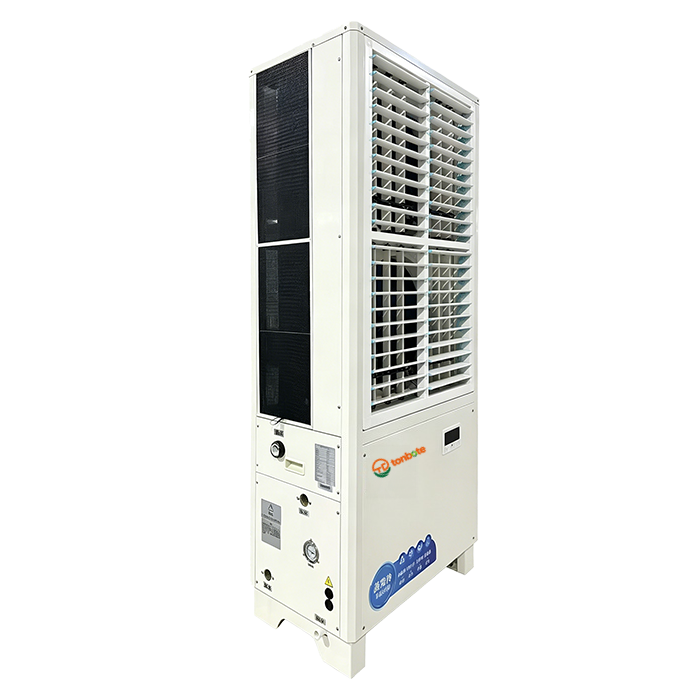
Process loads rarely stay flat. A reactor might demand full cooling during an exothermic phase, then switch to gentle heating for distillation. Systems designed around a single peak or average duty either overshoot or lag when those conditions change. The better approach starts with mapping the actual sequence of operations—batch timing, temperature ramps, turndown needs—not just the nameplate capacity.
Once that sequence is clear, the equipment can follow it. Split-range control valves, variable-speed compressors, or a thermal storage buffer let the same loop shift capacity without fighting itself. For example, a food processor running cold-water kneading in the morning and hot-water sanitation at night might use a common glycol loop with automatic changeover, avoiding duplicate hardware. The goal is not a bigger chiller or boiler; it is a responsive system that meets each step without wasting energy in between.
How Thermal Stability Holds Up Under Fluctuating Loads in Real World Conditions
Real-world thermal cycling rarely follows the tidy ramps and dwells of a lab profile. A motor winding might climb from 40°C to 155°C in under a minute, then drop just as fast when the load cuts out, while a nearby solder joint sees smaller but far more frequent swings. What keeps these systems intact is not just a high glass transition or a generous CTE match, but how the materials redistribute stress during each excursion. Resins with a lower modulus above Tg can absorb some of that expansion mismatch without cracking, and fillers that create tortuous paths slow down the microcracks that inevitably start at the interface. The result is that failures show up as gradual loss of adhesion rather than sudden fracture, giving maintenance crews a window to spot the drift before it becomes a shutdown.
Under fluctuating loads, the usual heat-soak data from a datasheet can be misleading. A part rated for 200°C continuous may still fail in service if its thermal stabilizer package volatilizes under repeated spikes or if the bond line sees tensile stress every time the assembly cools unevenly. Field evidence from conveyor drives and injection-molding platens shows that oxidation onset temperature matters less than how well the material holds up after a thousand shallow cycles between 80°C and 140°C with mechanical vibration thrown in. One practical approach is to look for joints and coatings that retain at least 80% of their room-temperature adhesion after cycling, and to design in a slight compliance layer so that differential expansion does not concentrate at a single edge. That way thermal stability becomes less about surviving a single hot peak and more about not accumulating damage over months of normal, messy operation.
Achieving Energy Efficiency Without Compromising Thermal Management
Striking the right balance between low power draw and effective heat dissipation is a persistent challenge in modern electronics. Many designs chase energy savings by throttling performance or shrinking cooling budgets, only to find that component lifespan and reliability suffer under elevated temperatures. The key lies in rethinking layouts and material choices so that heat moves away from critical junctions with minimal added load. For instance, using phase-change materials or optimized airflow paths can pull heat out of densely packed boards without forcing fans to spin faster or processors to slow down.
Rather than treating thermal management as a separate, power-hungry subsystem, engineers now embed it into the architecture itself. This might mean placing high-power components near dedicated thermal vias, selecting substrates with anisotropic conductivity, or tuning duty cycles so that peak heat generation never aligns with peak ambient stress. These moves cut overall energy consumption because the system no longer needs aggressive active cooling or derating to survive worst-case scenarios.
The result is a design that holds its temperature envelope under real workloads without wasting watts on overcooling. Benchmarks often reveal that such systems draw less power at the wall while maintaining junction temperatures well within spec, even during sustained load. That dual win—lower energy bills and longer component life—comes from careful co-design of electrical and thermal paths, not from sacrificing one for the other.
Scaling Precision Thermal Control From Prototype to Production
Moving a precision thermal control system from a one-off prototype to a repeatable production line rarely survives contact with reality. The benchtop version might rely on hand-selected Peltier modules, a lovingly tuned PID loop, and a lab-grade sensor that costs more than the entire production budget. None of that scales. The first real task is to strip the design down to its functional core: identify which tolerances actually drive thermal stability, then replace exotic components with off-the-shelf parts that hold those tolerances across temperature, humidity, and supplier lot variation. This often means accepting a slight drop in peak performance on paper in exchange for a system that can be built a thousand times without a PhD hovering over each unit.
The second challenge is calibration and test. A prototype gets tuned by hand over days; a production line gets minutes per unit. That demands a different approach to measurement: build the calibration into the firmware, not the fixture. Use a reference thermal load with known transient response, then let the controller self-characterize and store its own correction coefficients. This shifts the burden from highly skilled technicians to deterministic software routines, and it catches drift before the unit ships. The key is designing the test protocol to exercise the same thermal paths the product will see in the field, so that a passing unit on the bench is a passing unit in a customer's rack, not just a unit that happened to sit still for ten minutes.
Finally, scaling precision thermal control means rethinking failure modes at volume. A single prototype can be nursed through an occasional oscillation or a noisy sensor; ten thousand units in the field cannot. Production-grade systems need built-in diagnostics that flag degrading Peltier efficiency, fan bearing wear, or thermistor drift long before they cause a process excursion. In semiconductor metrology, for example, keeping a wafer chuck within ±0.02°C across a full production shift requires not just a good controller, but an architecture that monitors its own health and adjusts control gains on the fly. That shift from passive stability to active self-correction is what separates a clever prototype from a product that actually scales.
Why Standard Temperature Controllers Fall Short for Critical Applications
Standard temperature controllers are designed for general-purpose environments where minor fluctuations go unnoticed, but critical applications demand a level of precision that off-the-shelf units simply cannot deliver. In semiconductor manufacturing, pharmaceutical storage, or aerospace testing, even a half-degree drift can compromise product integrity or experimental validity. Generic controllers often rely on basic PID algorithms with fixed parameters, which struggle to adapt to rapidly changing thermal loads or non-linear system behavior, leading to overshoot, oscillation, or slow settling times that are unacceptable when tolerances are measured in fractions of a degree.
Another glaring shortfall lies in sensor compatibility and signal conditioning. Standard controllers typically support only a narrow range of thermocouple or RTD types and lack the advanced input filtering needed to reject electrical noise common in industrial settings. Critical applications frequently involve exotic sensor types, low-level signals, or long cable runs where electromagnetic interference can corrupt readings. Without galvanic isolation, high-resolution analog-to-digital conversion, and per-channel linearization, a standard controller may misinterpret the actual temperature, causing the entire process to drift out of spec without any immediate alarm.
Reliability and fail-safe behavior also separate purpose-built controllers from their standard counterparts. In critical environments, a controller failure cannot simply halt production; it must trigger a safe state, log diagnostic data, and possibly switch to a redundant loop. Most standard units lack hardware watchdogs, relay health monitoring, or secure communication protocols, leaving the system vulnerable to silent malfunctions. Moreover, their firmware is rarely validated to the rigorous standards required in medical, defense, or energy sectors, where documentation, traceability, and long-term availability are non-negotiable. Choosing a standard controller for such tasks is a compromise that often reveals itself only after costly downtime or a failed audit.
FAQ
We build custom thermal units covering a wide range from -40°C to 350°C, including circulating oil heaters, water-cooled chillers, and combined heating/cooling skids with integrated pumps and valves.
Our controllers hold stability within ±0.1°C under steady load, using cascaded PID loops and adaptive tuning that compensates for changing flow rates or ambient conditions.
You'll find our equipment in pharmaceutical reactors, semiconductor etch baths, automotive test stands, and food extrusion lines—anywhere a few degrees of drift can ruin a batch or skew a test.
Yes, we offer combined skid-mounted units with a common reservoir, diverter valves, and a single PLC interface, so one footprint handles both heating and chilling without separate utility connections.
We size the heater and compressor for peak dynamic load, not just steady state, and add variable-speed pumps plus a buffer tank so the loop responds to setpoint changes in seconds without overshoot.
Every unit includes redundant over-temperature switches, low-flow cutoffs, pressure relief valves, and optional Class I Div 2 electrical ratings, along with leak containment basins and automatic shutdown logic.
Yes, we can supply Modbus TCP, EtherNet/IP, Profinet, or OPC UA, and built-in historians export temperature, pressure, and alarm logs to CSV or SQL for audit trails.
We offer commissioning assistance, remote diagnostics with VPN access, scheduled maintenance kits, and 24/7 phone support from engineers who actually designed your unit—not a generic call center.
Conclusion
Precision temperature control is rarely the first thing a production team examines when yields slip or scrap rates climb, yet the financial toll of uneven heating and cooling often hides in plain sight. A drift of just a few degrees in an extrusion line, a slow thermal response in a bioreactor, or hotspots across a semiconductor wafer can quietly ruin batches, shorten tooling life, and inflate energy bills. Off-the-shelf temperature controllers tend to rely on basic PID loops tuned for static conditions, which fall apart under real-world load swings, ambient shifts, or multi-zone interactions. The result is a cycle of manual overrides, rejected product, and maintenance calls that erode margins without ever appearing on a capital expenditure report.
What separates purpose-built industrial heating and cooling systems from generic hardware is the ability to match thermal behavior to the actual process dynamics. This means modeling not just the setpoint but the rate of change, thermal lag, and heat removal capacity during exothermic peaks. Well-designed systems incorporate adaptive tuning, cascade control, and predictive feed-forward strategies so that temperature stability holds even when throughput doubles or a chiller's load suddenly spikes. Energy efficiency then becomes a byproduct of tighter control rather than a compromise, as compressors and heaters run only when needed, heat recovery loops capture waste, and insulation matches the thermal mass. Scaling from a benchtop prototype to full production no longer requires re-engineering the control scheme; the same architecture scales, with sensors and actuators sized appropriately. For critical applications like medical device curing, laser optics, or battery cycler testing, standard controllers simply cannot deliver the repeatability and documentation required. The right heating and cooling maker provides integrated solutions that reduce hidden costs, adapt to process variations, and maintain the thermal stability that quality standards demand.
Contact Us
Contact Person: Wanshu Chen
Email: [email protected]
Tel/WhatsApp: +86-13662871206
Website: https://www.mbcee.com