

Laser Cutting Machine Manufacturer Insights on Choosing Efficient Fabrication Systems
2026-09-26
Most buyers spend weeks comparing laser power and cutting speed, yet still end up with a machine that stalls under real production demands. At HUNSONE, we’ve seen this cycle repeat across fabrication shops. Efficient fabrication systems aren’t just about the highest wattage on paper; they’re about the fit between the equipment and your workflow. Here’s what actually separates a smart investment from an expensive lesson.
Why Beam Quality Outweighs Raw Power in Day-to-Day Cutting
Walk into any fabrication shop and you'll hear the same debate: more watts means faster cuts. Yet the operators who spend their days feeding sheet metal into laser cutters know a quieter truth. A 6kW machine with a clean, focused beam will routinely outcut a 10kW system fighting a distorted mode. The reason comes down to how the energy actually lands on the material. A high-quality beam concentrates its power into a small, consistent spot, minimizing the heat-affected zone and producing edges that need little to no secondary finishing. Raw power without that precision just throws more heat at the problem—and heat, in cutting, is as often an enemy as a tool.
In day-to-day work, the difference shows up in the details that don't make it onto a spec sheet. Thin stainless parts stay flat instead of warping at the corners. Pierce times become predictable, so you can nest tighter and waste less material. Reflective metals like copper and brass, which laugh at a scattered high-power beam, suddenly behave when the spot is tight and stable. Maintenance intervals stretch because the lens and nozzle aren't constantly dealing with back-reflected energy. None of this is about bragging rights on maximum output—it's about running a machine that cuts the same at 9 a.m. as it does at 4 p.m., job after job.
That's not to say power is meaningless. It absolutely matters for thick plate and high-volume production. But beam quality is the multiplier that makes power useful. A mediocre 12kW beam will often leave a rough, angled edge on 10mm mild steel, while a superb 4kW beam glides through the same material with a near-polished finish—slower in raw speed, faster in total time when you factor in deburring and rework. Shops that learn this shift their thinking from 'how many kilowatts can I afford' to 'how well can this resonator hold its mode over a full shift.' The answer to that second question, not the first, is what keeps the cutting table busy and the scrap bin empty.
The Hidden Cost of Downtime You Can Prevent Before Buying
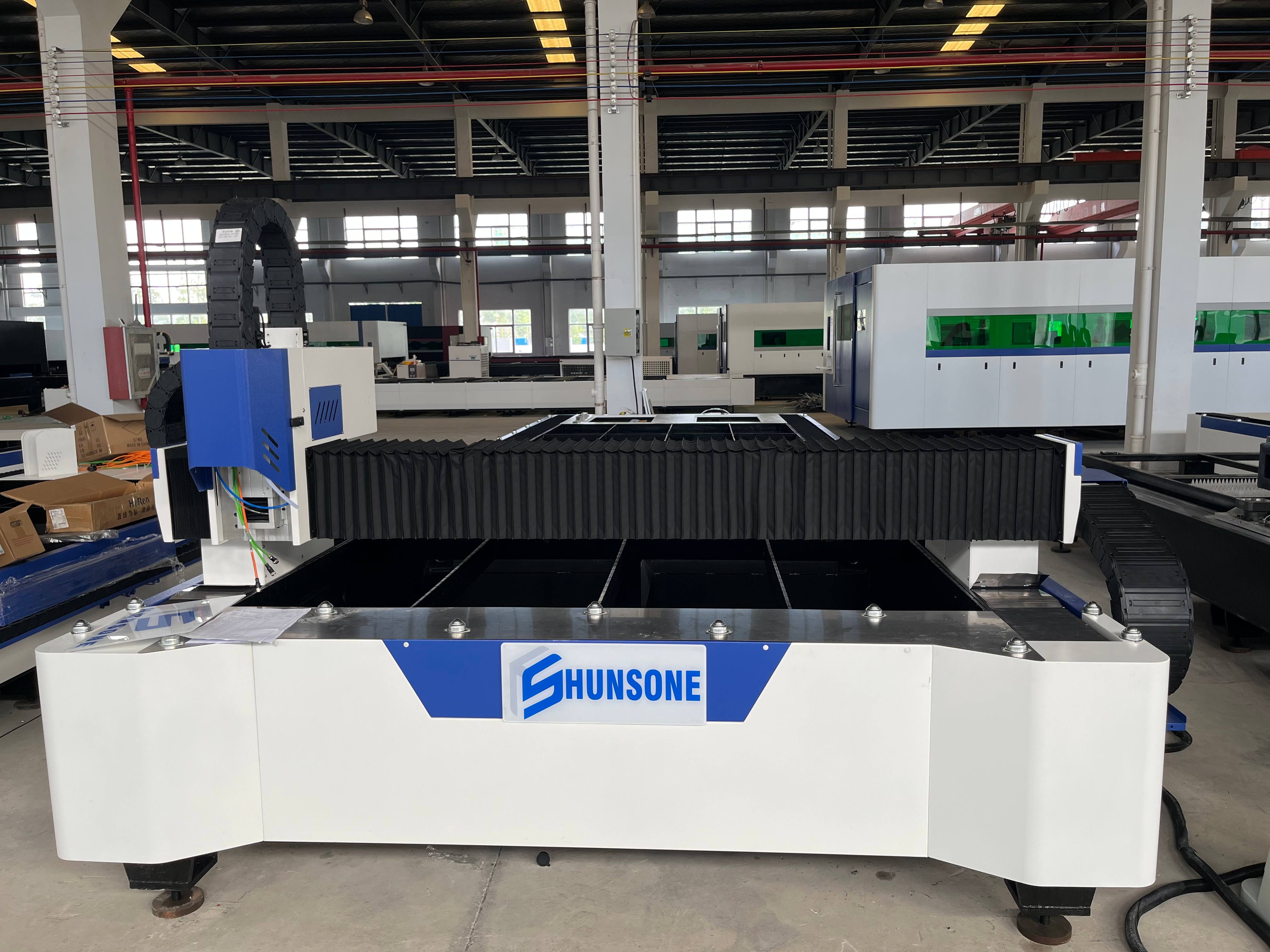
Every minute your equipment sits idle, the financial bleed goes far beyond the obvious repair bill. You lose production output, disappoint customers waiting on deadlines, and force your team into reactive firefighting instead of proactive work. The real surprise is that many of these stoppages trace back to one avoidable decision: choosing a machine without proper preventive design. When buyers focus only on upfront price and basic specs, they overlook things like accessible maintenance points, built-in diagnostics, and modular components that keep downtime measured in hours rather than days.
Think about the last time a minor sensor failure cascaded into a full line shutdown. Was that failure truly unpredictable, or was it a known weak point in a cheaper model? Quality manufacturers engineer against this by stress-testing components at higher loads, using sealed bearings in dusty environments, and designing systems that degrade gracefully instead of failing suddenly. The hidden cost isn't in the part that breaks; it's in the hours spent diagnosing, the overnight shipping fees, and the overtime labor to catch up. Those costs never appear on the purchase order, but they show up clearly on your quarterly P&L.
The good news is you can spot these risks before signing anything. Ask for mean time between failure data under realistic conditions, not ideal lab settings. Request a walkthrough of the machine with a maintenance technician, not just a sales engineer. Pay attention to whether routine service points require special tools or can be reached without dismantling adjacent sections. A slightly higher initial investment in a design that keeps running pays for itself many times over, especially when your competitors are the ones losing half a shift to a preventable fault.
Software Compatibility: The Make-or-Break Factor Nobody Mentions
Imagine settling into a new project with a brilliant team and a clear vision, only to discover that the tools you rely on refuse to talk to each other. Data gets stuck in silos, exports break midway, and every integration becomes a late-night scramble. Software compatibility isn't a footnote in your tech stack—it's the quiet architecture that either keeps your workflow fluid or grinds it to a halt. Yet, strangely, it rarely makes it onto the pre-purchase checklist.
Most people evaluate software by its flashiest features or its price tag. But the true cost often hides in the friction between systems. A CRM that won't sync with your email client, a design tool that can't export to your developer's environment, or an accounting platform that doesn't play nice with your bank feeds—these mismatches drain hours and morale. The most powerful app in the world is useless if it can't fit into the ecosystem you already have.
So before you sign up for that shiny new tool, dig into the boring stuff: APIs, file formats, and real-world integration stories from users like you. Ask whether it speaks the language of your existing stack, not just whether it looks good in a demo. Because when compatibility fails, it's never a small, contained problem—it becomes the daily leak that sinks your productivity ship.
How Frame Rigidity Changes Your Cut Accuracy Over Time
A cutting frame that flexes under load doesn't just produce a single bad cut—it starts a slow erosion of precision. Every time the structure bends slightly during operation, the blade or bit follows a path a fraction of a millimeter off the intended line. At first the error is almost invisible, hidden in the noise of material variation or operator habit. But repeated stress gradually loosens joints, wears guides unevenly, and shifts the entire geometry of the machine. Within months, what began as a barely measurable deflection turns into visible taper, wandering kerfs, and parts that no longer fit together without extra finishing.
The real culprit isn't usually a dramatic failure; it's micro-movement that accumulates. A rigid frame holds the cutting head in the same plane cut after cut, so wear patterns stay predictable and adjustments remain stable. A less rigid frame lets vibration eat away at bearings and mounting points, creating new slack that compounds the original flex. Over time, the operator finds themselves compensating more often—shimming stock, re-zeroing halfway through a job, or accepting looser tolerances. Once that cycle starts, the only real fix is stiffening the structure, not endlessly tweaking the settings.
Energy Consumption Claims: What to Test Before You Trust
Most energy consumption figures come from controlled lab runs that rarely match how equipment actually gets used. Before you put any faith in a label, test the device under partial load, in standby, and across the temperature range it will actually see. A unit that's efficient at full tilt can waste surprising amounts of power when idling or cycling on and off.
Look closely at the testing protocol behind the claim. Some numbers rely on outdated standards or a single cherry-picked configuration. Ask for third-party test reports and check whether they include startup spikes, shutdown sequences, and realistic duty cycles. Also watch for degradation curves: compressors, batteries, and power supplies all lose efficiency over time, and a fresh-off-the-line rating may not hold up after six months.
If you have the equipment handy, run your own side-by-side measurement with a plug-in energy monitor over at least a week. Record consumption during active use, idle periods, and overnight. Even a 10-15% gap between the claimed figure and your measured average might be acceptable due to environmental differences, but anything larger suggests the claim was built for a lab, not your actual workload.
When Automation Actually Pays Off for Smaller Job Shops
Automation rarely makes sense for a shop that shifts between dozens of part numbers every week. When setups eat more time than cutting, a robot arm just adds another thing to program. The payoff starts when a handful of jobs repeat monthly or a customer commits to steady volumes—even a few hundred pieces. That repetition lets the machine run unattended long enough to cover programming and fixturing costs.
A shortage of skilled operators can tip the scale faster than any cost spreadsheet. If you can't fill a second shift or your best machinist is nearing retirement, a simple collaborative robot handling load/unload on one machine might be cheaper than raising wages endlessly. The trick is picking a narrow, boring task—not trying to automate the whole cell. One robot feeding one lathe for eight hours is automation that actually pays.
Too many small shops buy automation because a trade show demo looked impressive. Then it sits idle because nobody defined the bottleneck. Instead, find the single most repetitive, time-wasting operation—deburring, part inspection, even chip removal—and ask if a $30,000 cobot can do it for two shifts. If the payback lands under 18 months, go. Otherwise, keep running manual until the volume or labor pain justifies the leap.
FAQ
It often comes down to beam quality and motion control. High-grade optics and lightweight gantries reduce acceleration losses, while adaptive nesting software can lift material usage by double digits.
Not necessarily. Power helps with thick stock, but if the bed size, cutting head, and assist gas delivery are mismatched, you still end up with slow cycles and poor edge finish.
We look at power consumption per cut meter, lens and nozzle wear, and real-world maintenance intervals. Some machines look cheap upfront but need frequent alignments or expensive chiller service.
Automation removes bottlenecks like loading sheets and sorting parts. A well-integrated tower or pallet changer lets the laser run unattended, which often boosts productive hours by 30 to 50 percent.
Fiber has clear advantages for thin to medium sheet metal, but CO2 still holds an edge for certain non-metal or thick plate applications. It comes down to the material mix and shop volume.
Ask for response times, spare part localization, and whether the supplier offers remote diagnostics. A machine that sits idle for two weeks waiting on a technician can wipe out months of efficiency gains.
Software is half the battle. Nesting algorithms, common-line cutting, and automated lead-ins can cut cycle time by 10 to 15 percent on complex jobs. Many shops overlook this and overspend on hardware.
It can, if it was well maintained and you can verify hours and service logs. However, older motion systems and controllers may lack the acceleration curves and energy recovery of newer models, which hurts thin sheet throughput.
Conclusion
When a manufacturer talks about efficiency, the first number you usually hear is laser wattage. But in day-to-day cutting, beam quality has a far greater impact on edge finish and cutting speed across varied materials. A high-power tube with poor mode stability wastes time on deburring and scrap. Just as critical is downtime you can prevent before buying: look for machines with modular service access, proven drive components, and local parts availability, because a single afternoon of lost production can erase months of marginal savings. Software compatibility is another quiet dealbreaker—if your existing quoting or nesting workflow doesn't integrate cleanly, you'll burn hours exporting and re-importing files. And frame rigidity isn't just about initial setup; a lighter gantry may hold tolerance for a few months but gradually drift under vibration, hurting repeat accuracy on long runs.
Energy consumption claims deserve scrutiny as well. Don't trust idle power readings; run actual cut tests with your typical material mix and measure consumption over a full shift. That's the only way to know the real operating cost. For smaller job shops, automation can be a smart move, but only when it matches the workload—auto-loading systems shine with repeat batches or lights-out production, while high-mix, one-off jobs often don't justify the upfront cost and programming overhead. The most efficient fabrication system is rarely the one with the biggest spec numbers; it's the one that keeps its accuracy over years, integrates with how you actually work, and proves its energy claims under realistic conditions.
Contact Us
Contact Person: James Chen
Email: [email protected]
Tel/WhatsApp: 86 13770803946
Website: https://www.hunsone.com/