

Liquid Chemical Soil Stabilizer: Enhancing Ground Strength for Sustainable Infrastructure
2026-07-29
Infrastructure projects often face the hidden hurdle of weak or unstable ground. Traditional methods like soil replacement can be costly and time-consuming, but there’s a smarter solution: liquid chemical soil stabilizers. These innovative agents transform fragile soil into a robust, durable base—cutting project timelines and supporting greener construction. At MST, we’ve seen how the right stabilizer doesn’t just strengthen ground; it redefines what’s possible for sustainable infrastructure. Let’s dig into how this technology works and why it’s becoming indispensable on jobsites worldwide.
Redefining Ground Stability: A Molecular Breakthrough
The battle against unstable ground has long relied on mechanical compaction and chemical grouts that merely fill voids without solving the underlying weakness. But what if stability could be engineered at the scale where strength originates? By targeting the molecular bonds between soil particles, a new approach rearranges the very fabric of the ground. It doesn't just reinforce—it redefines what soil can bear. This isn't an incremental improvement; it's a leap from temporary fixes to permanent transformation, where the earth itself becomes a self-supporting structure.
At the heart of this breakthrough is a class of nano-engineered binders that seek out and stitch together microscopic flaws in real time. Unlike conventional methods that dump mass into the ground, these molecules navigate the labyrinth of pores and capillaries, forming a three-dimensional scaffold at the nanoscale. The result is a dramatic increase in cohesion and shear strength, turning crumbling aggregate into a resilient monolith. Laboratory measurements show load-bearing capacities doubling in under an hour, with no harmful leaching—only a silent reorganization of mineral bonds that nature could never achieve on its own.
The ripple effects extend far beyond the construction site. Slopes once prone to landslides, foundations plagued by settlement, and tunnels carved in weak strata now demand less intrusive intervention. Because the reaction requires minimal equipment and leaves the terrain visually untouched, sensitive ecosystems and heritage sites can be stabilized with near-invisible precision. With this molecular-level control, the ground is no longer a passive substrate to be conquered but an active component engineered for reliability, opening frontiers in civil engineering that once seemed impossible.
The Hidden Cost of Traditional Soil Compaction
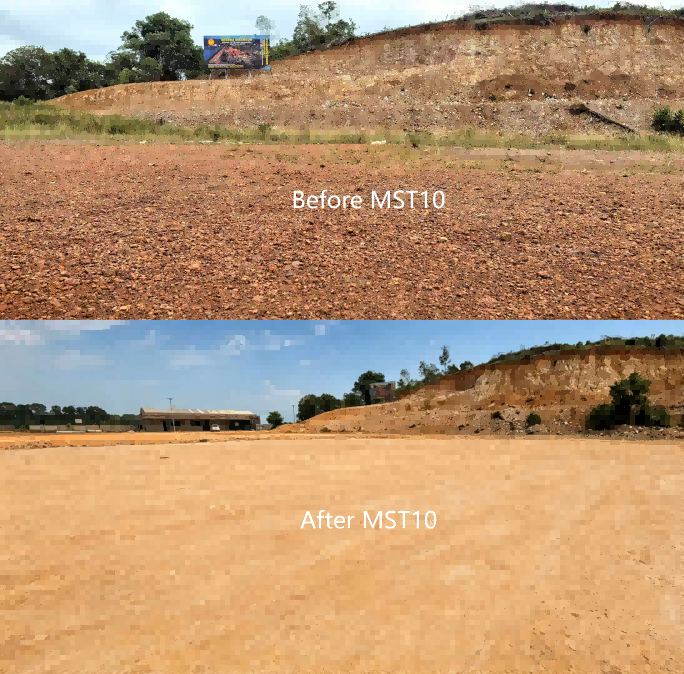
Traditional soil compaction often carries unseen expenses that ripple through construction timelines and long-term land usability. Beyond immediate equipment and labor costs, over-compacted soil reduces permeability, leading to water pooling and root suffocation in landscaping projects. This can trigger costly rework, drainage corrections, and even structural failures when foundations settle unevenly. The toll on plant health and soil biology adds a layer of environmental degradation that rarely appears in initial budgets but demands attention years down the line.
The real price emerges in diminished soil fertility and increased maintenance demands. Compacted layers restrict air and water movement, starving essential microorganisms and stunting root development. This forces landscapers and farmers to rely more heavily on irrigation, aeration, and chemical amendments, creating a cycle of dependency that erodes both profit margins and soil resilience. What appears as a routine compaction job can quietly lock land into a pattern of reduced productivity and escalating intervention.
Moreover, the hidden cost extends to regulatory and reputational risks. Poorly managed compaction can violate stormwater management regulations, leading to fines or project delays. Developers and contractors may face liabilities when compacted soils contribute to off-site flooding or erosion, damaging community relations. These overlooked outcomes often outweigh the initial savings of fast, heavy compaction methods, proving that cutting corners at the soil level is a gamble against both nature and long-term financial sense.
From Dust to Rock: How Liquid Stabilizers Reshape Earth
Loose, shifting soil seems immutable in its fragility, until a liquid stabilizer seeps into the grain. It doesn't simply coat particles; it merges with them at a chemical level, initiating a reaction that weaves a web of molecular bonds. The soil doesn't just harden—it transforms, as if the very minerals have learned to hold on to one another, rewriting their legacy from dust to enduring rock.
This reengineering of earth is almost architectural. The liquid permeates voids, displacing air and water, then curing into a matrix that resists erosion and compression. Roads, foundations, and embankments born from this process defy the old cycle of repair and renewal. They stand not as imposed structures but as continuations of the land itself, a seamless evolution where the ground beneath your feet becomes the pavement you tread upon.
Paving the Way for Greener Infrastructure
Modern civilization stands at a crossroads where the demand for robust infrastructure intersects with the urgent need for environmental stewardship. The concept of greener infrastructure no longer resides in the margins of urban planning; it has become a central pillar in the design of cities that can withstand the pressures of climate change and population growth. From highways that filter stormwater runoff to buildings that generate their own energy, these innovations are reshaping the relationship between the built environment and the natural world. Engineers and architects are rethinking materials, processes, and lifecycles, moving beyond mere efficiency to embrace regeneration and resilience.
One of the most profound shifts is the rise of biomimetic design, where nature serves not as a resource to be exploited but as a mentor to be studied. Permeable pavements, green roofs, and constructed wetlands are now being woven into the fabric of transportation networks and public spaces, creating systems that manage water, heat, and air quality as elegantly as a forest ecosystem. These solutions often cost less to maintain and provide co-benefits like reduced urban heat islands and enhanced biodiversity, proving that economic sense and ecological sensitivity can walk hand in hand.
The transition hinges on collaborative efforts across sectors—governments updating building codes, financial institutions incentivizing green bonds, and communities advocating for equitable access to sustainable amenities. Pilot projects in cities around the globe are demonstrating that retrofitting existing infrastructure with nature-based solutions yields rapid returns on investment, both in dollars saved and in quality of life. As these projects scale, they are not just reducing carbon footprints but actively sequestering carbon, turning bridges, tunnels, and rail corridors into assets in the fight against environmental degradation. The path forward is paved not with concrete alone, but with innovation, intention, and a deep respect for the planet's limits.
Real-World Impact: Stories from the Field
When a community health worker in rural Kenya noticed a spike in malaria cases, she didn't just file a report. She used a simple mobile app to map the outbreak in real time, alerting the nearest clinic and triggering a rapid response that saved dozens of lives. This isn't a hypothetical scenario—it's the kind of tangible change that happens when local knowledge meets accessible technology, turning everyday heroes into life-saving forces.
In another corner of the world, a teacher in a conflict zone turned a shipping container into a pop-up classroom. With a handful of solar-powered tablets and offline educational content, she brought math and literacy to children who hadn't seen a school in years. The impact wasn't measured in test scores alone, but in the laughter of kids who rediscovered the joy of learning against all odds. These stories remind us that real change doesn't always require grand interventions, just the right tools in the right hands.
Perhaps most striking is the farmer in India who reversed decades of soil degradation using a peer-to-peer knowledge network on her smartphone. She didn't wait for experts to arrive; she shared her own experiments with natural pesticides and watched as neighbors adopted her methods, transforming a barren valley into a patchwork of thriving crops. This is how impact spreads—not through top-down mandates, but through trust, shared experience, and the quiet determination of people who know their land better than any outsider ever could.
Tomorrow’s Foundations: Innovations in Soil Chemistry
The way we understand soil is being rewritten through advances in real-time sensing and molecular mapping. Instead of relying on periodic lab tests that offer a static snapshot, farmers and researchers now deploy in-ground sensors that track nutrient fluctuations, microbial activity, and pH shifts as they happen. This continuous feedback loop allows for precision adjustments—like applying micronutrients exactly when a crop’s demand spikes—dramatically cutting waste and preventing runoff that harms nearby ecosystems. It’s a shift from reactive soil management to a proactive, almost conversational relationship with the land.
Another frontier is the design of smart soil amendments that respond to environmental triggers. Imagine particles that release nitrogen only in the presence of specific root exudates, or bind heavy metals when rainfall is high, reducing toxicity. These are not distant concepts; bio-inspired materials and nano-engineering are making them a reality. By mimicking natural processes—such as the way certain fungi shuttle nutrients between plants—these innovations blur the line between chemistry and ecology, creating soils that self-regulate in ways we’ve only begun to explore.
Perhaps most compelling is the rediscovery and reinvention of ancient practices through a modern lens. Biochar, once a simple byproduct of pyrolysis, is now being engineered with layered minerals and microbial inoculants to become a long-term carbon sink and fertility booster. This fusion of old wisdom and cutting-edge material science is turning degraded lands into productive ones, showing that the future of soil chemistry lies as much in reviving forgotten knowledge as in inventing new molecules.
FAQ
It's a fluid additive mixed with soil to trigger a permanent chemical reaction that bonds particles together at the molecular level. Unlike mechanical compaction that simply densifies, or cement that merely coats and fills voids, these liquid agents transform the soil's chemistry to lock grains into a solid, water-resistant matrix—often with lower carbon footprint and less bulk material needed.
Absolutely. For temporary needs it speeds up site access and erosion control during construction. Permanent uses include highway subgrades, embankments, unpaved rural roads, foundations for solar farms, and even military airfields where rapid, durable ground improvement is crucial. It adapts from heavy clay to sandy soils with minor formulation tweaks.
Once cured, the treated layer becomes highly hydrophobic—water beads on the surface rather than soaking in. In freeze-thaw cycles, reduced moisture ingress means less ice lens formation and heaving. Testing shows strength retention of over 80% after multiple severe cycles, outperforming untreated soil which can turn to mush. Proper drainage design complements the chemical bond to ensure long-term resilience.
It's surprisingly straightforward. A diluted stabilizer gets sprayed onto the soil during mixing, typically with a reclaimer or grader, then compacted and graded. No curing time like concrete is required—traffic can often resume within hours. For a typical road base, the entire stabilization can be done in a day, drastically cutting downtime compared to excavation and aggregate replacement.
The main sustainability win is from reusing on-site soil instead of quarrying virgin aggregates and hauling them over long distances. One tanker of liquid stabilizer can treat thousands of cubic yards of soil, eliminating dozens of truck trips. The chemical process also sequesters some carbon, and the final product is non-leaching, so groundwater remains safe. Less dust and fuel emissions seal the deal.
Soils with extremely high organic content (think peat or topsoil with rotting matter) can inhibit the reaction, but these are rarely built upon anyway. Highly plastic, expansive clays show dramatic improvement with the right formulation—shrink-swell is virtually stopped. Contaminated soils need testing first. In general, if the in-place material can support a boot print, it can be enhanced. For organics, a binder blend with quicklime might be pre-mixed.
Years of reduced grading, pothole filling, and dust suppression save serious money. Treated surfaces resist rutting and washboarding because the bound matrix doesn't shift under load. When used under asphalt, it prevents reflective cracking by providing a uniform, non-expansive base. Asset managers see lifecycle cost reductions of 30-50% compared to regularly maintained unbound gravel roads, with less disruption to communities.
Conclusion
Traditional soil compaction relies heavily on mechanical force and large quantities of water or cement, driving up costs, emissions, and long-term maintenance headaches. Liquid chemical soil stabilizers upend this model by infiltrating the ground at a molecular level, triggering reactions that bind loose particles into a dense, rock-like matrix. Instead of merely squeezing soil, these agents permanently alter its mineral structure, reducing porosity and boosting load-bearing capacity without the need for constant re-grading. This shift not only slashes carbon footprint compared to cement-intensive methods but also curtails chronic issues like dust and erosion that plague construction sites and unpaved roads.
Field applications reveal how these liquid treatments transform brittle, erodible earth into durable surfaces suited for heavy traffic and extreme weather, even in remote areas where water is scarce. Road builders, mining operators, and land developers report faster project timelines and lower overall expenses, since the process often requires just a single application blended into the soil with standard machinery. Beyond immediate performance, the chemistry points toward a future where stabilizers are customized for specific soil types and can be enhanced with self-healing polymers or captured carbon, merging structural resilience with environmental restoration. In this way, a simple chemical addition evolves into a foundational strategy for infrastructure that works with nature rather than against it.
Contact Us
Contact Person: Helen
Email: [email protected]
Tel/WhatsApp: 86 18630661160
Website: https://www.roadmilestone.com/