

Liquid Road Hardening Agent for Long-Lasting Dust-Free Roads and Driveways
2026-09-13
If you've ever driven down a gravel driveway after a long dry spell, you know the choking cloud of dust that follows your vehicle. It coats your car, irritates your lungs, and gradually eats away at the road base. MST offers a liquid road hardening agent that penetrates deep into the soil, transforming loose, dusty particles into a solid, load-bearing surface. No more watering, no more regrading—just a clean, durable road or driveway that stays dust-free for years. But how does a simple liquid achieve that? Keep reading to find out.
Stop Gravel Driveway Dust Without Constant Watering
Most people reach for a hose the moment dust starts billowing off a gravel driveway, but that only buys you a few hours of relief. The real problem isn't dryness alone—it's the loose, unbound fines that lift away as soon as tires roll over them. Instead of wasting water, consider the actual texture of your gravel. A well-graded mix with angular stones locks together far better than rounded pea gravel, which shifts and grinds into powder. If your surface feels soft underfoot or you see fine silt pooling after rain, the base has broken down. You don't need to replace everything, but adding a fresh layer of crushed stone with fines can reset the interlock and dramatically cut airborne dust.
There are also long-term binders that don't require daily effort. Liquid calcium chloride or magnesium chloride, applied once or twice a year, pulls moisture from the air and keeps the surface slightly damp at the particle level. That subtle dampness weighs down the fines so they stay put. For a more natural approach, mixing in a small amount of clay or using a product made from plant-based polymers can achieve a similar effect without introducing salts that might affect nearby plants. The key is to treat the driveway before the dry season hits, not after dust clouds become a daily nuisance. Once the binder sets, you'll notice the gravel feels firmer underfoot and the air stays clearer long after a car passes.
Finally, think about how the driveway is used. Sharp turns, rapid acceleration, and constant speed changes grind the stones together and create fresh dust faster than any watering schedule can handle. If you can't change driving habits, consider installing a defined parking or turning pad with larger, cleaner rock that won't break down as quickly. Even a simple border of edging along the driveway edges can keep gravel from migrating and exposing the dusty subbase underneath. By focusing on the structure and chemistry of the surface rather than temporary moisture, you get a dust-free driveway that stays that way without standing outside with a hose every afternoon.
Why Your Road Keeps Washing Out After Every Storm
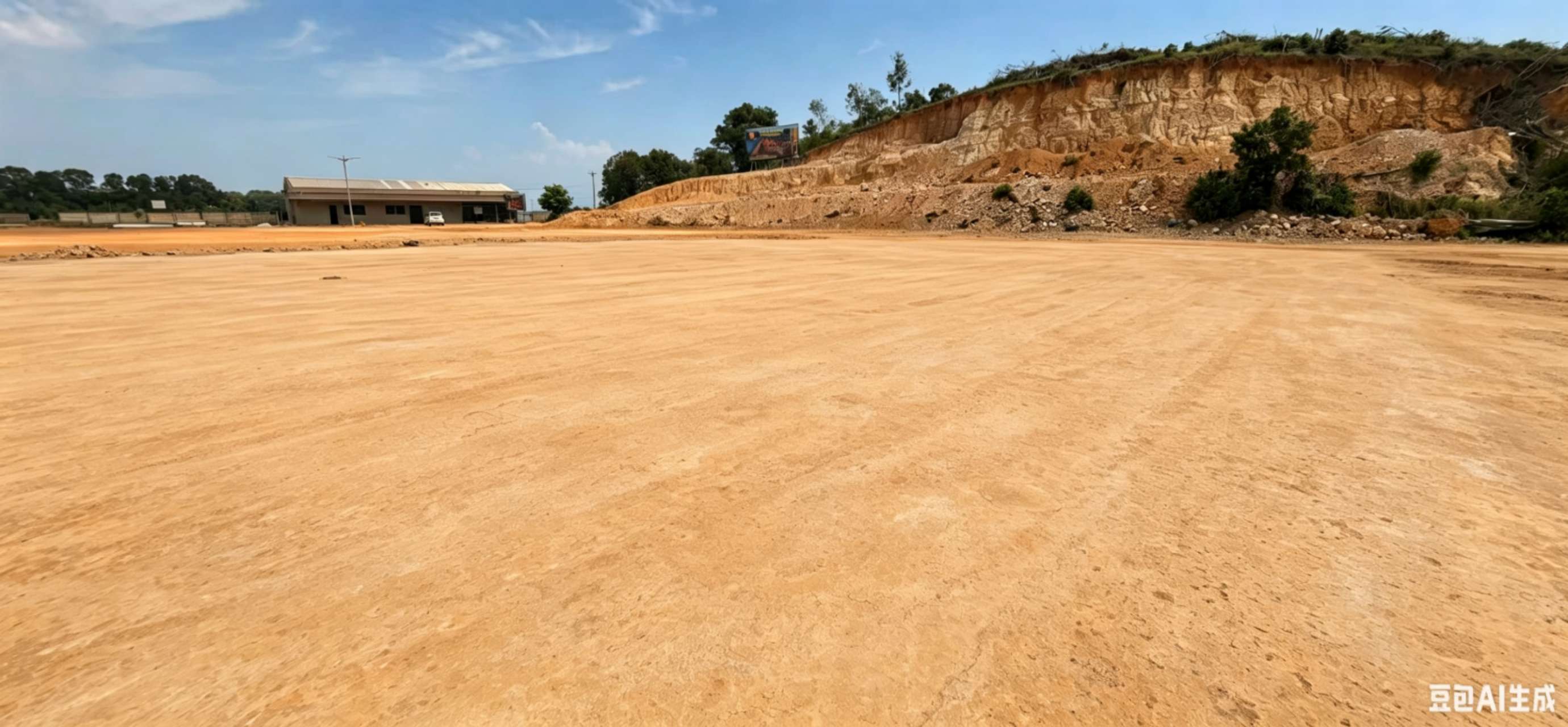
You patch the ruts, haul in fresh gravel, and tell yourself this time it'll hold. Then the next downpour hits, and within hours the same stretch of road is carved into a muddy channel again. The frustrating truth is that most washouts aren't caused by the storm itself—they're caused by the road fighting against the natural flow of water. A road that runs perpendicular to a slope, or one built with a slight crown that sends runoff to the weakest edge, will always lose that battle. Until you change how water moves across and away from the surface, every repair is just a temporary bandage.
Look closely after the next rain and you'll likely spot the real culprits: a missing turnout ditch, a culvert that's too small or clogged with debris, or a compacted surface that sheds water instead of absorbing it. On steep grades, water picks up speed and scours out whatever loose material it can find, especially if there's no energy-dissipating feature like a water bar or rolling dip. Even well-graded gravel can fail if the underlying soil has turned to soup because there's no drainage layer or geotextile separating it from the aggregate above.
The fix isn't just more gravel—it's giving water a clear, low-resistance path off the road before it can build up destructive force. That might mean reshaping the crown so runoff sheets evenly to both sides, installing properly sized culverts at every natural low point, or adding frequent cross-slope drains on long hills. In many cases, adding a slight inward slope toward a lined ditch on the uphill side will stop water from ever crossing the driving surface. Once you start working with the water instead of against it, the road stops washing out—and you stop spending every spring rebuilding the same stretch.
Long-Lasting Hardening That Bonds Loose Aggregate
Once the binder cures, the surface stops shifting under foot and tire. It locks down dust, fills the spaces between stones, and turns a scattered spread of gravel into a tight, stable layer. The real test comes weeks later, after rain and traffic have had a chance to work the edges. A proper bond doesn't wash out or peel back; it holds the loose aggregate together from the surface down to the base.
That kind of hardening doesn't happen overnight. It starts with penetration, not just a film on top. The binder needs to soak into the voids, coat each particle, and then set slowly enough to create a strong bridge between the fine and coarse material. When done right, the result feels dense underfoot and stays quiet under tires, without the constant need to regrade or rake stray stone back into place.
For gravel driveways, pathways, and exposed aggregate patios, this is what separates a temporary fix from a surface that performs season after season. You still see the natural texture and color of the stone, but the whole layer behaves as one piece. Edges stay crisp, puddling is reduced, and the usual migration of material toward the road or flower bed simply stops being a weekly chore.
Dust-Free Roads Without Asphalt or Concrete Costs
Every dry-season drive down a gravel road sends a plume of fines into the air, and the usual fix—paving with asphalt or pouring concrete—often carries a price tag that small communities and private landowners simply cannot absorb. The result is a familiar compromise: dusty, rutted surfaces that demand frequent grading and watering, yet never stay clean for long.
A more practical route is to stabilize the existing soil itself. By blending the native material with polymer emulsions, enzymes, lignosulfonates, or magnesium chloride, the surface particles bind tightly together instead of lifting away as dust. The road becomes dense, hard, and nearly dust-free, using what is already on site rather than hauling in crushed stone or hot mix. No asphalt plant, no concrete mixer, no heavy paving crew.
What makes this approach attractive beyond the initial savings is the maintenance profile. A treated surface typically needs only a light reapplication every year or two, and occasional grading keeps it smooth without breaking the compacted crust. Over a five- to ten-year span, the total cost per mile stays far below that of conventional pavement, which is why farms, ranches, mining roads, and rural municipalities are turning to soil stabilization as their default dust-control strategy.
How a Liquid Treatment Penetrates and Stabilizes the Base
A liquid treatment typically enters the base through a combination of capillary suction, pressure differentials, and gravity. Because the fluid is formulated with a low surface tension and viscosity, it can migrate into pores and micro-fractures that are otherwise inaccessible. The base material—whether it consists of compacted aggregate, soil, or recycled concrete—contains interconnected void spaces that act like a network of tiny conduits. As the liquid moves deeper, it wets the surfaces of individual particles and begins to displace air and residual moisture from the pore structure. This initial penetration phase determines how uniformly the treatment will distribute before any chemical or physical stabilization takes place.
Once inside the base, the liquid's reactive components interact with the surrounding material. Depending on the formulation, this may involve hydration reactions, ion exchange, or polymerization. For example, silicate-based treatments can react with calcium compounds present in cementitious bases or lime-stabilized soils, forming calcium silicate hydrate gels that bond loose particles together. Polymer emulsions, on the other hand, may coalesce around particle contacts as water evaporates, creating a flexible yet strong adhesive film. These reactions occur gradually, often over several hours or days, and are influenced by ambient temperature, moisture content, and the chemical composition of the base. The result is a reduction in pore volume and an increase in inter-particle cohesion, which directly contributes to the base's load-bearing capacity.
The long-term stabilization effect arises from the persistent presence of the reacted or cured liquid within the base matrix. By sealing capillary pathways and forming a semi-rigid skeleton between particles, the treatment limits further water ingress and minimizes the potential for frost heave or moisture-induced softening. This enhanced resistance to environmental cycling helps maintain consistent density and stiffness under repeated traffic loads. Over time, the treated base behaves less like a collection of loose grains and more like a monolithic layer, distributing stresses more evenly and reducing the likelihood of rutting, cracking, or differential settlement.
Maintenance-Free Driveways for Homes, Farms, and Worksites
A driveway that never asks for sealing, patching, or weed pulling sounds too good to be true, yet the right permeable paving systems deliver exactly that. For homes, a resin-bonded or open-graded aggregate surface lets rainwater drain straight through, so puddles and ice patches become rare. You simply blow or rinse off the occasional debris, and the surface stays put year after year without the cracks that plague poured concrete.
On farms, heavy equipment and repeated turning put real stress on any entry path. Interlocking permeable pavers or reinforced gravel grids spread that load across a stable base, so ruts don't form after harvest season. Mud becomes a non-issue because water moves down instead of pooling, which also keeps the yard cleaner and safer for livestock and trailers.
Worksites demand access that can handle loaded trucks, forklifts, and constant foot traffic without turning into dust or sludge. A properly installed cellular confinement system filled with angular stone offers a firm, low-maintenance driving surface that resists erosion and wheel spin. Once it settles, you can forget about re-grading or topping up material every few months.
FAQ
It penetrates the top layer of soil or gravel and binds the loose particles into a dense, stable mass. Once it cures, you end up with a hard surface that stops dust from kicking up and holds up under regular traffic.
With a proper application, the treated surface commonly remains dust-free for years, not months. The exact lifespan depends on traffic volume and weather exposure, but it won't wash away or break down quickly like surface sprays.
Yes, it works across a range of situations. For light residential driveways, a standard application is enough, while commercial roads or high-traffic lanes might need a higher dilution rate or an extra coat to handle the load.
No, the cured surface keeps a natural texture rather than forming a slick film. Water still drains through or runs off normally, so you won't be dealing with a glossy or hazardous coating after rain.
You typically grade the area first to remove potholes and loose debris, then spray the liquid evenly over the surface. After a curing period—often a day or two depending on weather—the road is ready for use, and any leftover material can be stored for touch-ups.
Not really. The color may darken slightly while it cures, but once dry it blends back into the native material. You keep the earthy appearance without the constant cloud of dust or loose stones shifting around.
Most homeowners handle it with a simple garden sprayer or a rented spray rig. The key is even coverage and not cutting corners on the prep work, so if you're comfortable with basic yard equipment, a DIY job is very doable.
Almost none. Occasional regrading or a light top-up spray in high-wear spots every few years is all that's required. Regular sweeping or blowing off debris keeps the surface performing at its best.
Conclusion
Gravel driveways and unpaved roads constantly lose fine particles to wind and passing vehicles, leaving a dusty cloud that only settles with repeated watering. That same loose structure also explains why heavy rain cuts ruts and washes out sections after every storm. A liquid road hardening agent takes a different approach: it penetrates into the base and chemically binds loose aggregate, stone, and fines into a dense, stabilized layer. Rather than sitting on top like a surface coating, the treatment works from within, locking particles together so the road resists dust, rutting, and washouts at the source. This makes the surface noticeably firmer and far less prone to breaking apart under traffic or weather.
Once the base is hardened, there is little need for constant watering, regrading, or adding new gravel after each downpour. Homes, farms, and worksites gain a solid, dust-free road without the expense of asphalt or poured concrete. The treatment suits long driveways, access roads, and equipment paths where ongoing maintenance is impractical. Because the stabilized layer stays cohesive through dry and wet cycles, vehicles travel over a cleaner, safer surface, and the road remains serviceable for years instead of degrading season after season. In short, it converts a problem gravel road into a low-maintenance, all-weather route that keeps dust down and stays put.
Contact Us
Contact Person: Helen
Email: [email protected]
Tel/WhatsApp: 86 18630661160
Website: https://www.roadmilestone.com/