

Marine Generator Set Manufacturing Concerns and How to Address Them
2026-10-25
When a marine generator set ships out, it carries more than rated kilowatts—it carries the safety of every voyage. Yet hidden manufacturing concerns like inadequate insulation, weak alternator windings, or skipped vibration testing can surface at the worst possible time. We’ll break down these recurring production pitfalls and show how Hichai Power tackles them with an uncompromising quality system that starts long before final assembly.
Keeping Salt Spray Out of Critical Winding Insulation
Salt spray doesn't just sit on the surface of a winding; it creeps into the smallest gaps between coils, wedges, and slot liners. Because the salt residue is both conductive and hygroscopic, it forms a partially conductive film that can lower the insulation resistance just enough to allow leakage currents. Over time this leads to tracking, corona discharge, and eventually a turn-to-turn or phase-to-phase fault. Keeping the windings dry and sealed at every penetration point is therefore not optional in coastal or marine installations.
A practical approach starts with vacuum pressure impregnation using a high-solids epoxy or polyester varnish. This fills the voids inside the slot section and bonds the conductors together. After curing, a flexible conformal coating or an additional layer of anti-tracking paint on the endwindings adds a second barrier. Terminal boxes need gasketed cable entries and breather drains that block mist while allowing condensation to escape. Regular inspection with insulation resistance and polarization index testing helps catch early salt ingress before it becomes a hard fault.
Vibration Damping Without Overcomplicating the Base Frame
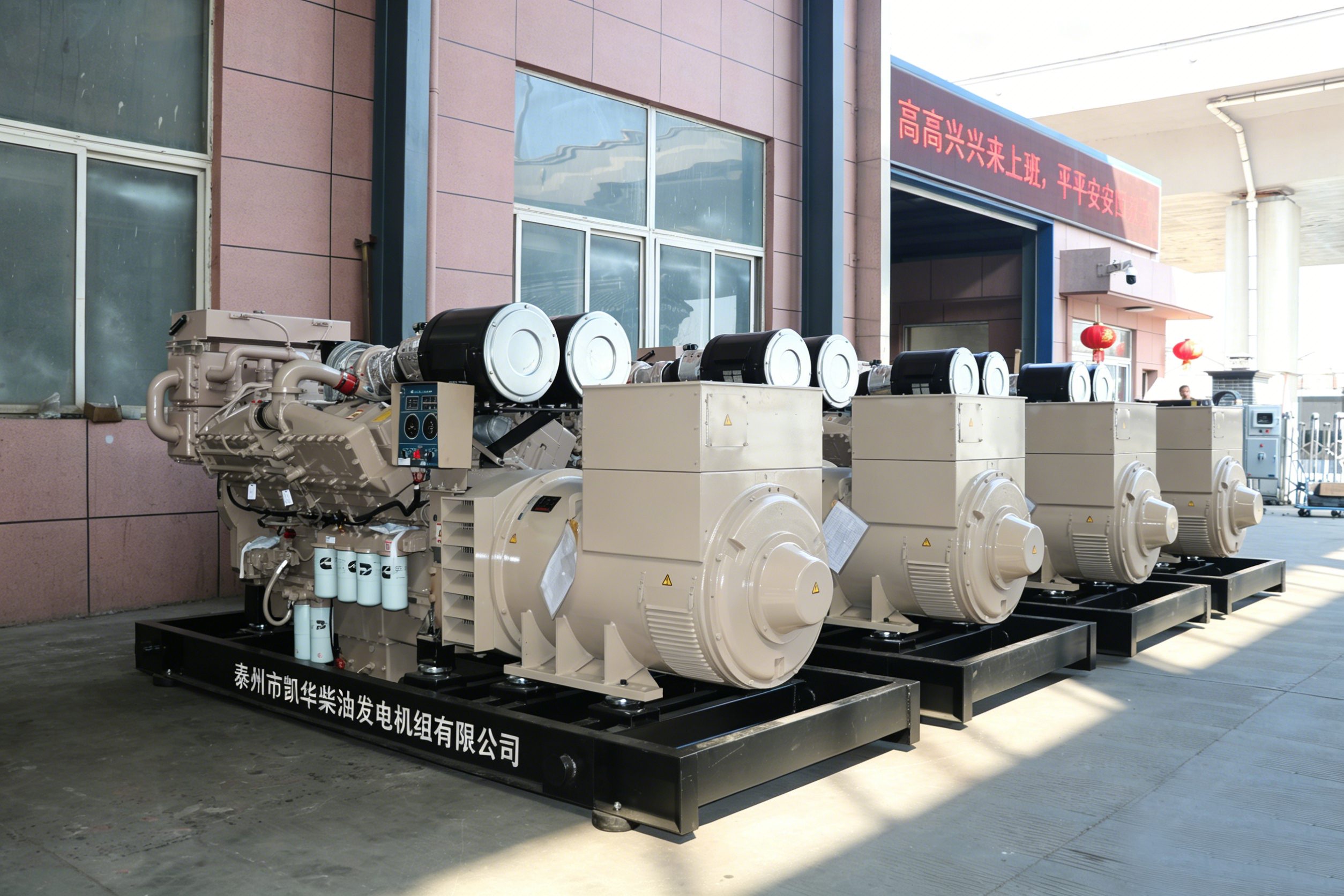
Most engineers assume that taming vibration means adding mass and complexity to the base frame. They bolt on extra ribs, pour concrete, or stack rubber pads until the machine barely moves. But that approach often creates new headaches: resonance shifts, higher cost, and a frame that's harder to service. The truth is simpler than the folklore—good damping starts with understanding where the energy actually goes, not with blindly reinforcing everything.
One underused trick is to break the vibration path with a few well-placed isolation mounts at the frame's natural flex points. You don't need a dozen of them; three or four correctly rated mounts can do more than a rigid frame filled with damping compound. Another overlooked lever is the joint design itself. Bolted connections with thin elastomeric washers dissipate high-frequency chatter without adding bulk, while keeping the frame alignment precise. It's about adding the right kind of compliance, not just more material.
The payoff shows up quickly on the shop floor. A base frame that stays light and straightforward reduces installation time, leaves room for cable runs and coolant lines, and still keeps the tool chatter well below the threshold that ruins surface finish. Instead of overcomplicating the frame, you get a design that's easier to build, easier to move, and far less likely to develop hidden fatigue cracks. Vibration control, it turns out, rewards restraint as much as rigor.
Fuel System Contaminants That Slip Past Standard Filters
Most spin-on and cartridge filters are rated to catch hard particles in the 10 to 30 micron range, but modern high-pressure pumps and injectors are far less forgiving. Abrasive silt, wear metals from the tank and lines, and fine rust particles often sit in the 2 to 5 micron band—well below the capture threshold of many stock elements. These microscopic fragments act like liquid sandpaper, slowly eroding precision-machined surfaces and widening clearances until pressures begin to fall.
Water is another stubborn contaminant that standard media struggles to contain. While a filter may trap free water droplets, dissolved or emulsified moisture passes straight through. Once this water reaches hot injection components, it flashes to steam, collapsing lubrication films and triggering cavitation damage. At the same time, it creates a breeding ground for bacteria and fungi at the fuel-water interface, producing slimy biomass that can clog filters from the inside out.
Then there are the soft, deformable contaminants—asphaltenes, varnish precursors, and degraded fuel byproducts. Because they lack a rigid shape, they squeeze through pores that would stop a hard particle of the same size. Over time, these sticky compounds plate out on injector pintles and control valves, causing sluggish response and uneven fueling that no amount of filter replacement will correct.
Thermal Runaway Risks in Poorly Ventilated Engine Rooms
Heat builds quickly in a confined engine room when airflow is limited. Batteries, alternators, and exhaust components all release warmth during normal operation, but without proper ventilation that warmth has nowhere to go. Surface temperatures on wiring harnesses and fuel lines climb steadily, and insulation begins to break down long before any visible smoke appears.
The real danger is not just the heat itself but how it accelerates chemical reactions inside the machinery. Rubber hoses soften, electrical resistance shifts, and battery electrolytes evaporate faster than they should. In a poorly ventilated space, even a small spark from a frayed cable or a hot turbo housing can ignite accumulated fumes that would normally dissipate in open air.
Unlike a sudden mechanical failure, thermal runaway in this environment tends to build quietly. Maintenance crews often miss the early warning signs because the engine room looks normal at a glance. By the time temperature alarms trigger, the surrounding materials may already be past their safe operating limits, turning a minor fault into a cascading fire that is extremely difficult to suppress once underway.
Aligning Alternator and Engine Tolerances Before Final Assembly
Getting the alternator to sit square with the crank pulley before final assembly isn't just about bolt holes lining up. Even a small offset in the mounting bracket or a slightly warped alternator ear will show up later as belt chirp, uneven wear, or premature bearing failure. Start by checking the flatness of the alternator mounting surface against the engine block with a straightedge and feeler gauge. Total runout across the mounting span should not exceed 0.15 mm, otherwise the alternator will twist once the bolts are torqued.
After flatness passes, measure the distance from the alternator shaft centerline to the crank pulley centerline using a machined alignment bar or a laser alignment tool. The goal is to keep the two axes parallel within 0.5 degrees and the belt plane offset under 0.8 mm for a standard V-ribbed belt. If the offset is greater, swap or machine the alternator spacers instead of forcing the bracket. It's common to find that mixing brackets from different engine series introduces a 1–2 mm offset that only becomes obvious after measuring.
Once the alignment is within tolerance, snug the mounting bolts by hand and rotate the crank two full turns while watching the belt ride on the pulleys. The belt should track centered on the alternator pulley without walking toward either flange. If it drifts, break the bolts loose and shift the alternator slightly before final torque. Small adjustments at this stage save pulling the radiator or intake later when a misaligned belt tears itself apart.
Simplifying Service Access for Crews in Tight Machinery Spaces
Reaching a filter housing or a valve block buried behind a tangle of piping is a routine frustration on many vessels. The usual workaround involves removing unrelated components, working blind with one hand, and hoping nothing gets dropped into the bilge. That kind of access problem isn't just annoying—it turns a fifteen-minute inspection into a half-day job, and it discourages crews from doing the preventive checks that keep machinery reliable.
A better approach starts with layout decisions that treat service clearances as non-negotiable, not as leftover space. Designers can group high-maintenance items like filters, strainers, and adjustment points along a single accessible face. Hinged or sliding access panels, quick-release fasteners, and pull-out trays for pumps and compressors eliminate the need to crawl over hot exhaust runs or squeeze between frame rails. Even simple changes—like routing hoses away from drain plugs or angling a manifold so a wrench actually fits—make a measurable difference.
The payoff shows up in reduced downtime and fewer skipped maintenance tasks. When a crew can reach a grease fitting without disassembling a guard, lubrication gets done on schedule. When an electrical junction box opens without a fight, wiring inspections become routine instead of rare. In tight machinery spaces, every inch of thoughtfully planned access translates directly into safer working conditions and longer equipment life.
FAQ
Salt spray and high humidity are relentless in a marine environment, so corrosion often starts at joints, fasteners, and any exposed metal surface. Manufacturers typically switch to 316 stainless steel or marine-grade aluminum for structural parts, apply multi-layer epoxy coatings to the base frame and enclosure, and fit sacrificial anodes to protect against galvanic corrosion. Sealing electrical enclosures with closed-cell gaskets and using conformal coating on circuit boards also keeps moisture from reaching sensitive electronics.
Vibration isolation is not just about rubber feet. A well-built marine genset uses resilient mounts tuned to the engine's firing frequency, flexible fuel and coolant connections, and a balanced crankshaft with a proper damper. During factory testing, vibration levels are measured at multiple points across the base frame and mounting brackets, and any resonance that could transmit into the hull is corrected before the unit ships.
Marine cooling has to deal with seawater that is corrosive, full of biological growth, and often dirty. The most reliable approach is a split system: a closed fresh-water loop for the engine and generator end, with a seawater heat exchanger or keel cooler to reject heat. Manufacturers need to size the raw-water pump for low flow rates, add strainers and zinc anodes, and select tube bundles that resist pitting and scaling. If the generator operates in warm tropical waters, keel cooling can avoid raw-water pump failures altogether, but it adds hull penetrations and requires careful antifouling.
IMO Tier III and EPA Tier 4 are the big ones for new marine engines, and they normally require aftertreatment like selective catalytic reduction or exhaust gas recirculation. Packaging that equipment into a compact genset enclosure is the hard part, because it adds heat, backpressure, and weight. Manufacturers often start with a clean-burning base engine using common-rail fuel injection, then design the exhaust system to reduce pressure drop, and finally tune the aftertreatment dosing to avoid ammonia slip. Testing on a load bank under simulated sea conditions verifies that emissions stay within limits while still meeting transient load response.
The best assurance is accelerated life testing that mimics real marine conditions rather than just bench testing. This means running the genset through thermal cycling, salt fog exposure, and multi-axis vibration while monitoring for insulation breakdown, connector fretting, and cooling system leaks. On the assembly side, using marine-rated wiring with tinned copper conductors, potting electronic modules, and avoiding dissimilar metal contact in terminals all pay off in reduced field failures. Factory-run endurance tests of 500 hours or more with periodic load steps catch weak points before they reach a customer.
Fuel quality on a vessel is often poor, with water contamination and microbial growth being common problems. Manufacturers address this with dual-stage fuel filters and water separators, plus fuel polishing loops on larger sets. Fuel lines and fittings are specified in corrosion-resistant materials, and a fuel cooler may be added to prevent vapor lock in hot engine rooms. The tank return line should also be routed to avoid picking up sediment, and all connections must be accessible for routine draining and filter changes.
Noise control is a balancing act between acoustic performance, weight, and budget. A practical approach uses a composite enclosure with mass-loaded vinyl and a perforated inner liner, combined with a well-designed intake silencer and a water-cooled exhaust system. Resilient mounts and flexible connections stop structure-borne noise from traveling into the hull. Rather than adding more insulation everywhere, manufacturers measure sound intensity around the set during testing and target the loudest radiation points, which often gives better results per kilogram than a thick blanket over the entire machine.
The generator set has to play nicely with whatever else is on the electrical bus. Manufacturers must verify voltage and frequency regulation under sudden load changes, test paralleling with another genset or shore power, and coordinate protective relays so a fault does not trip the whole vessel. Automatic transfer switches and load-shedding logic need to be bench-tested with the actual control panel. Factory testing should also include unbalanced load conditions and motor starting loads, because those are the moments when weak voltage regulation shows up.
Conclusion
In marine generator set manufacturing, the first real challenge is preventing salt-laden air from reaching winding insulation. Standard varnish or tape alone won't hold up; manufacturers need to consider conformal coatings or encapsulated windings, but also ensure that any added layer doesn't trap heat. Vibration damping is another area where overengineering can backfire. Adding too many isolators or stiffeners often shifts resonance into operating rpm ranges instead of eliminating it. The base frame should be designed with enough flexibility to absorb engine pulsations yet remain rigid at mounting points, and this often means using finite element analysis early rather than bolting on dampers later. Fuel systems present a quieter but equally damaging risk: contaminants below the nominal micron rating of standard filters, such as emulsified water or asphaltenes, can accumulate and cause injector wear. A dual-stage filtration approach with water separation and a final polishing filter, placed close to the engine, is more effective than a single oversized primary filter.
Thermal runaway in poorly ventilated engine rooms is often seen as an installation problem, but the generator set itself can be built to mitigate it. Specifying alternators with higher temperature ratings and integrating airflow guides or ducted fans at the factory reduces reliance on the vessel's own ventilation. During final assembly, aligning alternator and engine tolerances is not just about shaft concentricity; it includes axial spacing, coupling bolt torque patterns, and crankshaft end play. A small misalignment that passes a static check can destroy bearings under load. Finally, service access in tight machinery spaces should influence component layout long before the set is shipped. Instead of squeezing filters, belts, and junction boxes into leftover space, manufacturers can rotate the alternator terminal box, use remote-mounted oil filters, or design a slide-out base for the control panel. These choices may add a little upfront cost but dramatically reduce downtime when a crew has to perform maintenance at sea.
Contact Us
Contact Person: Ms. Lu
Email: [email protected]
Tel/WhatsApp: 8618917899306
Website: https://www.hichaipower.com