

Mid-Diameter Fiber Fusion Splicer Supplier: Key Factors to Evaluate Before Buying
2026-08-29
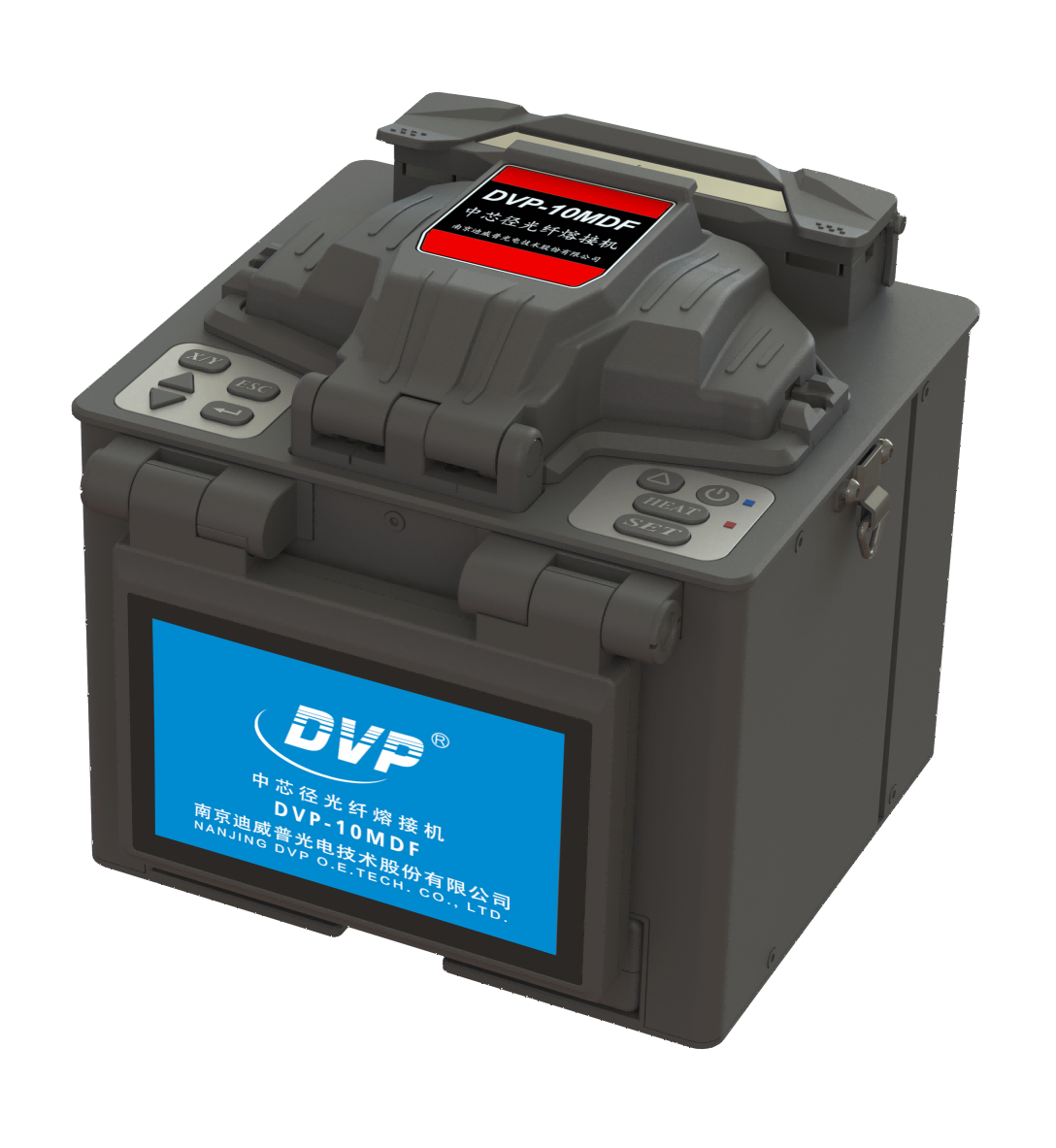
Selecting a mid-diameter fiber fusion splicer supplier involves far more than comparing spec sheets. Support quality, spare parts availability, and real-world splice consistency often determine success or failure. In this guide, we examine the evaluation criteria that matter most before you buy—and share insights inspired by DVP's experience in optical fiber equipment. Read on to make a more confident purchasing decision.
Testing Splice Loss Consistency
When checking splice loss consistency, single-direction OTDR traces rarely tell the whole story. A splice that reads 0.02 dB from one end might show 0.08 dB from the other simply because of backscatter differences between fiber spans. Bidirectional averaging removes that offset and gives a repeatable number. If three identical splices made under the same conditions vary by more than about 0.05 dB, something in the process is drifting—cleave angle, arc time, or fiber alignment—not just measurement noise.
Consistency also means the same splice should read nearly the same value an hour later, a day later, and after the tray is handled. Large swings usually point to a mechanical problem: a stressed splice, a cracked pigtail near the heat-shrink, or a dirty launch cable that changes insertion loss with every connection. Rather than chasing the lowest single reading, track the spread across repeated measurements. A tight cluster of values around 0.03 dB is more trustworthy than a one-time 0.00 dB result that cannot be reproduced.
Support Response After the Sale
Once the invoice is closed, our team actually stays on the line—questions about setup, unexpected compatibility quirks, or warranty claims get routed to people who have access to your original order details, not a blank queue. You won't need to re-explain your purchase history every time you reach out.
Most requests receive a first meaningful reply within a few business hours, with complex technical issues escalated to a named contact who follows through until the case is resolved. We also keep a short post-delivery window open for no-penalty adjustments if the product arrives and simply isn't the right fit for your workflow.
Pricing Without Hidden Lines
We believe in straightforward pricing. What you see is what you pay—no surprise fees, no last-minute add-ons. Every cost is laid out from the start, so you can make decisions with confidence.
Transparent pricing isn't just a policy; it's a promise. By eliminating hidden lines and fine print, we ensure that every customer knows exactly what they're getting. This clarity builds trust and helps you plan without worrying about unexpected charges.
From the initial quote to the final invoice, every number is explained. There are no ambiguous terms or buried conditions. Our commitment is simple: if it's not in the quote, it won't be on your bill.
Custom Fixtures for Unusual Fibers
Standard tensile grips and connector adapters assume a round, pliable fiber with a clean polymer coating. That assumption collapses with ribbon cables, hollow-core fibers, or brittle chalcogenide strands. A custom fixture often starts from the failure mode: flat ribbon needs lateral support so individual channels don't twist under load, while a hollow-core fiber requires vacuum-assisted centering inside a V-groove to keep the microstructure from crushing.
For photonic crystal and other microstructured fibers, the clamp faces are typically machined from soft alloys or acetal with a radiused edge, letting the fiber settle without point loading. In some labs, disposable polymer inserts are swapped between samples to avoid cross-contamination or coating debris. The result is a grip that holds the unusual geometry firmly enough to measure break strength or attenuation, but gently enough not to create the very flaws you are trying to characterize.
Certifications Worth Verifying
Plenty of certificates look impressive at first glance, but a quick check often reveals they come from organizations with little standing. Before you add one to your resume or trust a vendor's claim, spend a few minutes confirming who actually issued it and whether that body is recognized by practitioners in the field.
Some areas deserve extra scrutiny. Safety-related credentials, financial planning designations, and medical or technical certifications can have legal weight, so a fake or expired one creates real risk. Look for independent accreditation, a public registry of current holders, and a clear renewal process. If the issuing group is vague about its requirements or charges a fee just to verify status, treat that as a warning sign.
It also helps to compare against what working professionals actually value. A certification that nobody in the industry asks for may not be worth the paper it's printed on, no matter how polished the website. Ask colleagues, check job postings, or look at professional association forums. The ones worth verifying are usually the ones that open doors, not just decorate a wall.
What Their Longest Clients Say
A client who has stayed with us for over a decade recently put it plainly: "You don't keep coming back this long unless the work actually holds up." That sentiment gets echoed in different ways—some mention how quickly we adapt when their needs shift, others point to the small details that never slip. It's not about grand gestures. It's the steady reliability that earns a decade of trust.
One of our longest-standing partners told us they've stopped looking elsewhere because the consistency saves them time and headaches. Another mentioned that when leadership changed on their side, our team knew the history well enough to make the transition feel seamless. That kind of institutional memory doesn't happen with short-term vendors. It only comes from years of paying attention.
The words we hear most often from clients who have been around the longest aren't about flashy wins. They're about feeling heard, never having to re-explain a core need, and knowing exactly who will pick up the phone. Longevity in any relationship is earned quietly, and their words reflect that.
FAQ
If they dodge questions about splice loss on real field fiber, refuse to share a demo unit, or push only the lowest price without asking about your cable types, that is a strong warning sign. A supplier that does not ask about ribbon vs. single fiber, splice counts per day, or environmental conditions is probably not serious about mid-diameter performance.
Ask them to explain electrode spacing, cleaning routines, and clamp force adjustments specific to fibers in the 200–400 μm range. A knowledgeable supplier will talk about arc calibration drift, humidity effects on alignment, and the need for more frequent electrode maintenance compared to standard 125 μm fiber. Vague answers usually mean shallow technical support.
Prioritize splice loss consistency across at least 50 consecutive splices, not just the best-case number on a data sheet. Also check tensile strength retention after splicing, alignment method under dusty conditions, and heat shrink oven compatibility with larger diameter sleeves. Real-world repeatability matters more than a single perfect lab result.
Electrode life can vary dramatically with mid-diameter fiber because higher arc power and longer cleaning cycles wear tips faster. Ask for expected discharge counts per electrode pair on your fiber type, and compare the cost and lead time of replacement electrodes. A cheap splicer with expensive or frequently unavailable consumables is often more costly over two years.
Look for on-site or live video training that covers ribbon and single fiber handling, arc calibration for odd coatings, and troubleshooting alignment errors on mid-diameter glass. The supplier should also offer a procedure for your specific cable construction rather than a generic manual. If they only hand over a PDF and disappear, long-term yield will suffer.
Yes, because mid-diameter fiber work often runs in tight windows such as railway, aerospace, or medical device builds. If a clamp arm breaks or a lens gets contaminated, waiting three weeks for an overseas part can idle an entire production line. Ask which critical parts are stocked in your region and what the emergency replacement turnaround is.
Request references from customers splicing similar diameter fibers, preferably with comparable coatings and environments. Ask those references about average splice loss, electrode replacement frequency, software stability, and how the supplier handled a machine failure. A supplier willing to connect you with two or three actual users is far more credible than one relying only on glossy case studies.
Build a simple two-year estimate that includes electrode replacements, cleaning supplies, software updates, service visits, and expected downtime. A supplier with a slightly higher upfront price but lower consumable burn rate and faster local repair can be cheaper within eight to twelve months. Also factor in training time saved and the rejection rate of splice joints, since rework often dwarfs equipment cost differences.
Conclusion
A mid-diameter fiber fusion splicer is only as dependable as the numbers you can repeat. Before signing, ask the supplier to run a splice loss consistency demo on your own fiber, not just their polished sample reel. Watch how they handle a dozen consecutive splices and whether the loss readings stay within a tight band or drift after the third or fourth attempt. Equally telling is what happens when something goes wrong. Press them on response times after the sale: will a real technician call you back within hours, or will you be routed through a ticket queue while a production line sits idle? Get that promise in writing, with named contacts, not just a generic support email.
Pricing should be boringly transparent. Ask for a line-item quote that separates hardware, electrodes, software licenses, and any recalibration fees—hidden costs often hide in "service plans" that sound optional until you need them. If you work with odd claddings or non-standard coatings, demand evidence of custom fixture experience; a supplier who only handles standard 125 µm fiber may stall on your 200 µm or 400 µm specialty runs. Verify certifications directly with the issuing bodies instead of trusting a logo on a PDF. Finally, call their longest-tenured clients, not the hand-picked references. Ask those customers what broke, how long repairs took, and whether the supplier ever walked away from a problem. Their answers will tell you more than any spec sheet.
Contact Us
Contact Person: Mr XU
Email: [email protected]
Tel/WhatsApp: 86-25-85582828
Website: https://www.dvp.cn/en/