

Mining Air Compressor Manufacturer Delivers Durable Solutions for Demanding Operations
2026-08-11
In the unforgiving world of mining, every piece of equipment is pushed to its limits. When a compressor fails, the entire operation grinds to a halt. That’s why so many site managers are turning to Seize Air—a manufacturer that doesn’t just build machines, but engineers resilience into every bolt and valve. Discover how their compressors are redefining reliability in the most demanding environments, and why downtime is no longer an option.
Built to Outlast the Job: Inside Our Rugged Compressor Design
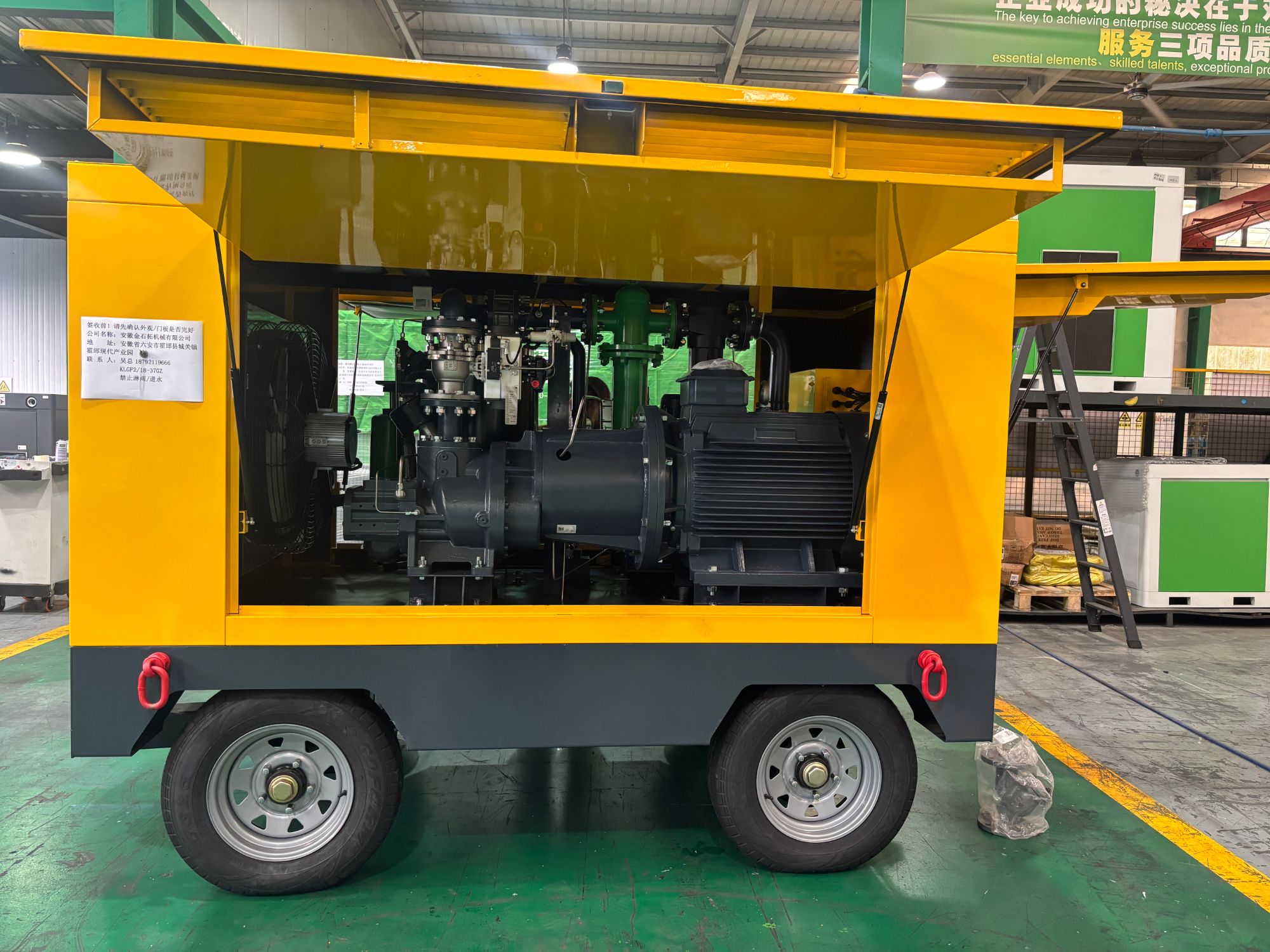
Our engineers didn’t just aim for durability—they obsessed over every component that takes a beating on the job site. From the cold-formed steel housing that laughs off drops and collisions to the sealed bearing cartridge that keeps grit out and grease in, this compressor was blueprinted to survive the kind of abuse that makes lesser machines tap out.
We attacked vibration like an enemy, isolating the pump assembly with tuned dampeners that swallow pulsation before it can fatigue metal. The result? Even after thousands of cycles, the frame stays tight and welds stay intact. It’s the difference between a device that runs for a season and one that runs for a career.
And we tested it mercilessly. Continuous run simulations in 120°F ambient heat. Rapid cycle abuse pulling full load amps. Dust chambers thick enough to choke a motor. Each prototype earned its badge only after proving it won’t flinch under real-world conditions—because the only thing worse than a compressor breaking down on the job is having to explain why it did.
From the Pit to the Plant: Real Miners Share Their Toughest Challenges
Mining isn't just a job—it's a life shaped by darkness, dust, and the constant hum of heavy machinery. Every miner has a story that starts long before the first swing of a pick or the rumble of a conveyor belt. For many, the toughest challenge isn't the physical exhaustion but the mental toll of spending hours underground, cut off from sunlight and the world above. It's the nagging thought that one wrong move could change everything, yet they show up shift after shift because the camaraderie in the pit is unlike anything else. That bond, forged in the cramped confines of a cage or the roar of a continuous miner, is what keeps a lot of folks going when the weight of the rock overhead feels a little too real.
Once the ore is out of the ground, a whole different kind of battle begins. Getting raw material from the pit to the processing plant sounds straightforward, but anyone who's done it knows the reality is a puzzle of logistics, breakdowns, and unpredictable conditions. You're dealing with conveyor systems that jam at the worst possible moments, trucks that sink axle-deep in slush on a haul road after a sudden downpour, and deadlines that don't care about any of it. One miner I know described a night where a primary crusher went down and the whole operation ground to a halt. The crew had to improvise with a makeshift bypass using loaders and a lot of sweat, just to keep the plant fed. It's problem-solving under pressure, with a dash of sheer stubbornness thrown in. That's the part the public never sees—the frantic hours where a group of tired people become an ingenious team, piecing together a solution so the whole cycle doesn't stall out.
But ask any veteran, and they'll tell you the hardest part isn't the machinery or the muck—it's the people side of things. Mining has a way of wearing down bodies over time, even with all the modern safety gear. The aches creep in, the hearing fades, and the stories of close calls accumulate. Yet the real challenge is balancing that reality with the need to provide for a family, or the desire to leave a legacy that isn't just a pile of tailings. Some miners talk about the moment they realized their kids had never seen them in daylight during the workweek, and how that hit harder than any rockfall. They wrestle with whether the sacrifice is worth it, and most will say it is, but that doesn't make it any easier. It's a life of quiet resilience, where the toughest challenges aren't always the ones that make the safety briefings—they're the ones whispered between shifts, over a cold coffee, while planning a future that hopefully spends more time under the sun.
Beyond the Spec Sheet: Engineering Secrets for Extreme Conditions
Real-world performance often hinges on details that never make it onto a product brochure. It's the subtle choice of a conformal coating that resists corrosion in salt-fog environments, or a thermal interface material that doesn't dry out after a thousand heat cycles. These decisions live in the gap between nominal specs and brutal reality, where standard ratings crumble and only deep material science holds the line.
Take the humble connector, for instance. A gold-plated contact might boast the same milliohms of resistance on paper as another, but the one that survives a Saharan sandstorm has an internal geometry that self-wipes during mating, shedding abrasive grit before it can embed. Similarly, enclosures rated IP68 can still fail in high-vibration scenarios if the design doesn't account for micro-movements that wear away sealing surfaces over time. It's the accumulation of these unpublicized refinements—secret sauces of spring-force optimization, glass-to-metal seal annealing, and polymer creep compensation—that separates gear that degrades gracefully from gear that fails catastrophically.
Validation is where these secrets prove their worth. Beyond the standard temperature-soak tests, engineers push prototypes into extreme transient conditions: rapid thermal shock while under full electrical load, combined with mechanical resonance sweeps that mimic a decade of transport fatigue in hours. Only when a unit emerges functional after a cycle of immersion in boiling brine followed by an instant dunk in liquid nitrogen—a test few companies perform, let alone advertise—do they know the design has transcended its paper identity. That's the difference between meeting a spec and mastering an environment.
When Downtime Isn’t an Option: Serviceability That Keeps You Running
For operations where every second of inactivity bleeds revenue or puts lives at stake, the machinery itself needs to be designed with an almost obsessive focus on swift, effortless repair. It’s not just about building things to last; it’s about accepting that failure is a possibility and engineering a response that’s so fast, the disruption barely registers. Hot-swappable modules, tool-less access panels, and diagnostic LEDs that speak in plain language rather than cryptic blink codes turn a potential catastrophe into a non-event.
The real genius lies in pushing intelligence to the edge. Components that track their own wear patterns and broadcast status updates long before they falter give teams the power to act on their own terms. When a worn bearing can be swapped during a planned lull in activity—because the machine gave a ten-day heads-up—the notion of “emergency maintenance” starts to feel archaic. It’s a shift from reactive firefighting to a rhythm of continuous, invisible care.
That seamless continuity doesn’t happen by accident. It demands a supply chain that places critical spares within arm’s reach and technical documentation that prefers clear illustrations over dense paragraphs. When a frontline operator can confidently complete a swap in under two minutes, guided by nothing more than a color-coded latch and a simple visual cue, the system becomes more than reliable—it becomes practically unbreakable in the eyes of the business.
One Size Fits None: How We Tailor Air Systems to Your Operation
Generic air handling setups often miss the mark because they're built for average conditions that rarely exist in real-world facilities. Your operation has unique temperature swings, dust loads, and humidity patterns that a one-size solution simply can't handle efficiently. We've walked through enough plants to know that what works in a packaging hall fails miserably in a welding bay.
Instead of pushing pre-configured packages, we start by mapping how air moves through your specific space and where the pressure points really are. This means spending time on your floor, charting heat sources and air quality shifts throughout a full production cycle. Only then do we design a system that aligns with your existing layout—not the other way around.
The result is an air system that breathes with your operation, scaling up ventilation during peak hours and dialing back when possible to save energy. It's tuned to the machinery you use, the materials you handle, and even the seasonal changes that affect your region. That kind of precision doesn't come from a catalog; it comes from paying attention to what makes your operation tick.
Power That Pays Back: Outpacing the Hidden Costs of Compressed Air
Compressed air often feels like a free utility, but it’s far from it. The energy consumed by compressors, dryers, and filters can rank among the top three expenses in a manufacturing plant. Yet most operators overlook the slow bleed of inefficiencies—small leaks, pressure drops, and unnecessary runtime—that silently drain thousands of dollars each year. Recognizing these hidden costs is the first step toward turning your air system from a financial burden into a source of payback.
What many don’t realize is that the real cost isn’t just the electricity bill. It’s the downtime caused by inconsistent pressure, the scrap from moisture-contaminated air, and the premature wear on equipment relying on clean, stable delivery. By mapping out these cost points, you can start prioritizing fixes that deliver immediate returns. Something as simple as an ultrasonic leak detection campaign can pay for itself in months, while a smarter control strategy can level out demand peaks without additional capital outlay.
Think of every compressed air upgrade not as an expense, but as an investment with a guaranteed, measurable return. When you optimize the system, you’re not just saving energy; you’re boosting throughput, improving product quality, and extending the life of both the compressor and the tools it feeds. The payoff is real, and it starts compounding the moment you address the inefficiencies hiding in plain sight.
FAQ
They're built to keep running through heavy dust, moisture, and temperature swings from freezing cold to desert heat. The enclosures and filtration systems are specifically designed to protect internal components in open-pit and underground mines.
With proper care, many units run reliably for over a decade. The manufacturer uses heavy-duty bearings, corrosion-resistant coatings, and oversized coolers to extend the lifespan far beyond what standard industrial compressors offer.
Yes, the design prioritizes field maintenance. All key access points are reachable without special tools, and the control system provides plain-language diagnostics so your crew can handle routine checks and minor repairs quickly.
Absolutely. The engineering team works directly with mine operators to match air flow, pressure, and mounting configurations to the exact equipment. Custom skids, power options, and monitoring packages are all on the table.
Support teams are positioned near major mining regions to dispatch parts and technicians fast. The compressors also come with remote monitoring that often catches issues before they cause a shutdown, so unplanned downtime is rare.
Everything from the frame to the pipe connections is reinforced. Vibration isolators, flexible hoses, and stress-relieved welds are standard, and the components are tested on shaker rigs to simulate years of rough terrain.
Yes, they offer models with Tier 4 and Stage V diesel engines, plus electric variants where emissions need to be zero. The air treatment systems ensure the discharge air is clean and safe for both equipment and personnel.
Conclusion
Deep within the earth, where every piece of equipment faces relentless punishment, mining air compressors must do more than just work—they need to survive. This manufacturer doesn’t just build machines; it forges them from decades of hard-won insight gathered directly from miners who’ve wrestled with dust-choked intakes, punishing vibration, and temperature swings that turn lesser units into scrap. By embedding protective redundancies into cooling systems, filtration, and structural welds, each compressor shrugs off conditions that would cripple ordinary industrial designs. The secret lies not in a single breakthrough but in an obsessive attention to the margins: bearing loads calculated for the worst shifts, seals tested beyond their rating, and a frame that takes the hits without passing the shock to critical internals. It’s a philosophy of overbuilding that turns whispers of “just make it tougher” into a rumbling, reliable presence at the face and along the conveyor.
But raw toughness means little if a unit bleeds profit through wasted energy or prolonged pit stops. Every compressor emerges from a conversation with the mine itself—not a catalog selection. Whether it’s rethinking air-end geometry to match a site’s specific duty cycle or engineering a service layout that lets a crew swap a main filter in minutes without skinning their knuckles, the aim is to erase downtime. That bespoke mindset extends to reclaiming the hidden costs of compressed air: variable-speed drives that shed kilowatts as demand dips, recovery systems that repurpose heat for other processes, and component placement that turns routine checks into rapid glances. The payback isn’t measured in weeks of quiet operation but in years where the compressor becomes an invisible asset—demanding little, delivering exactly what the job needs, and outlasting the expectations of those who depend on it shift after shift.
Contact Us
Contact Person: Mia
Email: [email protected]
Tel/WhatsApp: +86 19821985894
Website: https://www.seize-air.com