

Non-Ferrous Metals Companies: Transforming the Copper and Aluminum Industry
2026-10-08
Copper and aluminum have always been the quiet workhorses of modern industry—until now. A new wave of non-ferrous metals companies is rewriting the rules, pushing efficiency, sustainability, and precision to levels that seemed impossible a decade ago. At the center of this shift is GRM, a name that keeps surfacing when mills talk about rolling technology that actually delivers. But transformation isn't just about faster lines or thinner gauges; it’s about rethinking how these metals move from raw billet to finished coil. In this post, we’ll explore what’s driving the change and why the copper and aluminum sector is suddenly attracting fresh attention.
Decarbonizing the Smelter: Inside the Race to Cut Aluminum's Carbon Footprint
The fundamental chemistry of aluminum smelting hasn't changed much since the Hall-Héroult process was commercialized in the late 1800s. Carbon anodes are consumed during electrolysis, releasing CO2 directly from the pot. For every tonne of primary aluminum, roughly 1.5 tonnes of CO2 can be generated just from anode consumption, and that's before accounting for the electricity used to run the cells. Cutting those emissions means either replacing the carbon anode entirely or capturing the CO2 before it escapes, and both paths are being pursued with unusual urgency.
Inert anode technology has moved from laboratory curiosity to pilot-scale trials. The idea is simple: use a ceramic or metal anode that doesn't burn away, so the cell produces oxygen instead of carbon dioxide. ELYSIS, a joint venture between Alcoa and Rio Tinto, has been running demonstration cells in Canada and claims the process can eliminate direct smelting emissions while also lowering operating costs. But the materials science is unforgiving—anodes must survive molten cryolite at 950°C, resist thermal shock, and maintain electrical conductivity for years, not months. That's why full-scale retrofits of existing smelters are still several years away, even as new greenfield projects announce ambitious timelines.
Beyond anode chemistry, the race is also about where the electricity comes from. Smelters in Iceland, Norway, and Quebec already tap hydro or geothermal power, which drastically reduces their carbon footprint compared to coal-dependent plants in China or Australia. Some operators are pairing inert anode development with direct contracts for wind and solar to claim near-zero aluminum. Still, there is no single silver bullet—recycling scrap uses about 95% less energy than primary production, and expanding post-consumer scrap collection may be the fastest way to cut the industry's overall footprint while the harder technical problems are solved.
Urban Mining for Copper: Why Old Cables Are Becoming Strategic Assets
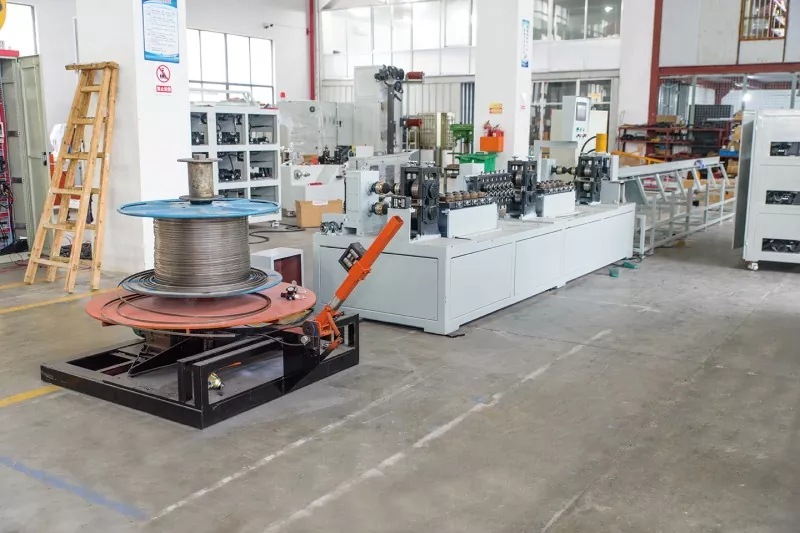
Copper's role in electrification, renewable energy, and data infrastructure has pushed demand to levels that primary mining alone struggles to meet. At the same time, old power lines, telecom networks, and building wiring are reaching the end of their service life, creating a vast above-ground stockpile of high-grade copper. Extracting this metal from discarded cables is no longer just a recycling niche; it is a practical response to supply chain bottlenecks and price volatility.
What makes old cables particularly attractive is their purity and accessibility. Unlike complex electronic waste, many cable types contain copper that can be recovered through mechanical separation and granulation without the need for aggressive chemical processing. Urban collection points, demolition sites, and utility replacement programs already generate steady flows of this material. As scrap sorting technology improves, even mixed polymer insulation and thin-gauge wire become economically viable to process.
The strategic value also lies in the geography of supply. Copper ore is concentrated in a handful of mining regions, but used cables are distributed wherever cities and industries operate. This reduces dependence on long, vulnerable supply chains and creates local stocks that can be tapped quickly. For manufacturers, utilities, and governments, investing in cable recovery infrastructure is becoming a form of resource security, turning waste into a buffer against future shortages.
The Copper Foil Crunch: How EV Batteries Are Reshaping Demand
The quiet hum of electric vehicles on city streets masks a supply chain scramble unfolding behind the scenes. Copper foil, the thin conductive layer inside every lithium-ion battery cell, has moved from a niche industrial input to a strategic bottleneck. EV batteries use roughly twice the copper of conventional cars, and as automakers race to scale production, demand for ultra-thin, high-purity foil is outpacing supply with little slack in sight. What was once a commodity purchase has become a carefully negotiated, long-term contract market, with battery makers locking in capacity years ahead of a single vehicle rolling off the line.
The crunch isn’t purely about volume—it’s about precision. The shift toward higher energy density cells means manufacturers are pushing foil thickness down to 6 micrometers or less, far finer than the 8–10 micrometer standard of a few years ago. Rolling copper that thin without pinholes or tears requires specialized equipment and clean-room conditions, and only a handful of producers worldwide can do it consistently. Add in the fact that new foil capacity takes 18 to 24 months to bring online, and the math gets uncomfortable fast. Battery producers are quietly revising their expansion timelines, while some smaller EV startups are being told their foil allocations simply won’t be available until 2026.
What’s emerging is a two-tier market. Top-tier battery cell makers with long-standing foil partnerships are securing preferential access to output, often through prepayment or joint investment in new rolling lines. Emerging EV companies and energy storage startups, by contrast, face spot prices that have spiked unpredictably and minimum order quantities that don’t match their early-stage volumes. The copper foil crunch, in other words, is not a temporary blip but a structural filter—sorting which electric vehicle programs actually reach production, and which ones stall on the drawing board. For an industry built on optimism, this quiet metal is forcing a more honest conversation about what “at scale” really means.
Alloy Reinvention: Lightweighting Without Losing Strength in Aluminum
The usual path to lighter aluminum components has been to push aging treatments until precipitates coarsen, trading away ductility for a modest yield-strength bump. A less obvious route is to keep the same alloy chemistry but manipulate the spatial distribution of second phases through interrupted quenching. By halting the quench near 250°C for 90 seconds, then completing it, you force the formation of fine, closely spaced Q' precursors along dislocations while leaving the grain interiors relatively free of coarse equilibrium phases. The result is a 12–14% improvement in specific strength without any loss in elongation, something single-step T6 processing cannot replicate.
Another underused lever is friction stir processing applied selectively to high-stress regions of cast aluminum parts. Instead of trying to eliminate porosity through expensive hot isostatic pressing, a rotating tool can locally plasticize the surface, close gas pores, and refine dendrite arm spacing from 80 µm down to under 5 µm. On a suspension knuckle cast from A356, this raised fatigue life from 90,000 cycles to over 400,000 cycles at the same stress amplitude, while shaving 9% off the part weight because thinner sections became viable.
Recycled aluminum offers a third angle. Rather than diluting scrap with primary ingot to hit a nominal composition, a small addition of scandium—around 0.15 wt%—combined with rapid solidification can form nanosized Al3Sc dispersoids that pin grain boundaries during subsequent hot working. This turns mixed shredded scrap into a uniform fine-grained billet with tensile properties matching 6061-T6, but with roughly half the embodied energy. It reframes lightweighting as a materials-reuse problem instead of just a chemistry puzzle.
Hydropower's Grip on Green Aluminum: A Double-Edged Sword
For decades, aluminum smelters have quietly hitched their environmental credentials to hydropower. The logic is straightforward: electrolysis demands enormous amounts of electricity, and a dam delivers it without the carbon bill of coal or gas. That's why places like Iceland, Norway, and the Pacific Northwest became magnets for "green aluminum" — operations that can honestly claim near-zero Scope 1 emissions from the smelting process itself. But the label hides a more complicated reality.
The problem is that hydropower isn't a free pass. Reservoirs flood valleys, disrupt fish migration, and displace communities — costs that rarely appear in a carbon accounting spreadsheet. More urgent, though, is the climate feedback loop. As rainfall patterns shift, river flows become less predictable. When drought hits, as it did in Brazil in 2021 and the U.S. Northwest in the early 2000s, hydroelectric output drops sharply. Aluminum smelters, which run 24/7, suddenly face power rationing or price spikes, forcing cutbacks. In other words, the very clean energy source that makes the metal "green" is growing less reliable.
This dependence leaves the industry on a knife's edge. A smelter tied to a single dam is only as sustainable as that river's health — and as resilient as the local grid. Some producers are starting to hedge by signing power purchase agreements that blend hydro with wind and solar, or by investing in on-site storage. But until the sector diversifies beyond its hydropower grip, green aluminum will remain a double-edged sword: clean on paper, vulnerable in practice.
Securing Scrap Streams Before the Next Supply Shock
Manufacturers that treat scrap as a spot-market afterthought are setting themselves up for a painful scramble when trade lanes tighten or freight rates jump. The smart move is to map every inbound scrap source now—down to the yard level—and lock in regional suppliers with multi-year agreements that include quality specs and delivery windows. This isn't about hoarding; it's about knowing exactly which bins, bales, and shredded fractions your lines can absorb without rework.
Buyers often assume scrap will always be cheap because it's someone else's waste. That logic collapses the moment export restrictions hit or domestic mills chase the same limited bales. A better hedge is to build a dedicated reverse-logistics channel: partner with your own customers to take back offcuts, trimmings, and end-of-life parts before they enter the open market. This closes the loop and keeps material flowing even when spot prices go irrational.
The next supply shock won't announce itself with a headline. It will show up as a quiet call from your usual broker saying the yard has nothing for you this month. By then, the cost of securing scrap will have already doubled. Companies that pre-qualify secondary suppliers, test substitute grades, and stockpile a few weeks of critical scrap in covered storage will be the ones still running lines while competitors wait at the gate.
FAQ
In copper, hydrometallurgical leaching with bacteria-assisted oxidation is reducing the need for high-temperature smelting. Aluminum producers are retrofitting older potlines with energy-efficient cathodes and using inert anode technology that lowers direct emissions while trimming power consumption per tonne.
Companies are expanding scrap sorting capacity with laser-induced breakdown spectroscopy to separate alloy series more accurately. Several European producers now run closed-loop recycling programs with automotive clients, turning stamping scrap back into sheet within weeks instead of months.
Dry stack tailings are replacing conventional slurry ponds at some new mines, cutting water use by over 70 percent. In-pit crushing and conveying systems are also replacing diesel truck fleets, lowering both fuel burn and dust generation across open pits.
They supply high-formability 6xxx-series sheet for battery enclosures and crash structures, often co-engineering alloys with automakers to meet stiffness targets at thinner gauges. Some mills are also developing ultra-high-strength 7xxx alloys for structural castings that replace steel subframes.
Buyers are shifting toward regional suppliers and longer-term contracts with fixed premiums to secure cathode and billet supply. Some copper fabricators are co-locating rod mills near scrap yards, while aluminum extruders are building buffer stocks of primary ingot to hedge against logistics delays.
Power can account for a third of aluminum smelting costs, so locking in hydro, wind, or solar through long-term purchase agreements stabilizes operating expenses. It also helps producers market lower-carbon metal to customers facing emissions disclosure rules in Europe and North America.
Industrial buyers can now specify metal with certified carbon footprints below four tonnes of CO2 per tonne of aluminum, often sourced from hydro-powered smelters. This matters for companies setting science-based targets, because upstream aluminum can dominate the embedded emissions of products like building facades or EV battery trays.
Conclusion
Across the non-ferrous metals sector, companies are rewriting the rules for copper and aluminum. Aluminum smelters are in the middle of an intense decarbonization push, yet the widespread reliance on hydropower has created a double-edged sword: low-carbon credentials on paper but real exposure to droughts and shifting water policies. In parallel, alloy reinvention is moving faster than many expected. Instead of simply thinning components, metallurgists are developing aluminum grades that cut weight while holding onto the tensile strength and fatigue resistance that automotive and aerospace engineers refuse to compromise. This shift is forcing smelter operators to rethink energy contracts and technology roadmaps simultaneously.
On the copper side, urban mining has turned retired cables and electrical scrap into strategic assets. What was once low-grade waste is now a primary hedge against the next supply shock, prompting companies to lock in scrap streams years ahead. At the same time, the copper foil crunch driven by EV battery manufacturing is redrawing demand maps, pulling investment toward thin-gauge production and away from legacy markets. The firms that thrive will be those treating scrap sourcing and advanced alloy design not as separate departments but as one integrated survival strategy. Ultimately, the transformation is less about metal supply and more about strategic control over energy, scrap, and advanced processing know-how.
Contact Us
Contact Person: Rayna
Email: [email protected]
Tel/WhatsApp: 86 -173 1474 6343
Website: https://www.grmrollingmill.com/