
ODM Grating Clip: Your Guide to Custom Manufacturing and Applications
2026-10-02
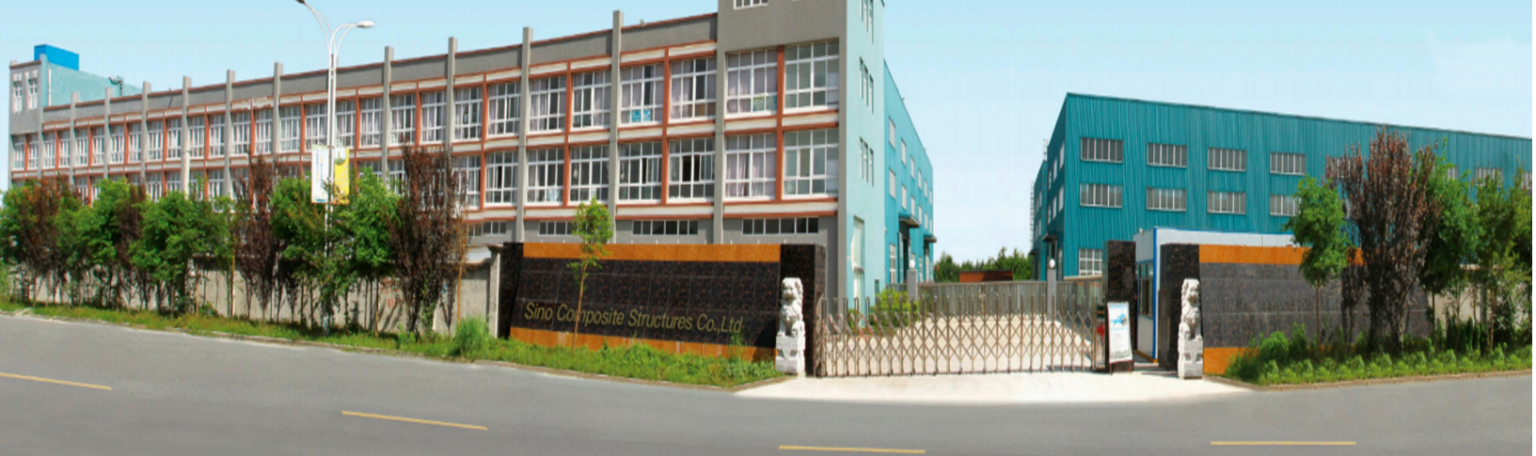
Why do so many grating installations fail? Often, it's because the clip was an afterthought—a standard piece that doesn't match the actual load, vibration, or corrosion conditions. ODM grating clip manufacturing flips that approach, letting you define the clip around your application. This guide explores how custom clips are engineered, the manufacturing steps involved, and where they deliver the biggest payoff. If you're ready to move beyond one-size-fits-all, Sino Grating is a proven partner for custom work.
Why Off-the-Shelf Grating Clips Rarely Survive Custom Installations
Off-the-shelf grating clips are designed for standard, repeatable conditions—uniform bar spacing, predictable load ranges, and typical surface profiles. Once a project calls for custom installations, these assumptions quickly break down. You may be working with non-standard grating depths, irregular support steel, or tight clearance zones that a generic clip was never shaped to accommodate. The result is often a forced fit: clips get bent, shimmed, or welded in ways that compromise their grip and lead to premature loosening.
Another common issue is material and coating mismatch. Custom installations frequently involve corrosive environments, high-temperature zones, or specific aesthetic requirements that demand stainless steel, duplex alloys, or special finishes. A mass-produced clip may be galvanized or powder-coated for general use, but it won't hold up when exposed to chemical washdowns or coastal salt spray. Even if the clip survives initially, the fastening system can create galvanic corrosion or uneven stress points that accelerate failure over time.
Finally, off-the-shelf clips rarely account for field modifications. During custom installs, installers often need to adjust clip positions on the fly, notch out for obstructions, or accommodate slightly warped grating panels. Rigid, one-size-fits-all clips offer no flexibility here; they either crack under the stress of bending or leave gaps that allow vibration and movement. That's why many custom projects end up replacing cheap clips within the first year, while a purpose-designed fastening solution would have lasted decades with minimal maintenance.
Picking the Right Material: Stainless, Galvanized, or Something Exotic?
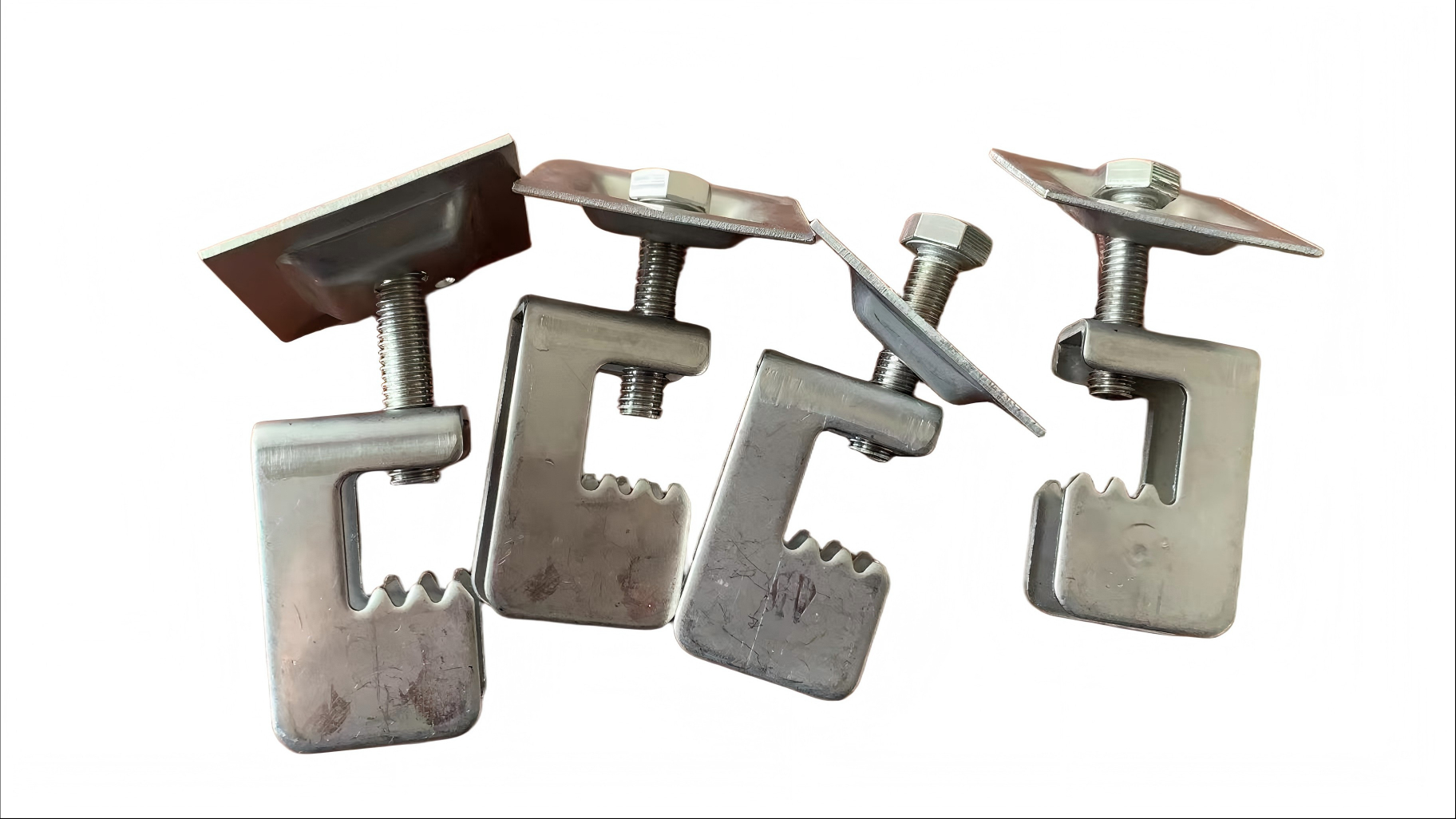
Choosing between stainless steel and galvanized metal usually comes down to how much moisture and chemical exposure your project will face. Stainless holds up better in coastal or high-humidity environments because its chromium oxide layer resists rust without needing an extra coating. Galvanized steel, on the other hand, has a zinc layer that sacrifices itself over time, so it works fine for indoor frames or dry climates but can start showing red rust once that zinc wears thin.
If the standard options feel limiting, exotic materials like titanium, copper, or weathering steel can bring a distinct look or performance edge. Titanium offers excellent corrosion resistance and a high strength-to-weight ratio, though the cost jump is steep. Copper develops a green patina that many architects love, but it can stain nearby surfaces and isn't ideal for structural loads. Weathering steel forms a stable rust-like surface that actually protects the inner metal, yet it may bleed onto concrete or stone during the first few years.
A practical way to narrow the field is to list the three biggest threats your material will face — salt spray, constant dampness, acidic runoff, heavy abrasion, or extreme temperature swings. Then compare how each candidate handles those specific conditions rather than relying on general reputation. For a garden trellis in a dry region, galvanized might be all you need. For a handrail near the ocean, stainless is worth the extra cost. And for a signature facade where appearance matters as much as durability, an exotic metal could be the differentiator that makes the project stand out without being over-engineered.
The ODM Workflow: How a Custom Clip Goes from Sketch to Shipment
A custom clip rarely survives its first sketch unchanged. Once the initial concept lands, our engineers turn it into a 3D model and run through a quick round of paper or resin prototypes to check the grip width, thumb tab angle, and how the spring sits under repeated open-close cycles. Clients often spot small tweaks here—maybe the edges need more curl to avoid tearing paper, or the hinge point shifts a few millimeters so the clip doesn't feel stiff on day one.
After the prototype is signed off, the real tooling begins. We cut the stamping and forming dies to match the final geometry, then send out first-off samples for a torture test: heat, humidity, salt spray if the clip is plated, and a cycle counter that clicks past the standard lifespan. Any burr or mismatched plating gets flagged before we move to a pilot run, because fixing a die after full production is far more expensive than catching it now.
The last stretch is all about consistency. A pilot batch runs under normal line speed and we pull random pieces every half hour to measure spring force, jaw alignment, and surface finish. Only when the numbers stay inside tolerance across the entire run does the order get packed, palletized, and loaded—same box dimensions every time, with the custom logo facing the same direction on each clip. From that first sketch to the final shipment, the whole path typically takes four to six weeks, depending on plating and packaging complexity.
Where Custom Grating Clips Actually Get Used (and Abused)
You'll find custom grating clips in some unglamorous corners: dairy plant mezzanines, fish hatchery walkways, and the grated landings around municipal aeration basins. In those spots, off-the-shelf saddles rarely survive a full season. High-pressure washdowns blast water between the clip and the bearing bar, bi-metallic corrosion starts where the galvanizing cracked, and the constant vibration from pumps loosens everything that wasn't designed for that exact bar spacing.
The abuse cases are even more telling. Rooftop unit platforms bake in the sun and then get hit with snow loads, so a clip with no expansion allowance will pry itself loose by spring. Marinas and ferry docks have stainless grating that looks tough until the wrong carbon steel saddle stains the bar and seizes in place. And on older industrial floors, you'll see custom clips retrofitted because someone got tired of panels jumping under forklift traffic—the fix is usually a deeper saddle throat and a slotted hole that lets the panel shift without chewing through the fastener.
What separates a good custom clip from a band-aid is whether it accounts for the stuff nobody puts in a spec sheet: thermal swing, trapped moisture, chemical splash patterns, and the way maintenance crews actually stand on the flooring. If a clip ignores those, the first sign is usually a rhythmic clank every time a cart rolls over the seam. By the time rust streaks appear, the grating has already started working against the structure.
Tolerances and Finishes: The Small Details That Prevent Big Failures
A shaft that measures a few microns over spec doesn't look alarming on the inspection report, but once it's pressed into a bearing housing at operating temperature, that tiny excess becomes a seized assembly and a costly teardown. Tolerances are rarely about what fits on the bench; they are about what happens when parts expand, vibrate, and shift under load. Getting them right means accounting for stack-ups across multiple components, not just checking each dimension in isolation.
Surface finish gets even less attention, yet a rough machined surface can cut fatigue life by more than half. Micro-notches left by a worn tool act as stress risers, and in cyclic loading they quietly initiate cracks long before any visible wear appears. For mating surfaces, the difference between a 0.8 µm Ra and a 0.4 µm Ra finish isn't cosmetic—it decides whether lubricant stays trapped or gets squeezed out, whether corrosion starts in a crevice, and whether a seal actually seals.
Engineers who treat these callouts as paperwork rather than performance limits end up chasing intermittent failures that never reproduce on a test stand. The fix is rarely more inspection; it's specifying functional tolerances at the design stage, then pairing them with a finish that matches the real contact conditions. Small numbers on a drawing, yes. Small consequences, no.
Cost vs. Longevity: Making the Financial Case for Custom Clips
The upfront price of a custom clip often scares buyers away, but that number tells a misleading story. A standard off-the-shelf clip may cost a few dollars, yet in high-cycle or harsh environments it wears out within weeks or months. Each replacement brings downtime, labor to swap the part, and procurement overhead. Over a year or two, those repeated purchases and interruptions quietly pile up until they dwarf what a single tailored clip would have cost in the first place.
Custom clips are engineered around the exact load, material, and movement of your application, so they routinely outlast generic alternatives by a factor of five or ten. A properly specified clip in an automotive assembly line or a medical device fixture can run for years without attention, while a universal clip might need monthly replacement. That longevity doesn’t just cut the purchase frequency; it slashes inventory carrying costs, reduces the risk of unexpected line stoppages, and frees your maintenance team for higher-value work.
To make the numbers concrete, run a total-cost-of-ownership comparison. Say a standard clip costs $4 and fails every three months—that’s $16 a year in parts alone, before counting labor and lost output. A custom clip might cost $60 but last five years, averaging $12 annually and eliminating most replacement labor. Add in the avoided scrap or rework from misaligned parts, and the financial case swings decisively toward custom. When you measure money over the life of the asset rather than at the checkout counter, the cheaper option is rarely the off-the-shelf part.
FAQ
With an ODM clip, the manufacturer works from your specific grating dimensions, load data, and operating environment instead of pulling a pre-made size from inventory. That often means a different saddle shape, relocated bolt holes, or a custom alloy so the clip fits tighter and holds longer in your particular setup.
Chemical plants, offshore platforms, wastewater treatment facilities, and heavy fabrication shops tend to see the biggest benefits. Standard clips there often fail early because of corrosion, vibration, or odd bar spacing. A custom clip can be shaped to grip irregular grating bars and resist aggressive chemicals without needing constant replacement.
It can make or break the part. Stainless 316 is common for marine or chemical exposure, while galvanized carbon steel handles general industrial use at lower cost. In high-heat or acidic areas, you may need a specialized stainless or nickel alloy. Custom manufacturing also lets you pick the exact coating or passivation finish, so the clip doesn't become the first thing to corrode.
Plants often struggle with grating panels that shift, rattle, or lift under foot and vehicle traffic. A custom clip can include a deeper saddle, a locking tab, or a serrated contact face to stop that movement. If access is tight, the design can use a low-profile head or a one-bolt system, letting workers install and remove them quickly without extra tools.
In most critical or unusual applications, yes. You pay more at the start, but you avoid repeated failures, panel damage, and unplanned downtime. A well-designed custom clip frequently outlasts several standard clips, which brings the total cost down over a few years even though the initial quote looks higher.
Start by sharing your grating bar thickness, spacing, panel dimensions, and the environment the floor will see. The manufacturer should respond with a proposed clip profile, material, and finish. It's wise to request a sample or a small pilot batch and test it under real load before committing to a large order. That step catches design flaws that look fine on paper but fail in the field.
Yes. Because the clip is built to match the actual load and movement pattern of your grating, bolts stay tight longer and clips don't crack from misalignment. Some custom designs add self-locking threads or anti-vibration washers, which further cut down on loosening and the need for frequent walkdowns.
A reliable supplier verifies dimensions with go/no-go gauges, checks alloy composition with a spectrometer, and measures coating thickness when corrosion resistance matters. They should also test-fit the clip on a sample grating section before full production. Ask for those records and make sure every batch is traceable so you don't end up with mixed materials in one project.
Conclusion
Most grating clip failures start with the assumption that a standard part will hold. Field conditions rarely match catalog specs—weld seams sit at odd heights, bar spacing drifts, or the surrounding structure flexes under load. A clip that fits the drawing can still crack when thermal expansion kicks in or when a maintenance crew accidentally steps on the edge. That's where ODM work pays off: the manufacturer pulls the actual site measurements, adjusts the hook depth, adds a wider bite, or shifts the bolt hole so the clip seats without prying. Material selection follows the environment, not the price tag. Stainless steel handles washdown areas and coastal salt, galvanized works for dry interior runs, and duplex or superalloy clips earn their keep in acid or high-chloride service. The path from sketch to shipment includes a prototype run, a quick install trial on a sample grating panel, and often a tweak to the bend radius before full production.
Custom clips show up in places where a loose grating panel means a shutdown: offshore platforms, chemical plants, water treatment decks, and food processing lines. Here, tight tolerances matter more than they look on paper. A few thousandths of an inch in the wrong direction can leave a clip fighting the bar instead of gripping it, while edge burrs or rough cut lines invite rust and stress cracking. A proper finish—pickling, passivation, or a light electro-polish—seals that risk. The financial side is straightforward: the clip itself is cheap compared to the labor of replacing a failed one, and a custom part that outlasts three or four commodity clips quickly earns back its premium. Downtime is rarely budgeted, but it always costs more than the difference between an off-the-shelf part and one built to fit.
Contact Us
Contact Person: Nicholas Zhu
Email: [email protected]
Tel/WhatsApp: 18921275456
Website: https://www.sino-grate.com