

Original Manufacturer Hair Growth Helmet: Revolutionizing At-Home Hair Restoration
2026-05-31
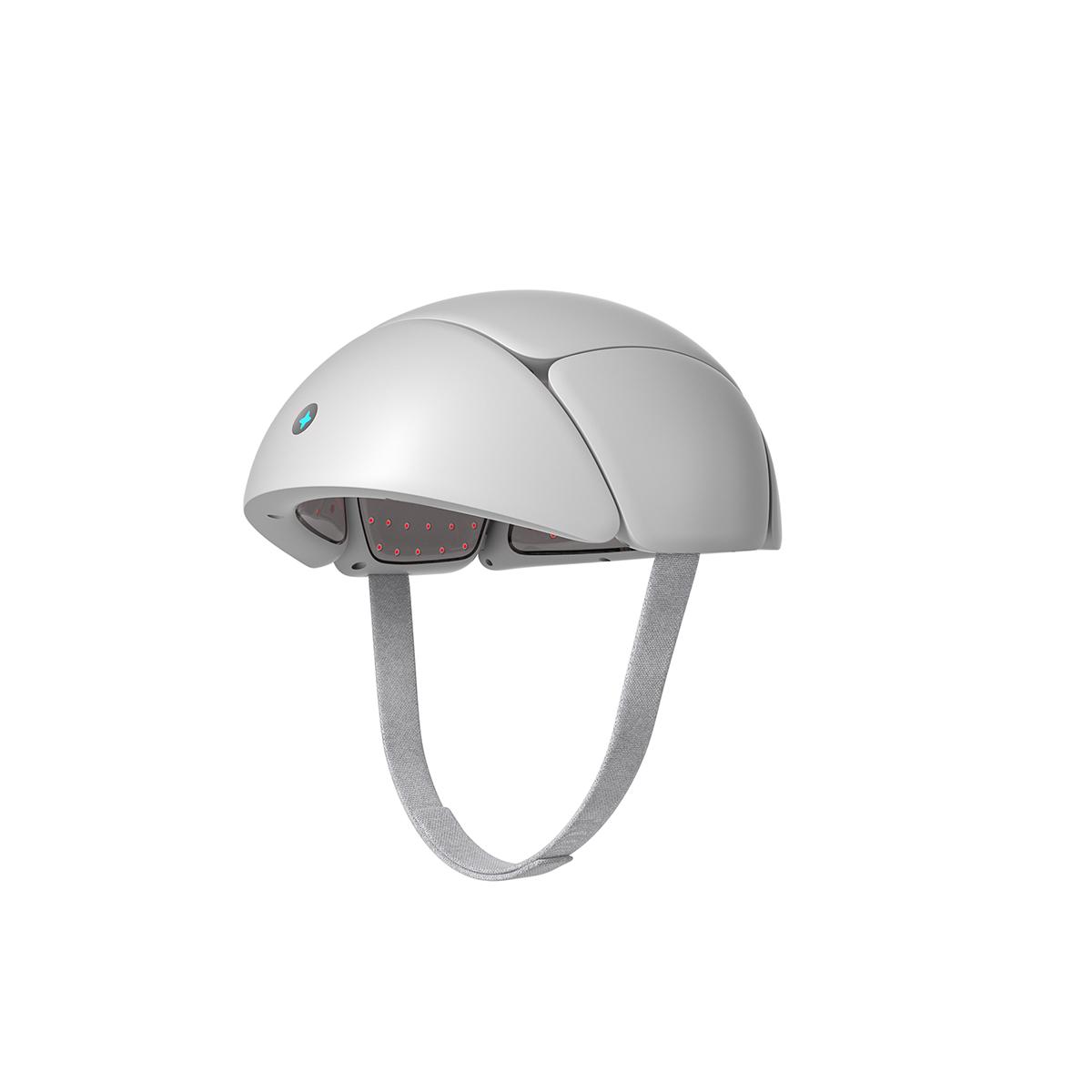
Imagine reclaiming your hairline without endless clinic visits or messy topicals. The Original Manufacturer Hair Growth Helmet from GUANG TAI makes that a living-room reality. It’s not just another gadget—it’s precision phototherapy engineered for real regrowth. Curious how a wearable can outperform so many traditional fixes? Let’s dive in.
The Science Behind Low-Level Laser Therapy
At its core, low-level laser therapy (LLLT) operates on the principle of photobiomodulation—a process where specific wavelengths of light interact with cellular components to trigger biological changes. Unlike surgical lasers that heat and cut tissue, LLLT uses low-power light that penetrates the skin without causing thermal damage. The primary target is cytochrome c oxidase, a key enzyme in the mitochondrial electron transport chain. When photons are absorbed by this enzyme, they enhance its activity, leading to increased ATP production. This boost in cellular energy allows cells to function more efficiently, repair damage, and reduce oxidative stress.
The mechanism also involves the release of nitric oxide (NO) from the enzyme, which dilates blood vessels and improves local blood flow. Better circulation means more oxygen and nutrients reach damaged tissues, while waste products are cleared faster. Additionally, LLLT modulates reactive oxygen species (ROS) levels in a hormetic manner—low levels of ROS stimulated by the light act as signaling molecules that activate protective pathways, whereas excessively high ROS levels are tamped down. This dual effect helps restore redox balance, a critical factor in many chronic conditions. The light also influences transcription factors like NF-κB, reducing pro-inflammatory cytokines and shifting the cellular environment from a state of chronic inflammation to one of healing.
Wavelengths in the red to near-infrared spectrum (typically 600–1000 nm) are most effective because they can penetrate tissue and are readily absorbed by the target chromophores. The concept of the "optical window" explains that light in this range avoids strong absorption by water and hemoglobin, allowing deeper reaching. Pulsing, continuous wave, and energy dose all play roles in the outcome—too low a dose may have no effect, while too high can inhibit healing. This biphasic response, often described by the Arndt-Schulz law in photobiology, means that the therapeutic window must be carefully calibrated. Research continues to unravel the intricate signaling cascades, but the convergence of mitochondrial activation, anti-inflammatory effects, and pro-healing gene expression underpins why LLLT is gaining ground in treating musculoskeletal pain, wound healing, and neurological disorders.
How It Stacks Up Against Salon Treatments
Stepping into a salon can feel like a mini escape—the soft lighting, the gentle hum of conversation, the promise of walking out with hair that looks effortlessly polished. But behind that experience sits a bigger bill and a chunk of your day carved out. At-home treatments have quietly caught up, closing the gap in ways that used to be unthinkable. The formulas now pack the same active ingredients you’d find in a pro’s hands, and the tools? They’ve gone from clunky afterthoughts to smart devices that guide you through every step.
The real difference now is about control and consistency. With salon visits, you’re on someone else’s schedule, and results can vary based on the stylist’s mood or technique that day. Doing it yourself means you get to baby your hair in exactly the way it likes, at 11 p.m. if that’s when you finally unwind. It’s not about replacing the salon entirely—there’s still magic in a professional’s touch for complex color or a fresh cut—but for deep conditioning, smoothing, and gloss treatments, the at-home versions are delivering near-identical shine and softness that actually lasts.
A Look Inside the Helmet: Design and Comfort
The moment you slip a well-designed helmet on, you notice how the interior contours seem to anticipate the shape of your head. It’s not just about padding; it’s about a carefully sculpted EPS liner that distributes pressure evenly across the crown and temples. The channels carved into the foam aren’t decorative—they align with natural airflow patterns, guiding heat away from the scalp without the need for bulky cooling systems. Some brands have shifted to multi-density foams, placing softer materials where impact forces tend to concentrate and firmer ones where structural rigidity matters most. It’s a delicate balance, akin to tailoring a suit with materials that disappear once you’re wearing them.
Then there’s the textile interface—often overlooked but integral to long-ride comfort. Instead of generic, plush fabrics that soak up sweat, forward-thinking designers use open-cell structures that wick moisture laterally, pulling it toward exhaust ports rather than letting it drip into your eyes. The cheek pads deserve special attention; they’re typically cut with a slight asymmetrical curve to accommodate the jaw’s motion when you’re speaking or chewing gum on a lazy Sunday ride. Quick-release tabs for emergency removal are now standard, but the real artistry lies in how those tabs are recessed so you never feel them during normal use.
Ventilation is often boiled down to port counts, but comfort hinges on the management of micro-turbulence. The best helmet interiors employ vortex generators—small, strategically placed ridges that break up buffeting air before it becomes noise. Simultaneously, they channel a film of silent air across the visor’s inner surface, drastically reducing fogging without electrical help. The chin bar’s inner mesh isn’t just a bug filter; it’s twisted in a helical pattern that acts as a diffuser, smoothing the breath stream so it doesn’t recoil back into your face. Every ridge, textile choice, and foam density choice feeds into a quiet, stable sanctuary that makes you forget you’re wearing anything at all.
Real Stories: Transformations and Timelines
Not every shift announces itself with fanfare. Some begin as a quiet nudge, barely perceptible until you look back at the breadcrumb trail of small decisions. The real stories that stick with us aren't the polished success tales, but the ones where someone wrestled with doubt, circled back to the start, and slowly reshaped their own trajectory. Those messy, stop-start timelines often hold the most quietly compelling transformations.
Timelines rarely run in neat lines. They loop, they stall, they jump forward in unexpected spurts. One person might spend years on a single plateau, only to pivot overnight after a throwaway conversation. Another might overhaul their daily habits for six months, see zero visible change, then suddenly find the pieces clicking into place during a random Tuesday afternoon. The thread that runs through these stories isn't flawless consistency, but a stubborn willingness to stay in the room.
When people share their turning points, the details are what hit home. The half-finished journal entries, the photos that didn't make it to social media, the cancelled plans that made space for something new. The timeline of genuine change is rarely photogenic. It's made of midnight kitchen conversations, unglamorous repetitions, and the quiet moment someone chose to trust a gut feeling over a five-year plan. That's where the real story lives, in the gaps between the highlights.
Is It Safe? Addressing Common Concerns
When it comes to using this product, safety isn't just a feature—it's the foundation. Every material undergoes rigorous testing to meet strict international standards, so you can breathe easy knowing there are no hidden toxins or irritants. From the packaging to the final application, each step is designed to minimize risk, whether it’s for sensitive skin or everyday household use. We’ve gone beyond the checklist, working with independent labs to verify that what you receive is as harmless as it is effective.
You might wonder about long-term exposure or interaction with other products you use daily. Real-world scenarios are where generic assurances often fall short, which is why our safety data includes comprehensive allergy panels and reactivity profiles. We don’t just claim hypoallergenic; we publish the results. And if you’re still hesitant, the transparent ingredient list and straightforward usage guidelines act like a conversation—no fine print, no surprises. It’s about creating trust through clarity, not marketing jargon.
What sets this apart isn’t just passing tests—it’s the ongoing commitment. Our customer feedback loop actively integrates real-life experiences, so if a rare sensitivity appears, it shapes the next formulation. That means the safety you experience today is constantly being refined, not resting on a certificate. So when someone asks, “Is it safe?” the answer isn’t just yes; it’s an evolving standard that puts your well-being first.
Making It Part of Your Daily Routine
Slip it into the cracks of your day. Right after your morning coffee, when you’re still shaking off sleep, that’s the moment. Or maybe it’s the quiet five-minute stretch while your computer boots up. The trick is to chain it to something you already do without thinking—no willpower needed, just a small anchor that pulls you gently into the habit.
Start so small that it feels almost silly. A single page of reading, a two-minute stretch, or jotting down just one idea. When something barely asks for time, you stop coming up with reasons to skip it. Those tiny wins stack up quietly, and before long you look back and realize you’ve built a streak without even trying.
Make it feel like yours, not a chore copied from someone else’s checklist. Tweak the environment to nudge you: keep a guitar by the couch instead of hidden in a case, or leave a sketchbook open on the table. When it fits naturally into your space and your quirks, it stops being a routine and starts feeling like just part of the day you’d miss if it weren’t there.
FAQ
It’s a wearable device built directly by the original producer—cutting out middlemen—to deliver clinical-grade light therapy for hair regrowth. Unlike resold or rebranded gadgets, this helmet uses medical-grade lasers arranged in a full-scalp coverage pattern, so you get professional results at home without the markup.
The helmet relies on low-level laser therapy, or LLLT, which bathes the scalp in specific wavelengths of red light. This stimulates dormant follicles, boosts blood flow, and nudges cells into a growth phase. Think of it as a gentle wake-up call for your scalp, applied consistently over time.
It’s best suited for people in the early to midstages of androgenic alopecia—common pattern baldness—or those with diffuse thinning. It also helps anyone whose follicles are still active but underperforming, and it’s equally effective for men and women struggling with hereditary shedding.
Most users start seeing subtle changes after three to four months of consistent use. The real transformation—thicker texture and visible regrowth—usually appears around the six-month mark. Patience is key, because hair cycles move on their own slow clock.
Yes, it’s built for frequent sessions and is cleared for safety when used as directed. Side effects are rare, mostly limited to a mild tingling or warmth on the scalp during treatment. There’s no UV risk, and the helmet automatically shuts off to prevent overuse.
The obvious win is convenience—you treat your scalp while relaxing at home, no appointments needed. Over a year or two, it’s dramatically cheaper than cumulative clinic visits, and you get the exact same core technology without the sterile atmosphere or commute.
Absolutely. It pairs well with topical solutions like minoxidil, microneedling, or even post-transplant care. In fact, combining therapies often accelerates results because they work through different mechanisms, but it’s smart to check with a dermatologist to tailor the approach.
Conclusion
The Original Manufacturer Hair Growth Helmet harnesses the power of low-level laser therapy (LLLT) to stimulate follicles and promote natural regrowth, all from the comfort of home. Unlike clinical treatments that demand frequent salon visits and hefty fees, this device delivers consistent, medical-grade light energy directly to the scalp, waking up dormant hair cells without pain or downtime. Users are finding it a practical alternative to in-clinic sessions, as results often match or surpass those from professional procedures—minus the scheduling hassles. Designed with everyday use in mind, the helmet’s lightweight structure and cushioning pads make it easy to wear while reading, working, or relaxing, turning hair care into a seamless habit rather than a chore.
Beyond convenience, the helmet puts safety first: it emits cool, non-thermal light that has been cleared by regulatory bodies and extensively studied for long-term use, addressing worries about side effects. Real-life stories back up the science—many users see thicker, fuller hair within three to six months, with early improvements in texture and shedding reduction appearing sooner. Integrating it into a morning or evening routine takes only 15–20 minutes a few times per week, and the hands-free design means no messy topicals or complicated steps. By merging professional-grade LLLT with at-home ease, this device is reshaping how people approach hair restoration, proving that sustainable results don't require a trip to the clinic. For anyone tired of temporary fixes, it offers a credible, research-backed path to lasting confidence.
Contact Us
Contact Person: Leon Yi
Email: [email protected]
Tel/WhatsApp: +86 17363316873
Website: https://zzgt.en.alibaba.com/