
Plastic Lumber Machine Company Reveals High-Efficiency Recycling Solutions for Sustainable Construction Materials
2026-08-11
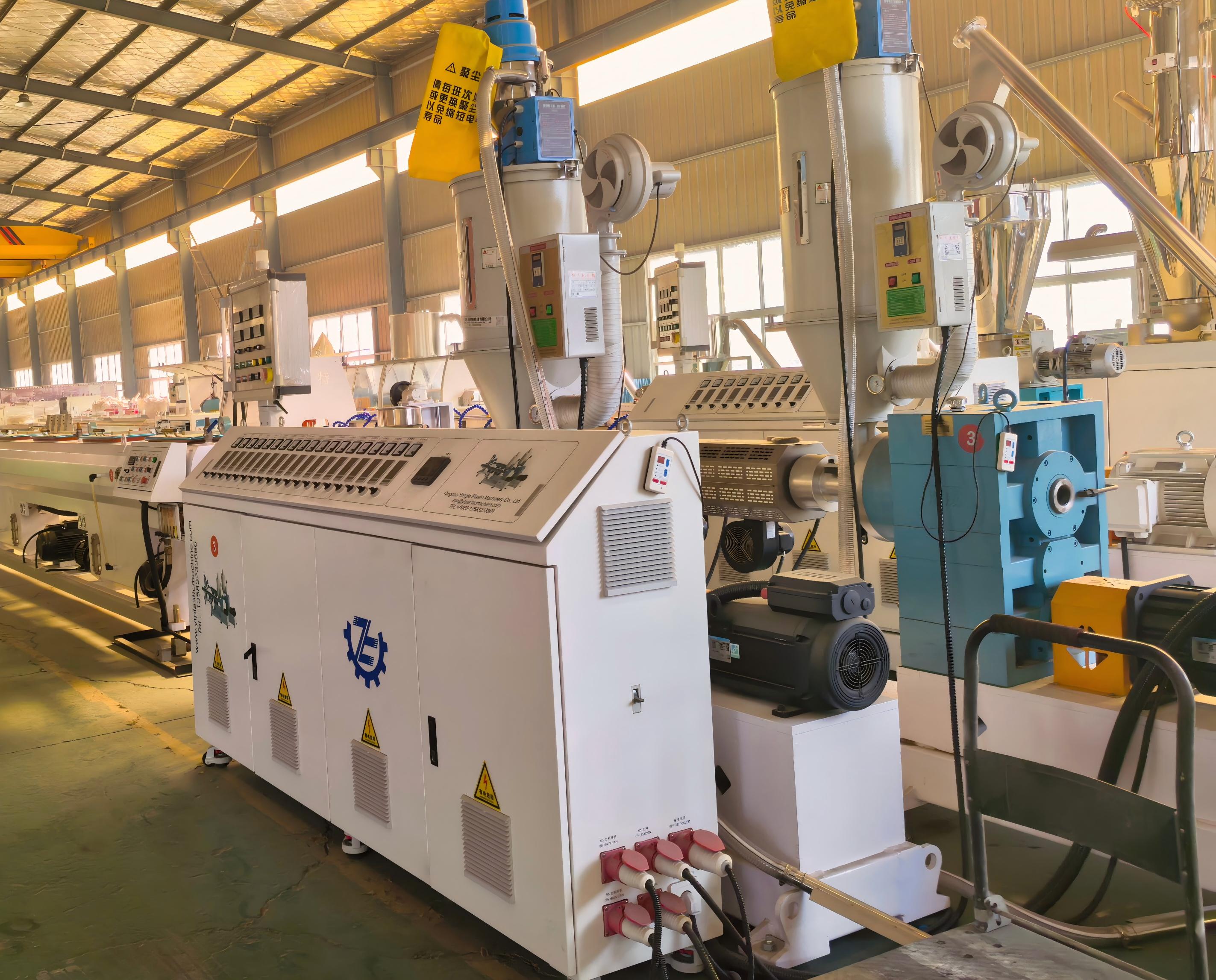
The construction industry’s sustainability challenge has a new answer. Yongte, a pioneer in plastic lumber machinery, just revealed cutting-edge recycling solutions that convert waste plastics into durable, eco-friendly building materials. Could this be the turning point for green construction?
Turning Plastic Waste into Sturdy Building Blocks
Plastic waste, often seen as an environmental curse, is finding a second life as a robust construction material. Through a process that combines sorting, shredding, and compressing mixed plastics, discarded bottles and packaging are transformed into dense, durable blocks that rival traditional bricks in strength. These blocks not only divert tons of refuse from landfills and oceans but also require no binding agents, relying on heat and pressure to fuse the polymers. The resulting product is lightweight yet tough, resistant to water and pests, and can be cut or shaped just like wood. It’s a straightforward upcycling approach that turns a pollutant into a practical resource for shelters, walls, and even furniture.
The technology behind this transformation is surprisingly accessible. Small-scale workshops and community projects can adopt the machinery with relative ease, empowering local recycling initiatives. The production process emits fewer greenhouse gases compared to conventional concrete or clay bricks, making it a greener alternative. Moreover, the blocks’ modular design allows for quick assembly without specialized skills, which proves invaluable in disaster-prone regions or low-income areas where affordable housing is scarce. Each block tells a story of material redemption, proving that with the right technique, the lifespan of single-use plastics can be extended indefinitely.
Beyond housing, these plastic-based blocks are sparking innovation in landscape architecture and temporary structures. Their vibrant colors, derived from the original waste, can be mixed to create decorative patterns or left as a statement about consumer culture. Some architects are even combining them with natural fibers to improve insulation, pushing the material’s versatility further. The shift from single-use to structural use underscores a crucial lesson: our discarded items hold untapped potential. By reimagining waste as a resource, communities can build more sustainably and challenge the throwaway mindset that created the plastic crisis in the first place.
Inside the Machine That Reshapes Recycling
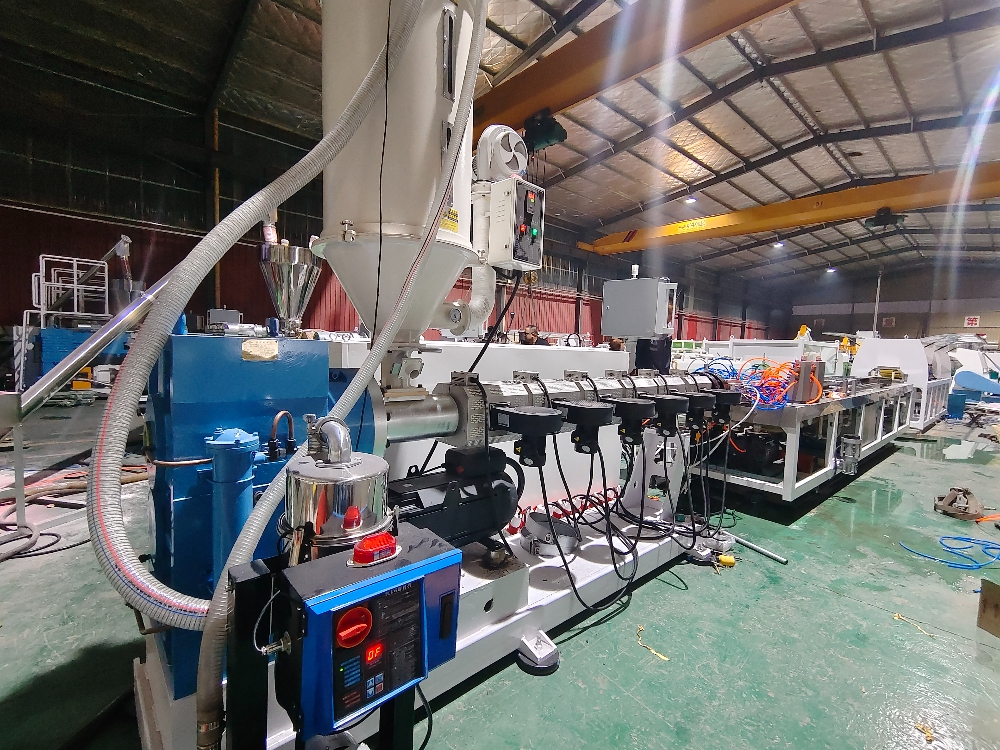
Step into the heart of a sprawling facility where conveyor belts hum and optical sorters flash, and you'll witness a machine that feels less like a piece of industrial equipment and more like a living organism, tirelessly reinventing the way we reclaim materials. This isn't just about crushing cans and baling cardboard—it's a symphony of sensors, magnets, and air jets that dissect a chaotic stream of waste with surgical precision. Every fragment of plastic, glass, and metal is identified, separated, and rerouted in a fraction of a second, turning what was once a mangled mess into a pristine resource stream ready for its next life.
The machine's intelligence lies in its ability to learn and adapt, mimicking the keen eye of a veteran sorter but operating at a scale no human could match. Near-infrared beams scan each object, reading its chemical fingerprint, while eddy current separators fling non-ferrous metals away as if by magic. It's a dance of physics and computation, where algorithms constantly refine themselves based on the river of refuse flowing through. The result is a system that not only boosts recovery rates but also uncovers value in materials once deemed too complex or contaminated to recycle, challenging our very definition of waste.
Yet for all its sophistication, the machine remains deeply connected to the human stories swirling around it. It hums in the background of a shifting economy where repair cafes and upcycling studios are gaining ground, reminding us that technology alone can't fix a throwaway culture. The real reshaping happens when this mechanical marvel is paired with community buy-back programs and design-for-disassembly principles, creating a feedback loop where every bottle returned or appliance stripped for parts feeds a cycle of renewal. Inside that labyrinth of belts and bins, you don't just see recycling—you see a quiet rebellion against obsolescence, one perfectly sorted polymer at a time.
Why Their Lumber Outperforms Traditional Wood
The key lies in a proprietary treatment that fuses natural wood fibers with advanced polymers, creating a material with far greater density and dimensional stability. Unlike traditional lumber that swells, warps, or cracks with seasonal moisture changes, their product maintains its shape and structural integrity year after year, even in extreme climates.
Another edge is the uniform consistency across every piece. Traditional wood often contains knots, grain irregularities, and hidden defects that can compromise strength or appearance. Their manufacturing process eliminates these variables entirely, resulting in boards that are not only straighter and smoother but also up to three times more resistant to impacts and scratches—without the need for heavy maintenance or toxic sealants.
Finally, the performance advantage shows in long-term wear. Where traditional decks and siding fade, splinter, or succumb to insect damage, their lumber's engineered surface resists UV degradation, moisture absorption, and pest infestation so effectively that it carries warranties decades longer than standard treated wood, often outlasting the structures themselves.
Cutting Carbon Without Compromising Quality
Reducing carbon footprint often comes with the fear of diluting product excellence, but smarter engineering is flipping that narrative. By rethinking material sourcing and embracing precision manufacturing techniques, companies can lower emissions while actually improving durability and performance. For instance, recycled aluminum now matches virgin quality, yet requires 95% less energy to produce—a win that shows sustainability needn’t mean sacrifice.
Energy efficiency is another lever that cuts carbon and boosts consistency. Using on-site renewables and smart sensors, production lines minimize waste heat and idle time, resulting in tighter tolerances and fewer defects. This operational discipline not only shrinks the environmental impact but also delivers a more reliable product, proving that eco-conscious shifts can elevate, not erode, quality standards.
Design choices play an equally pivotal role. Modular construction and repairable components extend product life while reducing the need for virgin materials. When brands prioritize longevity and end-of-use recovery, they curb emissions across the value chain—and customers get a superior, future-proofed product. It’s a seamless blend of practicality and progress that redefines what premium means in a climate-aware world.
Real Projects Built on Recycled Strength
There’s a quiet revolution happening in construction and design, where resilience isn’t just engineered—it’s scavenged. From decommissioned ships turned into floating schools in Bangladesh to old subway cars transformed into artificial reefs off the coast of Delaware, these projects don't just reuse materials; they carry forward a kind of brute endurance that new resources often lack. The steel in a retired cargo vessel has already weathered decades of storms, and when it becomes the backbone of a bridge or a coastal barrier, that legacy of survival is woven into the new structure. It’s a stubborn, practical poetry: building with pieces that have already proven they can take a beating.
What makes these initiatives truly compelling is how they blend necessity with ingenuity. In regions where fresh concrete and virgin timber are luxuries, people turn to what’s available—busted tires for retaining walls, shipping containers for clinics, discarded bottles for lighting. But even in affluent cities, architects are embracing this mindset, not out of scarcity, but because reclaimed materials bring a story and a texture that can't be faked. A community center built from salvaged factory beams feels grounded in a way that a glossier structure never could. The result isn't just sustainable; it's stubbornly, beautifully gritty.
Beyond the hardware, there's a human dimension: these projects often become anchors for local pride. They’re tangible proof that what’s been cast aside can be reborn as something essential. Neighborhoods that were once dumping grounds are transformed when that same rubble becomes part of a public library or a storm-resistant shelter. The strength here isn’t just physical—it’s the collective muscle of a community that’s learned to make do, then make remarkable. In a world obsessed with newness, these structures stand as monuments to the enduring power of the already broken-in.
The Next Wave of Green Construction Materials
In an era where sustainability is no longer a niche concern but a global imperative, the construction industry is undergoing a quiet revolution. A fresh wave of materials is emerging—not simply as incremental improvements, but as fundamental rethinks of how we build. Think beyond recycled steel and low-VOC paints; we’re now seeing biogenic materials that actively sequester carbon, self-healing concretes infused with bacteria, and transparent wood that could replace glass while offering better insulation. These aren't lab curiosities anymore. They're hitting job sites, reshaping supply chains, and challenging long-held assumptions about what buildings can be.
What makes this new generation truly different is its relationship with living systems. Mycelium composites, grown from fungal networks, are being molded into sturdy, fire-resistant panels that decompose safely at end of life. Algae-embedded façades generate energy and filter air, blurring the line between structure and organism. It’s a shift from inert, extractive materials to responsive, regenerative ones—where the building doesn’t just have less impact, but actively contributes to its environment. Early adopters are discovering that these materials often come with unexpected perks: lighter weight, better acoustics, or the kind of tactile warmth that concrete and steel never provided.
Of course, adoption isn't as simple as swapping one product for another. Building codes, insurance models, and trade skills all lag behind the innovation. The most successful projects are those that treat these materials not as drop-in replacements, but as catalysts for rethinking design from the ground up. As more data rolls in from pilot projects—office buildings with hempcrete envelopes, schools using cross-laminated timber, infrastructure repaired with bio-concrete—the narrative is shifting from risk to resilience. The next wave isn’t just about greener ingredients; it’s about a more intelligent, adaptive, and ultimately more human built environment.
FAQ
The growing demand for sustainable building practices and the urgent need to reduce plastic waste pushed the team to innovate. They saw a clear gap in the market where durability and eco-friendliness could meet without compromise.
Instead of simply melting and remolding, our system integrates advanced filtration and pressure techniques to remove contaminants more effectively. This results in a material that's almost indistinguishable from virgin plastic lumber in strength and appearance.
Absolutely. The high-efficiency process ensures structural integrity that meets rigorous industry standards. It's been tested for use in decking, framing, and even outdoor furniture that requires significant load support.
The system is versatile, handling everything from post-consumer HDPE containers to industrial LDPE film. It even processes mixed plastics that typically end up in landfills, turning them into consistent, usable lumber profiles.
Yes, it's designed to outperform traditional wood in outdoor environments. It doesn't rot, warp, or attract termites, and the color stabilization additives protect against UV degradation for decades.
Our closed-loop system uses approximately 60% less energy than producing new plastic lumber from petrochemicals. Plus, the localized recycling model slashes transportation emissions by using waste collected nearby.
The extrusion dies are customizable, so we can create standard dimensional lumber, custom profiles for cladding, tongue-and-groove planks, and even hollow sections for utility conduits—all from the same compact machine line.
We're piloting micro-factories in several municipalities, where residents can bring sorted plastic waste and see it transformed into benches, fences, or modular building components for local projects. The goal is to make recycling tangible and directly beneficial.
Conclusion
A growing number of construction companies are turning to an unexpected resource—plastic waste—as the raw material for durable building products. The Plastic Lumber Machine Company has engineered a series of high-efficiency recycling systems that transform discarded bottles, films, and industrial scrap into structural-grade lumber. Unlike conventional recycling that downgrades material quality, their process preserves polymer integrity while churning out beams, posts, and planks that rival hardwood in strength and durability. Inside their flagship machinery, a tightly controlled melt-filtration system removes contaminants and blends mixed plastics into a homogenous matrix, which is then extruded under high pressure into solid profiles. The result is a material that resists rot, splintering, and insect damage far better than wood, and requires no toxic preservatives.
What truly sets this approach apart is its immediate climate benefit: every ton of plastic lumber locks away carbon that would otherwise be released through incineration or decomposition, and production emits significantly less CO₂ than harvesting and milling timber. Testing shows the recycled boards can withstand decades of harsh outdoor exposure without warping or fading, making them ideal for decking, fencing, and even structural framing. Real-world projects—from boardwalks in coastal parks to retaining walls in flood-prone areas—are already proving the material’s resilience. As the industry faces pressure to reduce its carbon footprint without sacrificing performance, these advanced recycling solutions are paving the way for a new generation of green construction materials that turn a global waste crisis into a reliable, high-performance building stock.
Contact Us
Contact Person: Ms Qin
Email: [email protected]
Tel/WhatsApp: 8613583233866
Website: https://www.yongteplast.com