
Plastic Pipe Machine Solutions: Advanced Technologies for Efficient Production
2026-07-24
The demand for high-quality plastic pipes is surging, driving manufacturers to seek smarter production methods. Enter Yongte — a pioneer in advanced pipe machine technology. From energy-efficient extrusion lines to intelligent automation, discover how Yongte’s solutions elevate productivity without compromise.
The Heart of the Line: Next-Gen Extruders That Never Miss a Beat
In the relentless rhythm of production, the extruder isn't just another component—it's the conductor of the entire symphony. Modern extrusion systems now integrate adaptive torque control and real-time melt pressure monitoring, ensuring each layer emerges with unwavering consistency. Gone are the days of intermittent surges or thermal runaway; these units self-correct before deviations even register on conventional sensors, turning potential downtime into a seamless continuation of throughput.
What truly sets the latest generation apart is their predictive maintenance intelligence. By embedding vibration analysis and thermal imaging directly into the screw and barrel assembly, these extruders learn the unique harmonics of your operation. They don't just react to wear—they anticipate it. A slight drift in backpressure triggers an automated purge routine, while an anomaly in motor current draws immediate attention to the entry zone, preventing clogs before they form. It's proactive precision that keeps the line moving, quarter after quarter.
Powering Down Costs: How Newer Machines Slash Energy Bills
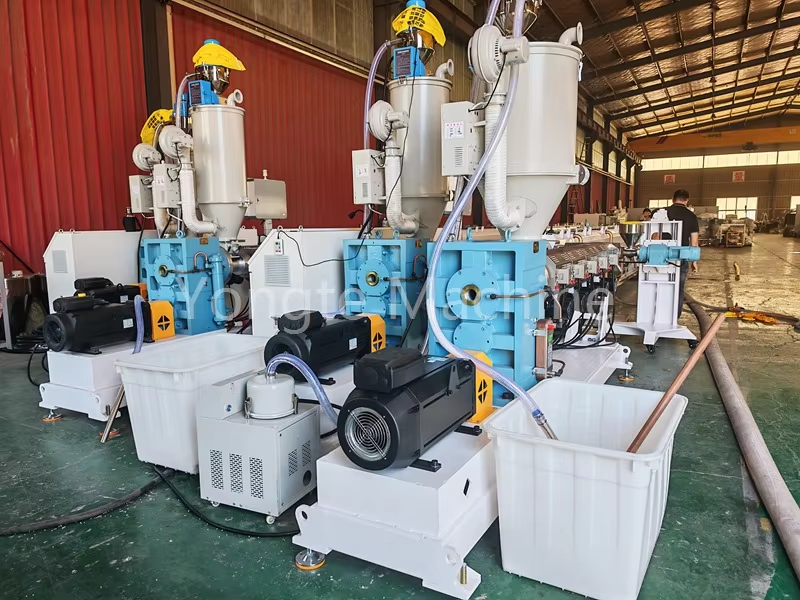
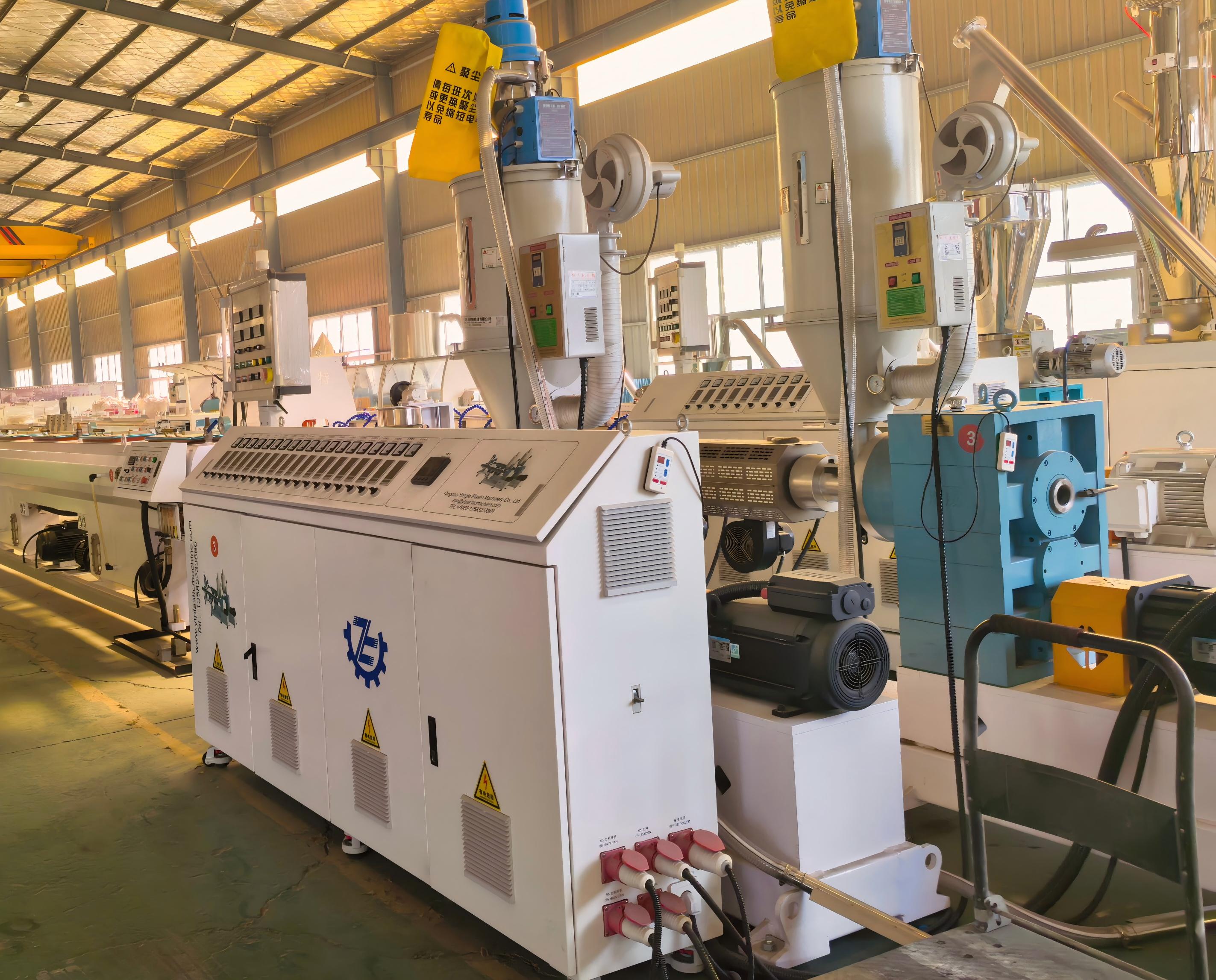
Older industrial equipment often operates with a brutal kind of inefficiency—drawing more power than needed, even during idle cycles, and converting much of that energy into waste heat rather than productive work. These hidden losses pile up month after month on utility statements, eating into margins in ways that aren’t always obvious until a detailed audit is performed. Newer machines, by contrast, are engineered with energy recovery systems, variable-speed drives, and smarter standby modes that collectively trim consumption by 30% or more. It’s not just about having a higher efficiency rating on paper; it’s about how the machine actually behaves across an entire shift, ramping down when full power isn’t required and waking up instantly without the wasteful spikes of older designs.
The shift to modern equipment also brings a quieter, cooler factory floor—benefits that directly lower HVAC and cooling costs. Many facility managers overlook how much of their air conditioning load comes from fighting the heat thrown off by motors and control cabinets. When you swap a bank of legacy machines for current-generation models, the drop in ambient temperature can be remarkable, sometimes allowing a downsizing of the cooling infrastructure itself. Add in the fact that newer machines often have integrated power monitoring, and you get a real-time window into consumption that makes it far easier to spot anomalies or schedule high-energy tasks during off-peak rate windows. That kind of visibility turns energy from a fixed overhead into something you can actively manage.
Beyond the immediate kilowatt-hour savings, there’s a reliability dividend that compounds these benefits. Older machines, especially those with worn bearings, misaligned components, or aging insulation, don’t just use more power—they’re prone to sudden failures that trigger emergency repairs, overtime labor, and rushed shipping charges for parts. A new machine’s tighter tolerances and predictive maintenance capabilities mean it stays within its optimal efficiency band longer, avoiding the gradual drift that quietly pushes energy use upward. Over a five- or ten-year lifecycle, the avoided downtime and lower maintenance spend often rival the direct energy savings, making the upgrade decision less about a single line item and more about reshaping the total cost of ownership.
Hands-Off Production: When Automation Does the Heavy Lifting
Modern manufacturing is undergoing a quiet revolution. Walk into a smart factory and you might see robots gliding along marked paths, arms articulating with precision while human operators monitor dashboards from a control room. The days of manual assembly lines, muscle strain, and repetitive strain injuries are fading as automated systems take over the physical grunt work. It’s not about replacing people—it’s about shifting their role from doers to orchestrators. Machines now handle the heavy lifting, the precise welding, and the endless sorting, leaving humans free to focus on oversight, quality checks, and creative problem-solving.
The real beauty of hands-off production is consistency. A robotic arm doesn’t tire after the 500th cycle, doesn’t lose focus, and doesn’t vary the torque on a bolt by a fraction of a Newton. This reliability translates directly into fewer defects and less material waste. For businesses, that means tighter margins, faster turnaround, and the ability to scale without a linear increase in labor costs. The systems are also programmable: switch out a fixture, upload new instructions, and the same line that was making car parts can start producing medical devices the next day. Lean manufacturing principles finally have the technological backbone they always needed.
Of course, this shift requires a different kind of workforce. Operators become technicians, learning to diagnose sensor anomalies and tweak software parameters rather than turning wrenches. The environment improves too—quieter, cleaner, and safer. When heavy machinery does the dangerous jobs, workplace accidents plummet. And as automation becomes more accessible, even smaller shops are adopting cobots that slot right into existing workflows. Hands-off doesn’t mean hands-off control; it means hands-on intelligence, applied where it counts.
From Pellet to Perfection: Smarter Material Handling Techniques
The journey from raw polymer pellets to flawless finished products is fraught with potential pitfalls, many of which originate in the material handling phase. Even minor inconsistencies in conveying, drying, or blending can cascade into visible defects, dimensional instability, or compromised mechanical properties. Smarter handling isn’t just about moving material faster—it’s about preserving pellet integrity, preventing contamination, and ensuring homogeneity at every transfer point. This means adopting gentle conveying systems that minimize fines and dust, designing layouts that eliminate dead zones where material can degrade, and integrating real-time monitoring to catch deviations before they affect production.
Modern advancements are shifting the focus from reactive troubleshooting to proactive control. Intelligent drying systems now adjust parameters on the fly based on actual moisture readings rather than fixed recipes, reducing energy waste and preventing over-drying. Precision blenders with mass-flow metering and automated recipe management remove the guesswork from additive dosing, drastically cutting scrap rates. Meanwhile, centralized vacuum networks with zone-based demand control optimize energy consumption while delivering consistent material flow. These technologies, when thoughtfully integrated, create a material-handling ecosystem that self-regulates, leaving little room for the operator errors that were once commonplace.
Ultimately, achieving perfection in the final part starts with respecting the pellet as an engineered raw material, not just a bulk commodity. Every scrape against a pipe wall, every moisture molecule left unchecked, every percentage point of additive variation tells a story in the molded product. By embedding intelligence into the handling chain—from railcar unloading through to the machine throat—manufacturers are turning a once-overlooked support function into a competitive differentiator. The result is not just fewer rejects, but a more predictable, efficient, and profitable operation where quality is built in from the very first pellet.
Built Tough: Why Uptime Matters and How Top Lines Deliver
When a production line grinds to a halt, the cost isn’t measured just in repair bills—it’s the orders that ship late, the crews standing idle, and the trust that quietly erodes. Every unscheduled minute of downtime eats into margins that are already razor-thin, turning what should be a predictable operation into a scramble. In sectors where timelines are non-negotiable, reliability becomes the quiet backbone of profitability, yet it’s often taken for granted until a critical bearing seizes or a drive fails without warning.
The machines that run around the clock don’t get there by accident. They’re built with over-spec’d frames, sealed electrical enclosures that laugh off dust and moisture, and components chosen for endurance rather than just upfront price. Smart sensors embedded in key points monitor vibration, temperature, and load cycles, flagging subtle shifts long before they become breakdowns. This isn’t about piling on complexity—it’s about engineering out the single points of failure so that a conveyor or pump keeps humming through shifts that would break lesser equipment.
Maintenance on a top-tier line feels less like firefighting and more like a pit stop. Quick-access panels, common fastener sizes, and onboard diagnostics turn what used to be hour-long teardowns into fast, targeted fixes. When a line is designed with the mechanic in mind, planned downtime shrinks and the unplanned kind all but disappears. That’s the real payoff: a line that doesn’t just survive the daily grind but thrives in it, giving operators the confidence to push harder without glancing nervously at the clock.
Your Pipe, Your Way: Flexible Systems for Niche Markets
In the world of industrial infrastructure, there's no room for a one-size-fits-all mindset. When your operation doesn't fit the mold, you need piping solutions that bend—sometimes literally—to your needs. That’s where flexible, customizable systems come into play, letting you tailor everything from material composition to bend radius, so you're not forced to make compromises on performance or safety. Rather than wrestling with rigid standard components, you get a setup that aligns perfectly with the quirks of your process, whether it's handling abrasive slurries, high-purity chemicals, or tight installation spaces that standard parts can’t navigate.
What sets niche-market systems apart isn't just the ability to choose a longer hose or a different fitting. It’s a deep collaboration with engineers who understand that your success hinges on subtle details—like how a slight change in polymer composition affects chemical resistance over years of cycling temperatures, or how a custom-designed flange face can eliminate leak points in critical vacuum lines. This level of attention turns a commodity product into a strategic asset, reducing downtime, simplifying maintenance, and often slashing total lifecycle costs. Instead of making your process fit someone else's catalog, you get a partner who listens and builds around your actual workflow constraints.
Real flexibility also means thinking beyond today. Niche applications often evolve—new regulations, changing feedstocks, or scaling demands—and a truly adaptable system grows with you. Modular designs with quick-connect interfaces let you reconfigure lines without major retrofits. Off-the-shelf may be tempting, but when your reputation depends on consistent output in a demanding corner of the market, having pipework that feels like it was designed specifically for your facility isn't a luxury—it's just good sense.
FAQ
Several key advancements are driving efficiency, including real-time wall thickness control systems that use ultrasonic sensors, adaptive melt pressure regulation, and automated die-centering mechanisms. These technologies minimize material waste and reduce manual adjustments.
Co-extrusion allows combining different materials in distinct layers, such as an inner antimicrobial layer, a middle reinforced layer, and an outer UV-resistant layer. This enhances durability, chemical resistance, and overall longevity without a significant cost increase.
Yes, modern lines incorporate servo-driven haul-offs, efficient barrel heating with insulated covers, and optimized screw geometries for lower melt temperatures. Some systems even recover heat from cooling processes, cutting energy use by up to 20%.
Automated systems continuously monitor diameter, ovality, and surface defects using laser or camera-based inspection. Closed-loop feedback instantly adjusts parameters like screw speed or puller force to maintain tight tolerances, ensuring every meter meets spec.
Many machines now feature tool-less die changes, quick-clamp calibrators, and recipe-based controls that recall full parameter sets. Operators can complete a changeover in under 15 minutes, significantly boosting overall equipment effectiveness.
A virtual replica of the entire line simulates start-ups, material variations, and what-if scenarios. This allows operators to optimize settings offline, reduce trial runs, and predict maintenance needs before they cause downtime.
Advanced vacuum spray tanks with independent zone control and high-flow water circuits provide uniform cooling without creating thermal stresses. Some designs also feature vacuum sizing at multiple stages, ensuring perfect roundness and surface finish.
Machines must be tailored to handle specific resins like HDPE, PP-R, or PVC-O. This involves corrosion-resistant coatings for abrasive materials, special screw coatings for shear-sensitive polymers, and melt filtration systems that prevent contaminants from reaching the die.
Conclusion
Modern plastic pipe extrusion lines have evolved into highly integrated systems where next-generation extruders form the beating heart of production. Advanced screw designs and precision temperature controls ensure consistent melt quality at higher throughputs, while direct-drive motors eliminate gearbox maintenance and deliver energy savings. These machines are engineered to run continuously without missing a beat, reducing scrap and maximizing output. Meanwhile, smarter material handling techniques—from pellet conveying to dosing and blending—guarantee that every gram of raw material is used efficiently, turning pellets into perfection with minimal waste. The adoption of gravimetric feeding and in-line recycling further optimizes resin consumption, contributing to both sustainability and cost control.
Energy efficiency is no longer an afterthought: newer machines slash utility bills through optimized barrel heating, regenerative drives, and standby modes that power down during pauses. Automation takes center stage as hands-off production becomes the norm—sensors, vision systems, and centralized controls handle everything from pipe diameter adjustment to quality inspection, freeing operators for higher-value tasks. Rugged construction and predictive maintenance tools drive uptime, because every hour of unplanned downtime translates into significant financial loss. Finally, flexibility is key for niche markets; modular downstream equipment and quick-change tooling allow manufacturers to pivot seamlessly between pipe sizes, materials, and specialty profiles, ensuring that each customer gets exactly the pipe they need, their way.
Contact Us
Contact Person: Ms Qin
Email: [email protected]
Tel/WhatsApp: 8613583233866
Website: https://www.yongteplast.com