

Professional Twin Screw Extruder Essentials for High-Quality Compounding
2026-08-06
Getting high-quality compounding right isn’t just about the recipe — it’s about the machinery that brings it to life. Twin screw extruders are at the heart of modern processing, yet their real potential is often overlooked. Whether you’re refining polymer blends or scaling up production, understanding the essentials can make or break your results. At MINGDE, we’ve seen how the right equipment transforms complexity into consistency. Let’s unpack what truly matters when it comes to these workhorses of the industry.
Screw Design Nuances That Dictate Mix Quality
The geometry of a screw can make or break the homogeneity of your melt. It’s not just about moving material forward—flight depth, pitch, and the shape of the mixing elements directly control how polymers shear, stretch, and recombine. A shallow channel might build pressure quickly but starve dispersive mixing, while an aggressive barrier flight can trap unmelted pellets unless it’s tapered with a specific relief angle. The devil is in the transition zone, where solid-bed breakup has to happen at just the right rate; too fast and you’ll get temperature spikes, too slow and you’ll end up with soft spots in the extrudate.
Distributive and dispersive mixing demand contradictory geometries, and finding the sweet spot means juggling trade-offs. Wide, deep channels encourage gentle folding but won’t tear apart agglomerates. Sharp-edged blister rings or pineapple sections provide the intense shear needed for color concentrates, yet if they’re spaced too close together, residence time distribution narrows until the screw behaves like a plug-flow reactor—great for temperature control, terrible for blending high-viscosity additives. Even the helix angle of the metering section influences how much back-flow recirculates material, effectively tuning the time it spends under shear. You’re not just designing a component; you’re choreographing a chaotic dance where every millimeter of flight land changes the tune.
Materials react differently to the same screw, so what works beautifully for polyethylene can be a disaster for hard-to-mix engineering resins. Fillers like glass fiber abrade flight tips and call for hard facing or wider clearance, which in turn reduces shear input. That’s when multi-flighted sections or eccentric Maddock mixers become necessary—they shift the mixing mechanism from shear-driven to extensional, folding the melt without overworking it. The real nuance is in how these sections communicate: a poorly aligned transition from a distributive to a dispersive zone creates a bottleneck that isn’t visible on a datasheet but shows up as surging during production. Ultimately, mixing quality is encoded in the screw’s DNA, written by every radius, undercut, and compression ratio.
Balancing Shear and Residence Time for Heat-Sensitive Materials
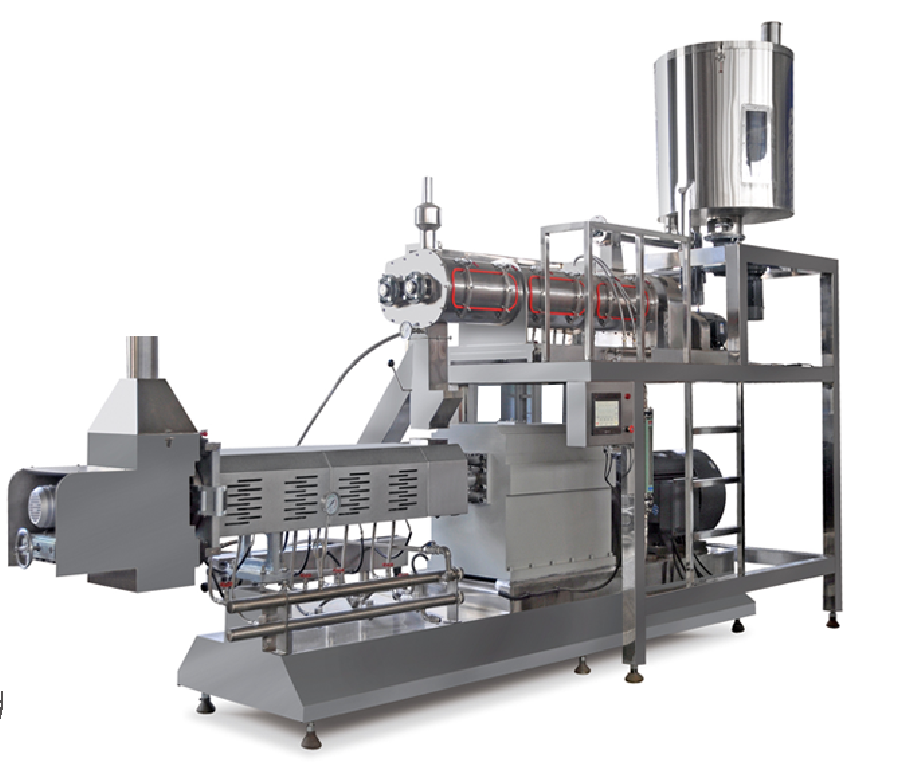
Processing heat-sensitive materials requires a careful trade-off between the intensity of mixing and the duration spent inside the equipment. High shear forces can generate localized friction that raises temperatures quickly, pushing vulnerable compounds past their thermal stability limits. Yet reducing shear too much often means relying on longer residence times to achieve homogeneity, which can equally degrade the product through prolonged heat exposure. The goal becomes finding that narrow window where mechanical energy input aligns with the material's thermal tolerance, preventing both shear-induced hotspots and time-dependent breakdown.
Equipment design plays a decisive role here. Screw configurations in extruders, for instance, can be tailored to balance dispersive and distributive mixing while minimizing unnecessary energy input. Short barrel lengths or optimized flight depths help limit how long the material stays in the heated zone. Some processes use staged temperature profiles, where the material is only brought to reaction temperature for the minimum required time, then cooled rapidly. Real-time monitoring of melt temperature and viscosity can also guide adjustments, ensuring the system stays within safe boundaries without sacrificing output quality.
Beyond hardware, formulation adjustments often provide additional margin. Incorporating lubricants or processing aids reduces internal friction, lowering the shear stress needed for flow. Pre-blending components at ambient conditions can cut down the mixing duty required inside the hot zone. It’s a continuous puzzle: every heat-sensitive formulation has its own threshold where shear and time conspire to cause damage, and successful processing depends on sensing that balance and building it into both recipe and machinery.
Feed Handling Tactics for Sticky or Low-Bulk-Density Ingredients
Managing ingredients that cling, bridge, or refuse to flow consistently demands a shift from conventional screw-feeder setups. For sticky materials like high-moisture meals or syrupy concentrates, surface friction is the real enemy—coating flights and shafts until throughput stalls entirely. One effective countermeasure is to swap standard geometry for progressive-pitch augers paired with polished, non-stick liners across all product-contact zones. Running the feeder slightly faster with a shallower fill level also prevents compaction, letting the material shear away cleanly instead of balling up into stubborn clumps.
Low-bulk-density powders—think fumed silica, spray-dried flavors, or fibrous botanicals—introduce a different headache: they aerate easily and behave more like a fluidized cloud than a settled solid. Here, vertical agitation cages mounted just above the feed screw break up ratholes without packing the material tighter. Adding a gentle vibration pulse to the hopper wall, synchronized with the auger rotation, keeps the powder column live without hammering fines through the seals. In extreme cases, vacuum-assisted drawdown through a porous screw core drags entrapped air out of the material column, raising effective density right where it matters most—inside the feed tube.
A less obvious tactic revolves around strategic pre-conditioning before the ingredient ever touches the feeder. For sticky gums, chilling the raw material just a few degrees below ambient can stiffen it enough to prevent smearing onto metal surfaces. Conversely, low-density flaky inputs sometimes benefit from a slight humidification step that adds just enough weight and surface tension to curb dusting without triggering clumping. Trial work often reveals that altering a single upstream variable—like adjusting a granulator screen size or letting a heat-sensitive powder cure longer—yields more consistent feed than any downstream mechanical fix ever could.
Venting Configurations for Moisture and Volatile Removal
Effective moisture and volatile removal hinges on tailoring venting layouts to the specific process dynamics. Rather than relying on a one-size-fits-all approach, engineers often position extraction points close to the source, where vapor concentrations are highest. This targeted strategy prevents condensation in dead zones and reduces the risk of re‑adsorption onto product surfaces. By mapping airflow patterns through computational modeling, it becomes possible to create a slight negative pressure gradient that guides fugitive emissions away from sensitive areas without wasting energy on excessive exhaust volumes.
In systems handling heat‑sensitive materials, the interplay between temperature control and vent placement is critical. A well‑designed configuration might incorporate a cascading series of vents, each activated at a different stage of the cycle. For instance, early‑stage vents handle rapid initial outgassing, while later‑stage points manage trace residuals. Some setups even integrate micro‑porous membrane vents that selectively allow water vapor to escape while retaining larger volatile organic molecules for subsequent capture. This nuanced setup keeps the processing environment stable and avoids the pitfalls of sudden pressure drops that can entrain solids or degrade delicate structures.
Maintenance reality often dictates long‑term venting performance. Build‑up of residues is inevitable, so practical configurations include sloped ductwork with accessible clean‑out ports and condensation traps that are easy to inspect and drain. Materials matter, too: corrosion‑resistant alloys or coated internals extend service life when dealing with acidic volatiles. Regularly scheduled integrity checks, supported by inline sensors that monitor flow rate and humidity, help operators fine‑tune vent positions and catch blockages before they compromise removal efficiency. It's this blend of upfront design and operational vigilance that keeps moisture and volatile levels consistently in check.
Material and Coating Choices to Combat Abrasive Wear
When dealing with abrasive environments, the instinct is often to reach for the hardest material available, but this oversimplifies a complex problem. Hardness alone can lead to brittleness, causing cracking or spalling under impact. Instead, a combination of hardness and toughness usually yields better results. For instance, high-chromium white irons offer excellent abrasion resistance due to their carbide volume, but they can be brittle. Manganese steels, on the other hand, work-harden under impact, making them ideal for heavy pounding applications like crusher jaws. The key is matching the material's properties to the specific wear mechanism—whether it's low-stress scratching, high-stress grinding, or gouging.
Coatings provide a way to upgrade a component's surface without changing the underlying material. Thermal spray coatings, like tungsten carbide or chromium carbide, are popular for resisting sliding abrasion at elevated temperatures. Hard chrome plating is another traditional option, but it has environmental drawbacks and may spall under heavy point loads. More recently, physical vapor deposition (PVD) coatings such as titanium nitride (TiN) or chromium nitride (CrN) offer a thin, hard barrier that reduces friction and wear on cutting tools and dies. The challenge with coatings is ensuring strong adhesion and managing the mismatch in thermal expansion between the coating and substrate, which can cause delamination. A well-chosen coating can dramatically extend service life, but it's not a one-size-fits-all solution.
Polymers and elastomers might seem surprising choices for abrasive wear, but they excel in certain wet, corrosive environments where metals would degrade quickly. Polyurethane, for example, is remarkably resistant to sliding abrasion and impact in slurry handling equipment. Rubber linings in mills and chutes can outlast steel because they absorb impact and let particles bounce off rather than cut into the surface. Ceramics, too, have their place—alumina tiles are often used to line high-wear areas in pneumatic conveying systems. The art lies in combining materials: a steel structure for strength, a rubber layer to absorb shock, and a ceramic facing to resist the abrasion. No single material wins every battle; it’s about smart compromises for the specific conditions.
Streamlining Scale-Up from Lab to Production Throughput
Successful scale-up hinges on recognizing early that lab conditions rarely mirror production realities. The idealized environment of a benchtop reaction—precise temperature control, uniform mixing, and minimal external variables—can mask factors that become critical at larger volumes. By embedding process characterization studies alongside early-stage development, teams can identify sensitivity to parameters like heat transfer, mixing dynamics, or reagent quality long before they threaten production timelines. This proactive approach not only flags potential bottlenecks but also builds the data foundation needed to justify equipment choices and avoid costly rework.
A common misstep is treating scale-up as a linear multiplication of inputs rather than a holistic process redesign. Throughput depends on more than reactor size; workflow integration, material handling, and analytics turnarounds all compound as volume increases. Mapping the end-to-end sequence—from raw material intake to final purification—reveals hidden constraints that lab-scale thinking can overlook. For instance, a filtration step that takes minutes at gram scale can dominate cycle time once batches reach kilograms, demanding a switch from manual to automated systems. Addressing these interdependencies early keeps the entire chain balanced and output predictable.
Leveraging modular equipment configurations further smooths the transition. Instead of committing immediately to fixed, large-scale infrastructure, using skid-mounted units or flexible reactor trains allows teams to dial in throughput gradually while gathering real-world performance data. This incremental strategy refines operating ranges and standardizes procedures before full capital expenditure, turning scale-up from a high-stakes gamble into a managed evolution. When process understanding, workflow alignment, and modular deployment come together, the path from lab discovery to consistent production throughput becomes not just feasible, but reliably repeatable.
FAQ
A twin screw extruder is a machine that uses two intermeshing, co-rotating or counter-rotating screws inside a heated barrel to continuously mix, compound, and shape materials. Raw ingredients are fed into the barrel, where the rotating screws convey, melt, blend, and pressurize the material, forcing it through a die to create a uniform product. The intermeshing design ensures excellent mixing and heat transfer.
Twin screw extruders provide superior dispersive and distributive mixing due to the intermeshing screws, which create high shear and elongation forces. They handle a wider range of materials, including heat-sensitive additives, with better temperature control and shorter residence times. Their self-wiping screw profiles minimize material stagnation and degradation, resulting in more consistent product quality.
Key design factors include screw diameter, length-to-diameter ratio, screw element types (conveying, kneading, mixing), barrel modularity, and venting options. The drive motor power and screw speed range should match the material’s rheology. Materials of construction for screws and barrels must withstand wear and corrosion, especially when processing abrasive or corrosive compounds.
Twin screw extruders are widely used in plastics compounding, masterbatch production, pharmaceutical hot melt extrusion, food processing, and advanced materials like biopolymers and composites. They are essential for incorporating fillers, reinforcing fibers, pigments, and functional additives into polymers with precise dispersion.
Optimization involves balancing screw speed, feed rate, barrel temperature profiles, and screw configuration. Higher screw speeds increase shear but may cause overheating; proper temperature zoning ensures controlled melting and mixing. Adjusting feed rates and using appropriate screw elements for melting, dispersion, and degassing help achieve desired morphology and properties without degrading the material.
Regular maintenance includes cleaning screw elements and barrel walls to prevent material buildup, inspecting wear on screw flights and barrel liners, checking gearbox oil levels and condition, and monitoring seal integrity. Establishing a preventive schedule based on throughput hours, and promptly replacing worn parts, avoids downtime and preserves mixing efficiency.
Conclusion
A twin-screw extruder’s heart is its screw configuration, where subtle adjustments in flight geometry, mixing zones, and pitch directly determine how uniformly additives disperse and distribute. For heat-sensitive compounds, this demands a precise equilibrium: enough shear to break agglomerates without introducing excessive temperatures, often managed through carefully staggered kneading blocks and smart barrel heating strategies. Sticky, fluffy, or low-bulk-density powders further complicate the feeding stage; they may need crammer feeders or special hopper agitation to maintain consistent intake without bridging. These interconnected choices set the foundation for stable, high-quality output.
Beyond the screws, venting design proves equally decisive. Strategically placed open ports under vacuum extract trapped moisture and residual monomers, but the melt seal upstream must be tight to prevent surging or powder leakage. Abrasive fillers like glass or mineral fibers accelerate wear, pushing processors toward hardened steels, bi-metallic alloys, or sacrificial coatings that safeguard tight clearances over thousands of hours. Finally, scaling from lab to full production isn’t merely about larger barrels—it’s about replicating shear history and energy intensity. Maintaining consistent tip speed and torque density while adjusting channel depths ensures the compound’s properties translate without costly rework.
Contact Us
Contact Person: LILY SUN
Email: [email protected]
Tel/WhatsApp: 0086-13969103791
Website: https://www.snackfoodmachinery.com/