

Reliable Digital Oscilloscopes: Precision Testing for Modern Electronics
2026-05-27
In the fast-paced world of modern electronics, precision is not just a luxury—it's a necessity. Whether you're debugging a high-speed digital circuit or analyzing a fragile analog signal, the tools you use can make or break your project. That's where TPS digital oscilloscopes step in, offering unmatched reliability and accuracy. But what really sets them apart in a crowded market? Let's explore how these instruments are redefining precision testing for today's most demanding applications.
Why Signal Fidelity Remains the Cornerstone of Reliable Testing
Testing environments live and die by the accuracy of the signals they process. When a waveform drifts or a pulse edge softens, measurements lose their meaning, and decisions based on those measurements become gambles. Signal fidelity isn’t just a specification on a datasheet—it’s the difference between catching a subtle timing violation and letting a latent defect slip through. Every bit of attenuation, every reflection, every nanosecond of jitter chips away at the confidence you can place in your results. Without it, even the most advanced test setup is just a collection of expensive guesswork.
Maintaining that crispness from source to sink demands more than just premium cabling. It’s a discipline that starts with understanding impedance landscapes, grounding strategies, and the analog truths that digital engineers often overlook. A high-bandwidth oscilloscope probe connected without care can turn a clean clock into a noise-infested mess. The real art lies in preserving the signal’s shape and timing so faithfully that the instrument sees exactly what the device under test is producing—nothing more, nothing less. That level of transparency is what separates consistent validation from intermittent mysteries.
In the end, reliable testing hinges on trust, and trust is earned through repeated, unshakeable correlation between the injected stimulus and the observed response. When signal fidelity is treated as the foundation, debugging sessions become shorter, compliance margins become wider, and product cycles accelerate because there’s less chasing of phantom failures. It’s not glamorous work, but it’s the quiet engine that turns prototypes into production-ready designs.
How Modern Oscilloscopes Tackle Signal Complexity Head-On
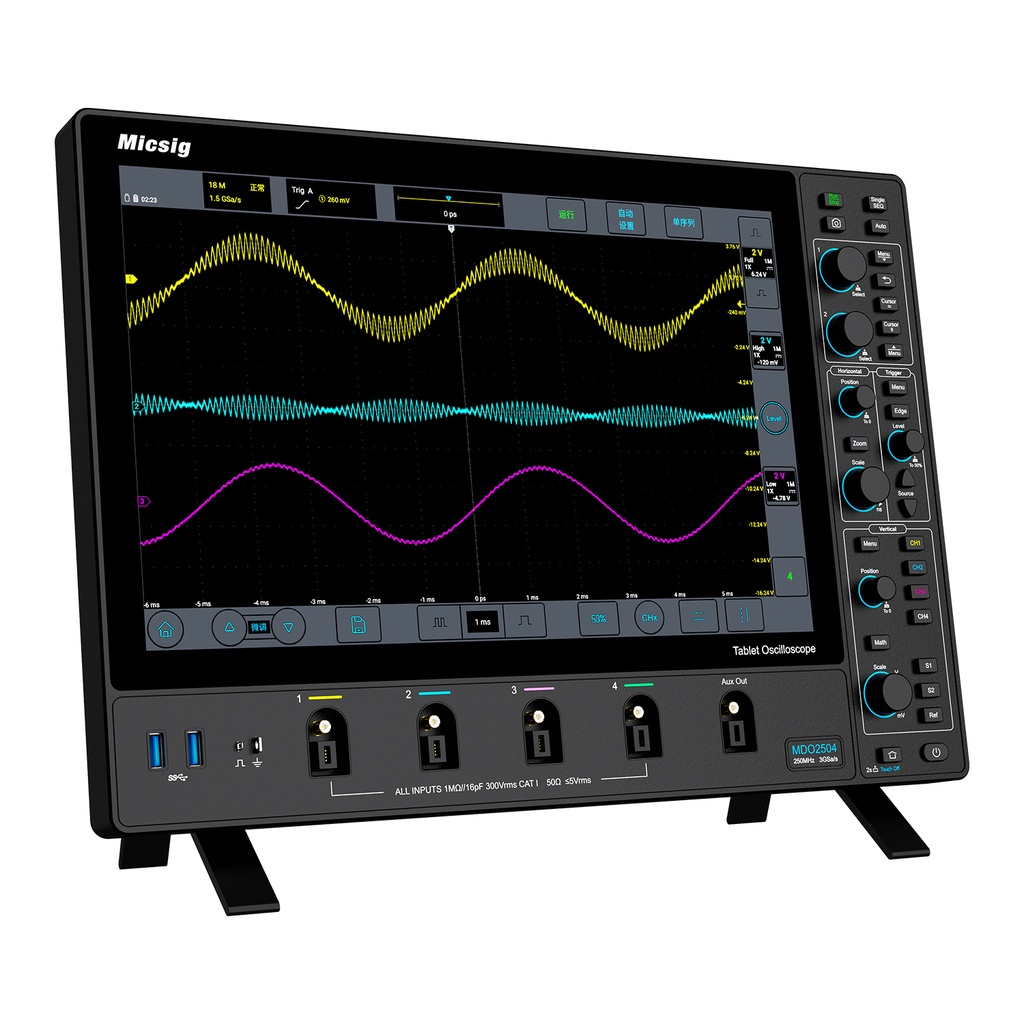
The days when an oscilloscope merely displayed voltage over time are long gone. Today’s designs face a barrage of mixed-signal, high-speed, and low-power challenges, and modern scopes have evolved into comprehensive analysis platforms. They pack multiple instruments into one box—logic analyzers, protocol decoders, jitter measurement tools—so you can dissect a signal from every angle without juggling separate gear.
Beyond raw bandwidth and sampling rate, the real breakthrough lies in how these instruments handle the unexpected. Advanced triggering systems can spot rare glitches buried in millions of cycles, while deep memory captures let you zoom into anomalies that happen microseconds apart. Meanwhile, built-in analysis software automatically measures everything from eye diagrams to power integrity, turning what used to be manual guesswork into a click-and-done process.
Perhaps most importantly, modern user interfaces bridge the gap between extreme capability and everyday usability. Touchscreens, customizable layouts, and intuitive menus mean engineers spend less time fighting the scope and more time solving problems. Coupled with remote access and collaborative features, these oscilloscopes become hubs for both bench work and dispersed teams, proving that tackling signal complexity isn’t just about hardware—it’s about making that complexity manageable.
The Critical Connection Between Bandwidth and Measurement Confidence
Every engineer knows that measurement accuracy isn't just about having the right sensor or a well-calibrated instrument. The often-overlooked factor that quietly dictates whether your data is trustworthy is bandwidth. When you push a system beyond its true bandwidth limit, you're not just losing a little detail—you're fundamentally altering the shape and timing of the signals you're trying to capture. Edges soften, glitches vanish, and what looks like a stable reading on screen might be a dangerous misrepresentation of reality. That gap between the actual signal behavior and the measured result erodes your confidence in ways that no amount of post-processing can fix.
Bandwidth limitations create a deceptive sense of security. Imagine tracking a fast transient event with a system that can't keep up: the waveform on display appears clean and well-behaved, but the physical circuit is experiencing spikes and ringing that go entirely undetected. You make design decisions based on that flawed picture—adjusting component values, tweaking layouts, signing off on a prototype—only to stumble upon real-world failures later. The culprit wasn't a bad design; it was the assumption that the measurement chain was transparent. In reality, insufficient bandwidth acts like a low-pass filter that selectively hides trouble from you, and the worst part is you won't know what you missed until it's too late.
Confidence in your measurements grows when you actively manage bandwidth as a critical variable, not an afterthought. This means going beyond datasheet numbers and understanding how your probe, cabling, and amplifier interplay at the frequencies you care about. It's about recognizing that a 100 MHz oscilloscope doesn't suddenly become useless above 100 MHz—it gradually loses amplitude accuracy and adds phase shift, slowly poisoning your results. The remedy isn't always buying more expensive gear; sometimes it's simply probing at a point with lower source impedance or compensating your leads more carefully. When you treat bandwidth as a finite resource that directly shapes the truthfulness of your data, you stop seeing it as a specification and start seeing it as the foundation of every measurement decision you make.
Unmasking Interference: Advanced Triggering for Elusive Anomalies
Tracking down rare, silent failures in complex systems demands a shift away from passive monitoring. Instead of waiting for obvious threshold breaches, we deploy finely tuned signal-processing kernels that sift through the noise in real time, pulling out the faint signatures left by subtle degradation. These kernels are designed to recognize interference patterns—momentary collisions in queuing logic, erratic clock drifts, or phantom resource contention—that conventional tools dismiss as background chatter.
The real breakthrough lies in adaptive triggering mechanisms that learn from each event without human recalibration. By continuously refining their baselines using multi-modal feature streams, they become increasingly sensitive to the specific fingerprints of elusive anomalies. This creates a feedback loop where the system not only catches more incidents but does so with far fewer false positives, preserving on-call sanity while tightening the net around genuine threats.
Implementation in high-throughput environments shows a dramatic uplift in detection rates for those hardest-to-find issues—the ones that previously lurked for weeks before surfacing in customer-facing impact. The approach turns the traditional anomaly detection model on its head: rather than being trained solely on historical failures, it proactively hunts for the interference that precedes them, effectively unmasking problems before they fully manifest.
From Lab Bench to Field Deployments: Consistency That Counts
Taking an idea from a controlled lab environment into the messy, unpredictable field is rarely straightforward. The real test isn't whether a solution works once under perfect conditions—it's whether it holds up day after day, in all kinds of weather, with real users who don't read manuals. Consistency becomes the quiet hero here. It's what turns a promising prototype into a dependable tool that teams actually trust.
Without consistency, even the most impressive lab results are just noise. We've seen brilliant concepts crumble because they couldn't replicate that same performance outside the sterile bench setting. True consistency means the hardware survives dust and vibration, the software handles intermittent connectivity, and the output remains reliable when it matters most. It's about baking robustness into every layer so that field results mirror what you saw back at the bench.
Achieving that alignment doesn't happen by accident. It demands rigorous validation cycles that simulate real-world stress early on, not as an afterthought. The teams that excel treat lab and field as two sides of the same coin, constantly feeding insights back into the design. When consistency is prioritized from the start, deploying to the field stops being a leap of faith and becomes the natural next step—one that quietly delivers, every single time.
The Evolution of Probing: Maintaining Precision at Higher Speeds
As manufacturing cycles accelerate, the demand for in-process measurement has pushed probing systems far beyond their original capabilities. Early touch-trigger probes served well at moderate speeds, but they often struggled to deliver consistent accuracy when machines moved faster. The mechanical inertia of traditional designs introduced subtle timing errors, forcing operators to choose between throughput and metrology confidence.
Modern probing technology tackles this challenge through a blend of kinematic design and signal processing. Strain-gauge-based triggers, for instance, react to minuscule deflections almost instantaneously, slashing the latency that once plagued high-velocity probing. Coupled with vibration-resistant styli and advanced data filtering, these systems now capture reliable points even when the spindle is racing, preventing the scatter that would otherwise occur from residual oscillation or thermal drift.
Looking ahead, the integration of direct machine feedback and predictive algorithms is redefining what’s possible. Instead of stopping for a conventional probing cycle, cutting tools and probes can operate in a shared space, with real-time compensation adjusting tool paths on the fly. This evolution turns the probing event from a static inspection pause into a dynamic, self-correcting loop, preserving accuracy without sacrificing a second of production time.
FAQ
A reliable digital oscilloscope combines robust build quality, consistent signal accuracy, and advanced triggering capabilities. It should maintain calibration over time and resist interference, ensuring measurements remain trustworthy even in demanding environments.
Modern electronics often involve high-speed signals and complex protocols. Digital oscilloscopes offer detailed waveform analysis, protocol decoding, and high sampling rates, helping engineers diagnose issues quickly and validate designs with greater confidence.
Look for bandwidth, sample rate, and memory depth. Bandwidth determines the maximum frequency you can measure accurately, sample rate affects time resolution, and deep memory lets you capture long signal records without losing detail.
Absolutely. With features like mixed-signal inputs and serial bus decoding, you can simultaneously view analog and digital signals, making it easier to spot timing mismatches or communication errors in microcontroller-based designs.
A dependable oscilloscope reduces downtime and the need for recalibration, minimizing delays. It also prevents measurement errors that could lead to flawed product iterations, ultimately saving money on rework and testing.
Technologies like higher-resolution ADCs, enhanced digital signal processing, and better probe interfaces have improved measurement accuracy. Some scopes now offer automated measurements and cloud connectivity for remote monitoring.
Regular self-calibration, proper probe compensation, and keeping the instrument in a controlled environment free from dust and extreme temperatures are essential. Also, updating firmware periodically helps maintain performance.
Conclusion
The foundation of any meaningful measurement lies in the oscilloscope’s ability to preserve the original signal without introducing distortion. As designs push into higher frequencies and tighter margins, even subtle degradation can lead to misinterpretation. Modern instruments rise to this challenge by combining high-fidelity front ends with sophisticated processing that maintains signal integrity under demanding conditions. It’s not merely about capturing a waveform—it’s about trust in the displayed shape. Bandwidth plays a pivotal role here: insufficient headroom can hide critical details, while generous bandwidth paired with well-engineered probes ensures that measurements reflect reality, not an artifact of the tool. This marriage of bandwidth and probing precision is what separates a quick check from a confident validation.
Yet fidelity alone isn't enough when elusive glitches corrupt a system. Advanced triggering capabilities let engineers isolate intermittent faults—whether a runt pulse or a timing violation—that would otherwise vanish in a stream of normal data. Effective debugging requires an oscilloscope that thinks like a detective, not just a recorder. And this capability must travel beyond the lab. Ruggedized instruments with consistent performance bring the same analytical depth to field troubleshooting, ensuring that a measurement taken on a factory floor holds the same weight as one on a bench. The evolution of probing complements all of this: active, low-loading probes now deliver clean signals into the oscilloscope, preserving the very details that define whether a product meets its design goals. In the end, a reliable digital oscilloscope is not just a tool—it’s the engineer’s lifeline to certainty in an increasingly complex electronic landscape.
Contact Us
Contact Person: Lily
Email: [email protected]
Tel/WhatsApp: +49 (0) 2161 49526-0
Website: https://tps-elektronik.com/en/