

Rubber Profiles Extrusion Line Exporters You Can Trust for Consistent Quality
2026-11-16
When sourcing rubber profile extrusion lines for overseas projects, consistency can make or break your production schedule. Too many extrusion line exporters promise precision, yet few back it up with machines that hold tight tolerances run after run. That’s where SFC comes in. Instead of recycled specs or vague performance claims, this guide shows what to look for in rubber profiles extrusion line exporters you can trust for consistent quality—and why SFC’s approach changes the way you plan capacity, reduce scrap, and protect delivery timelines.
Consistency Begins Before the Material Reaches the Die
A lot of attention gets paid to die geometry and compression force, but the real story starts further upstream. Variations in particle size, moisture distribution, or blend uniformity can quietly undermine even the most precisely machined die. When the feed entering the compaction zone shifts from one moment to the next, the result shows up as density drift, cracked edges, or inconsistent hardness that no downstream adjustment can fully correct.
That is why pre-conditioning and feed delivery deserve more credit. A steady, well-mixed stream gives the die a chance to do its job instead of constantly reacting to surges or segregation. Small changes in how ingredients are layered, dried, or conveyed often matter more than adjusting the die itself. Once operators start monitoring those upstream variables with the same discipline as machine settings, the final product stops swinging between acceptable and borderline.
Stable output is not something you dial in at the press alone. It is built by controlling what happens to the material long before it reaches the tooling. That could mean sieving to narrow the particle range, holding moisture within a tighter band, or slowing down a transfer step that tends to separate fines. These choices may feel less direct than adjusting pressure or speed, but they are usually what separate a process that runs predictably from one that needs constant correction.
Custom Profiles Without the Long Lead Times You Expect
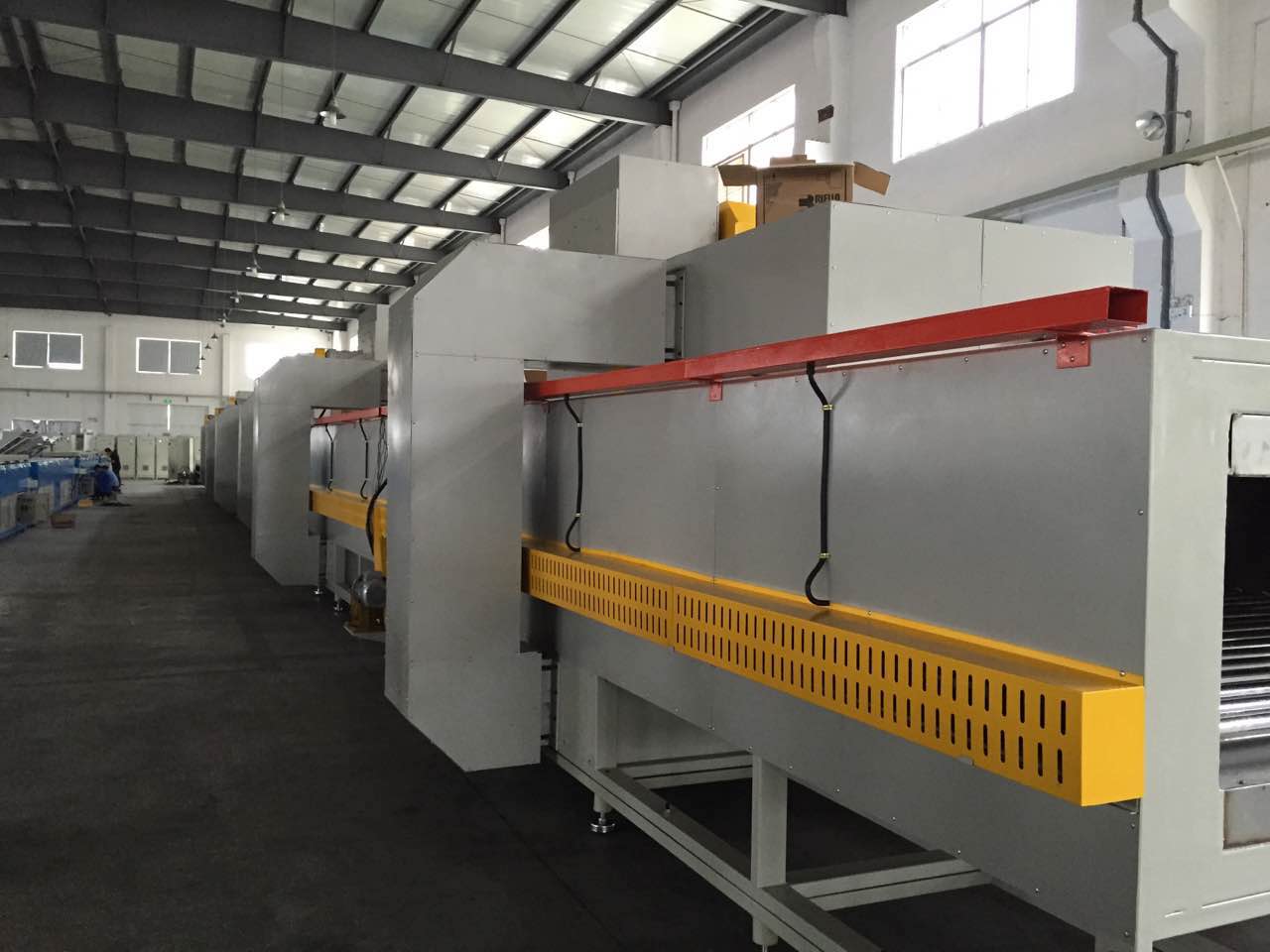
Most extrusion shops treat every custom shape as a one-off project, which is why the quoting and tooling stage alone can eat up weeks. The difference starts with a library of proven die profiles. When your part is close to an existing shape, we modify rather than build from scratch, and that cuts out the slowest part of the schedule.
There is no separate queue for "custom" work. Short runs are planned into the production week, not squeezed between large standard orders. That means sampling, finish work, and dimensional checks happen in parallel with extrusion instead of waiting for a batch window to open.
The point is not just speed. You get a profile that matches your actual load, sealing, and assembly requirements, with lead times that let you keep a lean inventory and still respond when a customer changes the timeline.
Tooling Choices That Keep Complex Shapes Within Tolerance
Getting complex contours to hold a few microns isn't about buying the most expensive end mill; it starts with matching tool reach and shank taper to the feature. Long, skinny tools chatter and spring away from deep pockets, so stepping up to a stubby necked tool with a relieved shank or using a conical barrel tool for multi-axis finishing can keep engagement predictable. Pairing that with shrink-fit or hydraulic holders rather than sidelock collets removes runout that turns a fine finish into a scrap part.
Edge geometry and coating have a bigger influence than most shops give them credit for. A sharp, high-helix edge lowers cutting force in gummy or thin-walled sections, while a tough coating like AlTiN or a diamond-based film keeps the edge stable in abrasive alloys. For freeform surfaces, choosing a ball nose with a variable pitch or chipbreaker can break up harmonics so the tool doesn't sing in corners where engagement spikes.
The toolpath needs to be dialed to the tool's sweet spot. Constant chip load strategies, trochoidal clearing, and rest machining with smaller tools only where the contour demands it keep thermal load low and prevent local spring passes from drifting out of tolerance. Measuring tool wear between roughing and finishing, then cutting the last few thousandths with a fresh finisher, is often the cheapest way to hold the profile across the entire run.
Run-Off Testing with Your Rubber Compound, Not a Placeholder
When a run-off test is set up with a generic or placeholder stock, the data may look clean but it has almost no connection to what actually happens on the line. Your compound carries its own scorch behavior, filler networking, and viscosity recovery after shear, and none of that shows up if the sample was simply pulled from a shelf. Even small differences in accelerator package or polymer ratio can shift the cure curve enough to mislead a process decision.
Running the exact production batch matters because rheometer curves are not interchangeable between recipes. A 60-durometer EPDM and a high-acrylonitrile NBR can both hit a similar Mooney range, yet their flow into a thin flash groove or a tight vent gap will be completely different. The only way to know whether a runner system is too restrictive, or whether the cavity will fill before scorch, is to feed the tool with the same material the press will see on the shift.
It also keeps troubleshooting grounded. If a trial tool is qualified on a placeholder and later fails with the real stock, you end up chasing vents, temperatures, and clamp settings that were never the root cause. Using the production compound from the start turns run-off results into something the shop floor can actually trust, and it makes the next scale-up conversation much shorter.
Export Logistics and Documentation Managed In-House
All export logistics and documentation are handled directly by our internal team, which means no waiting on third-party agents or chasing paperwork across time zones. From booking cargo space and coordinating with carriers to preparing commercial invoices, packing lists, and certificates of origin, the entire chain stays under one roof. This gives us a clear view of every shipment and lets us react quickly when schedules shift or a consignee raises a question at customs.
Keeping these functions in-house also means the people preparing your documents are the same ones tracking the shipment until it reaches its destination. There is no handoff where details can get lost. If a port holds a container for inspection or an airline changes a routing, the team adjusts the paperwork and updates the client without having to route the request through an outside broker.
For buyers, the practical benefit is fewer surprises. We control the document flow from the first draft of the proforma invoice through to the final bill of lading, so discrepancies that often delay payment or delivery are caught before they leave our desk. It is a quieter, more predictable way to handle international movement, built on direct accountability rather than outsourced convenience.
Technical Support That Speaks Extrusion, Not Just Sales
Most support lines give you a polite voice and a spec sheet. Ours tends to start with questions about barrel temperatures, screw speed, and what the melt is actually doing at the die. That is the difference when the person on the other end has run extrusion lines, not just read about them.
You might call about a surface blemish or a surging output and end up talking through back pressure, screen pack condition, or whether a worn screw flight is the real culprit. The goal is not to rush you into a replacement part. It is to help you trace the problem back to its source, even when that source is upstream from the extruder.
When a quick fix is not possible, you get straight answers about what to adjust, what to monitor, and what can wait until the next scheduled downtime. That kind of conversation only happens when support is treated as part of the engineering team, not as a handoff from a sales call.
FAQ
A dependable exporter can point to installations where output tolerances stayed tight over long runs. They usually have spare parts and service support arranged before the line ships, and they understand how your compounding recipe behaves in their equipment.
The better lines pair precise temperature control along the barrel and die with automated take-off speed adjustment. That coordination prevents wall thickness drift when ambient conditions or material viscosity change.
Automotive sealing, construction gaskets, appliance trim, and marine weather stripping are common. Each one places different demands on hardness, UV resistance, or compression set, so the line needs enough flexibility to switch without long downtime.
Ask for sample profiles produced on the exact configuration being quoted, not a demo in a lab. Also look at the control system documentation and whether the exporter includes process recipes or only hardware.
Many can, but it depends on the screw design and downstream curing setup. Sponge profiles need careful temperature staging and often a hot-air or microwave curing tunnel, so the exporter should confirm the line is specified for the foam density you need.
It matters more than most people expect. Wear on screws and barrels gradually changes output, so having access to gap checks, replacement parts, and remote troubleshooting helps bring the line back to baseline before defects appear.
After installation, commissioning might take a few weeks. The real variable is dialing in recipes for each profile. If the exporter provides process mapping and on-site training, many plants reach stable full production within four to eight weeks.
Conclusion
Trustworthy rubber profiles extrusion line exporters do not earn that label through marketing language; they earn it through decisions made before the material reaches the die. Consistency starts with how a compound is fed, warmed, and homogenised, because small changes in viscosity or temperature show up later as edge tear, dimensional drift, or poor surface finish. A reliable exporter plans the feeding zone around the compound's scorch behaviour instead of leaving operators to chase settings all shift. The same practical focus applies to custom profiles. Modular calibrators, adjustable vacuum blocks, and shared tooling inserts keep lead times short without cutting corners, so a non-standard seal or glazing gasket does not force a full new tool build. For complex shapes, die steel choice, land length, and drawdown control matter more than the profile drawing itself, since those factors keep thin lips and hollow chambers stable after cooling.
Run-off testing should use your actual rubber compound rather than a generic placeholder because shrinkage, swell, and release behaviour cannot be read from a datasheet. Exporters worth trusting schedule that trial, collect section scans and hardness readings, and adjust haul-off speed or die temperature before the line leaves the factory. Export logistics and documentation are managed in-house, which means the equipment arrives with the correct voltage, plug type, spare barrels, and customs paperwork for local compliance without last-minute surprises. After installation, technical support should discuss back pressure, melt temperature, screw speed, and die swell in practical terms, not simply push the next purchase. That depth is what separates an exporter who ships a machine from one who takes responsibility for how it performs months after commissioning.
Contact Us
Contact Person: Chen Zhengwei
Email: [email protected]
Tel/WhatsApp: +86-13963975727
Website: https://www.sfcrubbermachine.com