

Solar Insecticidal Lamp Company Leads the Way in Eco-Friendly Pest Control Solutions
2026-08-14
Picture a farm where the buzz of insects is met not with a cloud of chemicals, but with a silent, sun-powered sentinel. That's the reality SRS is bringing to fields and gardens everywhere. As the push for truly sustainable agriculture grows louder, this solar insecticidal lamp company is stepping out front—proving that effective pest control doesn't have to cost the earth. Curious how a simple lamp can change the game? Keep reading.
A Field-Tested Alternative to Chemical Pest Sprays
Growers who've spent a season or two fighting aphids with a backpack sprayer eventually start asking the same question: what actually works once the chemical loses its edge? One answer that keeps showing up in field trials is a mix of aromatic trap crops—basil, dill, and sweet alyssum tucked between rows. These plants don't just repel certain pests; they pull in parasitic wasps and hoverflies that do the heavy lifting. In side-by-side plots, this approach has cut aphid counts by more than half without a single synthetic input.
For outbreaks that need a faster knock-down, refined mineral oil or a simple soap-and-water solution applied at dawn can smother soft-bodied insects before the sun burns the leaves. The key is coverage: hitting the undersides of leaves where mites and whiteflies hide. Because these materials degrade within hours, they spare the predatory mites and lady beetles that chemical sprays often wipe out, which means the next pest generation is weaker.
Then there's the low-tech method that never gets enough credit—scouting. Walking the rows twice a week with a magnifying lens and squishing the first few aphid colonies between thumb and forefinger can postpone or eliminate the need for any spray. On larger acreage, releasing lacewing eggs at the first sign of trouble has matched conventional controls in university field tests, but only if you act before the population explodes.
How a Solar Insecticidal Lamp Handles Nighttime Pest Pressure
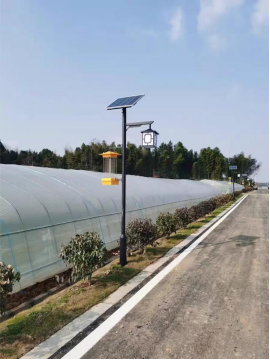
When the sun goes down, the pressure from nocturnal pests like cutworms, stem borers, and leafhoppers starts to build. A solar insecticidal lamp is designed to switch on automatically via a photosensor, usually within 15 to 30 minutes after twilight ends. It emits light in the near-ultraviolet range, typically between 365 and 400 nanometers, a part of the spectrum that many crop-damaging insects find irresistible. Instead of illuminating the whole field, the lamp concentrates its output into a narrow band, so the attraction effect remains strong without wasting energy.
The real work happens once the insects get close. Most models use either a high-voltage grid or a suction fan behind the light source. Moths and beetles that fly into the grid are dispatched instantly, while a fan-based unit pulls smaller pests into a collection tray where they dehydrate overnight. Because the lamp runs entirely on power stored during the day, it can keep working through the darkest hours when pest activity is at its peak. A healthy lithium-iron-phosphate battery typically holds enough charge for eight to ten hours of continuous operation, and the circuit is designed to cut off only when dawn arrives or the battery drops below a safe threshold.
Nighttime pest pressure isn’t just about killing insects — it’s about timing and consistency. By operating only when target pests are actually active, the lamp avoids the daytime pollinators and beneficial species that are less drawn to UV light. Some units also include a programmable controller so growers can limit operation to the first two or three hours after sunset, which is when many moth species emerge to mate and lay eggs. This targeted approach reduces the need for broad-spectrum chemical sprays and keeps pest densities at a level that the crop can tolerate without significant yield loss.
Placement, Timing, and the Bugs You Actually Want to Catch
Where you put a sticky trap matters more than how many you scatter. In a greenhouse or row tunnel, yellow cards work best when they sit just above the crop canopy, close to doorways, vents, or any gap where pests slip in. Avoid tucking them into corners or burying them under leaves—pests won't find them there. Different species also respond to height: whiteflies and aphids tend to hover near the top growth, while thrips often show up around flowers and lower foliage. Adjust trap height as plants grow so the sticky surface stays in the active zone.
Timing is everything if you want usable counts instead of a sticky mess. Put traps out right after transplanting or as soon as the crop emerges, not after you already see damage. Check them at the same time of day—early morning is usually best because insects are sluggish and easier to count. Twice a week is enough for most crops; daily checks create noise. Early-season numbers give you a baseline, so a sudden spike tells you something real is happening. If you know a pest's life cycle, ramp up checks when eggs hatch or adults emerge, not just when leaves start yellowing.
Not every bug on a trap is a reason to reach for a spray. Yellow sticky cards catch a lot of beneficial insects—parasitic wasps, hoverflies, lacewings—right alongside the pests. If your trap is covered in tiny wasps, that's a sign you're knocking out your own allies. Use pheromone lures or blue cards if you need to target thrips specifically, and learn to tell the difference between an aphid, a fungus gnat, and a beneficial midge. The bugs you actually want to catch are the ones doing real damage: aphids, whiteflies, thrips, leafminers. Before you treat anything, confirm the pest. A sticky card full of fungus gnats doesn't mean your crop is doomed.
Why Off-Grid Power Changes the Economics of Pest Control
Traditional pest control in remote agricultural or storage settings often hinges on diesel generators or manual inspections, which drive up operational costs and limit response times. Off-grid power setups, typically solar arrays paired with battery storage, remove that constraint. Electric traps, pheromone dispensers, and remote sensors can run continuously without fuel deliveries or grid extension. The immediate effect is a shift from periodic, labor-heavy interventions to always-on monitoring and automated control.
That changes the cost structure. Instead of paying for truck rolls, fuel, and technician hours to check bait stations or spray on a fixed calendar, operators can rely on real-time data to deploy targeted treatments only where thresholds are crossed. The capital cost of solar and batteries gets spread across many pest control devices, and ongoing energy cost is near zero. In remote grain stores or orchards, this often means the payback period for electrified pest management drops below a single growing season.
There’s also a reliability angle. Off-grid power decouples pest control from diesel price swings and supply chain disruptions. A solar-powered sensor grid can run through a week of cloudy weather if sized correctly, while a diesel generator might sit idle waiting for fuel. For farmers and facility managers, that translates into fewer losses from rodents or insects and less dependence on outside service providers. Over time, the economics favor prevention over emergency response, which is exactly the inversion off-grid power makes possible.
Maintenance Habits That Keep the Lamps Running in Rough Weather
Most outdoor lamps fail in rough weather not from poor design but from small, overlooked routines. After every heavy storm, walk the perimeter and hand-tighten any loose housing screws, then clear the tiny drainage holes at the base with a wooden toothpick. Water pooling inside the fixture is what usually kills the bulb and corrodes the socket long before the wind does.
In coastal or high-humidity areas, wipe down the inside of the glass lens with a dry microfiber cloth every month and add a thin dab of dielectric grease to the lamp base threads. This keeps salt spray and condensation from creeping into the contacts. Keep a spare bulb and a replacement rubber gasket in a dry box nearby—when the next squall hits, you'll do a quick swap instead of a panic repair.
Finally, check any exposed wire joints for cracked insulation and rewrap them with self-fusing weatherproof tape. A few minutes of this kind of care turns expensive replacements into occasional adjustments.
Scaling the Same Principle From Kitchen Gardens to Large Farms
The idea that a small kitchen garden can thrive with minimal external inputs isn't limited to backyard plots. The same underlying logic—build soil health, recycle nutrients, and diversify plantings—scales remarkably well to large farms, though the tools and timing change. A home gardener might turn compost by hand and rotate a few beds, while a commercial grower uses cover crop rollers and zone-tilled strips, but the principle remains identical: feed the soil, not just the plant.
Scaling up requires rethinking labor and machinery, not abandoning the core approach. Instead of hand-weeding between lettuce rows, a large operation might run a finger weeder through wide beds of kale, or use sheep to graze down cover crops before planting cash crops. The shift isn't about doing more of the same tedious work—it's about finding mechanical and biological equivalents that preserve soil structure and keep living roots in the ground as long as possible.
What often gets lost in the jump from garden to farm is the need for careful observation at scale. A gardener can spot a nitrogen deficiency by walking the plot each morning; a farm manager needs sentinel plots, soil tests, and drone imagery to catch the same issue across forty acres. Yet the fix is the same: add compost or manure, adjust the rotation, let a legume cover crop do the work. The scale changes the monitoring, not the remedy.
FAQ
They combine rugged photovoltaic panels with a wavelength-tuned LED array that specifically attracts agricultural pests rather than beneficial insects. The housing is built from recycled aluminum and the collection tray is designed for easy cleaning, so farmers spend less time on upkeep and more time on cultivation.
The lamp emits a narrow spectrum of blue and ultraviolet light that many crop-damaging insects find irresistible. When pests approach, a low-voltage electric grid immobilizes them and they drop into a sealed collection drawer. Repeated use disrupts breeding cycles in the surrounding fields without leaving any chemical residue.
Yes. Each unit includes a lithium-iron-phosphate battery that stores enough charge for two to three full nights of operation. Even after a stretch of cloudy weather, the lamp automatically dims non-essential functions to preserve power for the attractant light, so pest control continues uninterrupted.
The grid is surrounded by a protective mesh with openings too small for human fingers or larger animals to reach. The current is also pulsed at a low amperage that is lethal to small insects but only produces a mild tingle for larger creatures. Additionally, the light spectrum avoids wavelengths that strongly attract bees and butterflies.
Most farmers only need to empty the collection tray every week or two and wipe the solar panel with a damp cloth once a month. The LED bulbs are rated for over 50,000 hours, and the battery is designed to last through five years of nightly use before replacement.
Rice paddies, vegetable fields, orchards, and tea plantations see the strongest results because they often struggle with moths, leafhoppers, and stem borers. The lamps are also popular in vineyards and organic farms where chemical pesticide use is restricted or prohibited.
Initial purchase costs are typically recovered within two to three seasons thanks to reduced pesticide purchases and lower labor for spraying. Some cooperatives also report higher market prices for residue-free produce, and because the lamps run entirely on sunlight, there are no ongoing electricity bills.
Conclusion
Solar Insecticidal Lamp Company has built its reputation on a simple but overlooked idea: pest control doesn't have to mean dousing crops in synthetic sprays. Their lamps have been tested across a range of field conditions, proving effective against the nighttime insects that do most of the damage while leaving daytime pollinators alone. Because the units run entirely on solar power, farms and gardens no longer need to run extension cords or rely on the grid, which shifts the cost equation away from repeated chemical purchases and fuel-driven generators. Placement matters as much as the hardware itself—lamps work best when set at the height of the crop canopy and positioned upwind of the area you want to protect. Timing the daily switch-on to dusk, rather than leaving lamps burning all afternoon, catches the right pests and saves battery capacity for the hours when moths, beetles, and leafhoppers are actually active.
Keeping these lamps alive through rough weather comes down to a few habits: wiping the solar panel weekly, clearing insect debris from the collection tray before it clogs the grid, and checking that the mounting pole hasn't loosened after heavy wind. The company designs its housings to shed rain and resist corrosion, but no device survives neglect. What makes the approach scale is that the same principle works from a backyard kitchen garden to a several-acre farm. A single lamp covers a defined radius, so larger plots simply add more units in a grid pattern rather than switching to a different technology. That modularity, combined with the fact that the lamp never needs refills or annual chemical licensing, is why the company is gaining ground with growers who want pest pressure under control without adding another recurring input to their budget.
Contact Us
Contact Person: kitty
Email: [email protected]
Tel/WhatsApp: +8618676039824
Website: https://www.srssolargroup.com/