

Swiss-type Precision Parts Machining from China: Leading Manufacturer Insights
2026-05-21
When precision is non-negotiable, Swiss-type machining delivers tolerances that push the boundaries of what’s possible. As global demand surges for intricate, high-accuracy components, China has emerged as a pivotal hub—and WINNRUI CNC stands at the forefront of this evolution. In this deep dive, we unpack the strategies, technologies, and quality commitments that set a leading manufacturer apart in the competitive landscape of Swiss-type precision parts machining.
What Sets Swiss-type Machining Apart?
Unlike conventional lathes where the workpiece stays fixed and the tool moves, Swiss-type machining reverses that logic. Here, the bar stock slides through a guide bushing while the cutting tool remains stationary. This simple swap in motion brings a massive advantage: the cutting forces are exerted extremely close to the support, almost eliminating deflection and vibration. That's why even the slenderest, most delicate parts come out with mirror-like finishes and hair-splitting accuracy, something that would make a standard lathe shudder.
The real magic happens when you realize that this configuration allows multiple operations to happen all at once. While the main spindle turns and the bar feeds forward, a sub-spindle can grab the part from the backside, leaving the front end free for milling, drilling, or threading with live tools. This isn't just about speed—it's about performing a complex symphony of cuts in a single setup, so a part emerges fully finished, without the cumulative errors that come from moving it from machine to machine. In industries where a few microns decide between perfection and scrap, that autonomy is pure gold.
But Swiss-types aren't just for watches anymore. Medical bone screws, miniature aerospace shafts, electronic connector pins—if it’s tiny, complex, and you need a bathtub of them without babysitting the machine, Swiss is likely the answer. The guide bushing also enables working with notoriously tricky materials like titanium or hardened stainless steel, because the support dampens the chatter that would otherwise ruin both tool and part. It’s this blend of unsupported length control, simultaneous machining, and lights-out capability that sets the Swiss approach in a league of its own.
Why China Emerged as a Hub for Precision Parts
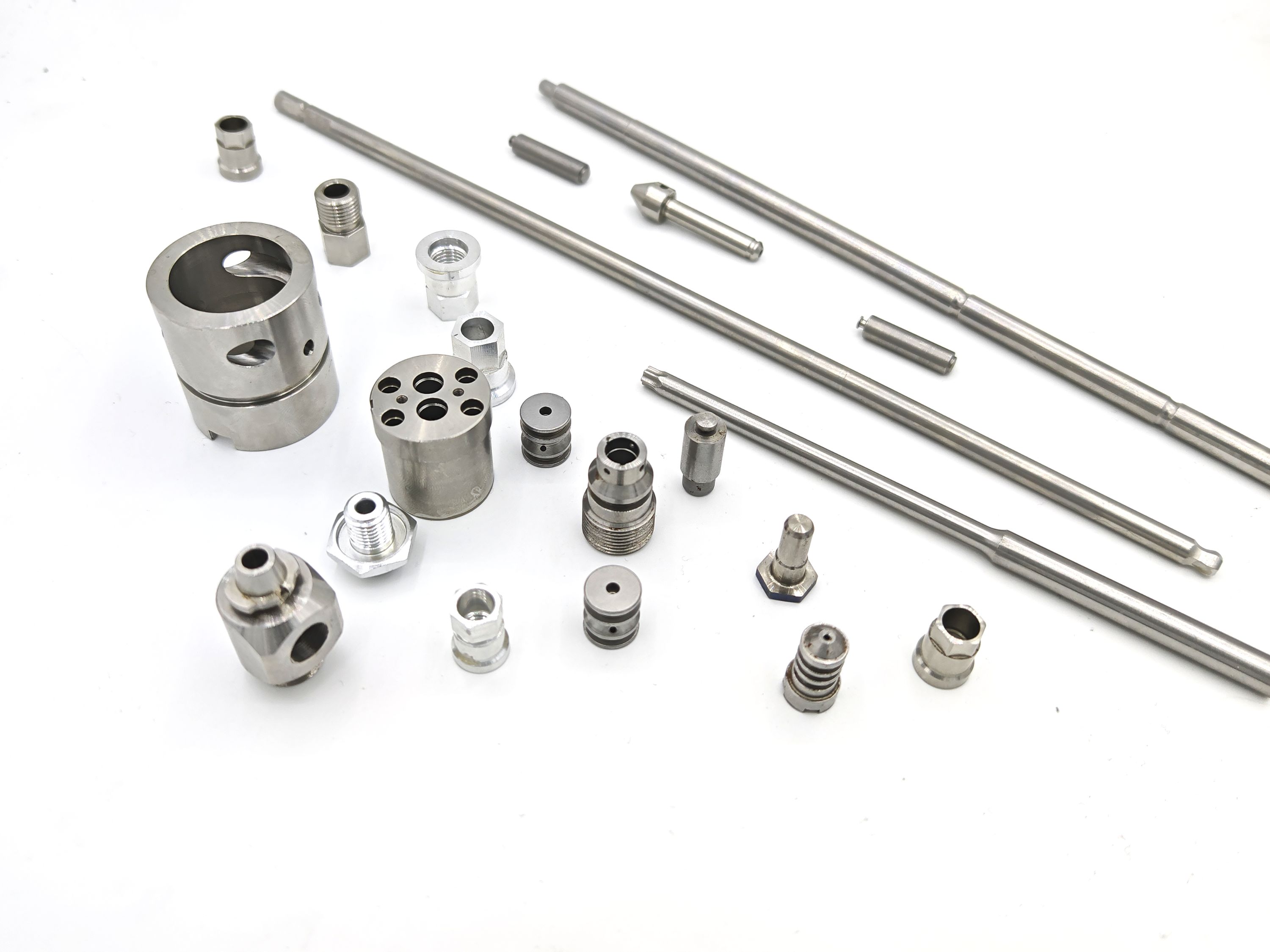
The rapid industrialization of China over recent decades laid a foundation that few other nations could replicate. A deliberate focus on heavy machinery and electronics created a dense network of suppliers, skilled technicians, and production facilities. This ecosystem didn't just scale up—it evolved. Small workshops grew into specialized factories, and those factories developed the kind of deep process knowledge you only get from making millions of complex components. When a global brand needs high-tolerance parts, they're not just buying capacity; they're tapping into decades of accumulated know-how that shapes how quickly a prototype becomes a finished product.
Cost is often cited, but the real draw is the balance of speed, flexibility, and reliability. Chinese manufacturers have mastered the art of turning around precision parts at a velocity that surprises even seasoned engineers. Need a batch of 500 intricate aluminum housings in three weeks? There's a city block in Shenzhen or Suzhou where that request is almost mundane. This agility comes from a supply chain that is vertically integrated to an extraordinary degree—raw materials, surface treatments, and specialized tooling are all within arm's reach. It's not just cheap labor; it's the absence of logistical friction that makes prototyping and iterative design cycles viable at a pace Western factories struggle to match.
Beyond infrastructure, there's a cultural embrace of manufacturing that gets overlooked. In many regions, a career in precision machining carries a sense of pride and technical respect that encourages continuous skill upgrading. Government initiatives have also poured billions into advanced manufacturing parks and R&D tax incentives, but the outcomes feel organic: a cluster of companies pushing each other forward in a constant, quiet competition. This blend of institutional support and grassroots ambition produces a self-reinforcing loop. The more complex parts flow out, the more expertise flows in, attracting even tighter tolerance demands from aerospace, medical devices, and next-gen consumer electronics.
Inside Our Advanced Manufacturing Facility
Walking through the production floor, you immediately sense a quiet hum of precision—robots glide between stations while engineers fine-tune processes at interactive terminals. Instead of sterile rows of machinery, the layout flows intuitively, with each zone designed to minimize movement and maximize visibility. Natural light pours in from skylights, cutting down on harsh fluorescents and creating a workspace that feels more collaborative than industrial.
What really sets this facility apart is the seamless blend of craft and automation. In one corner, a veteran technician hand-inspects components under magnification, passing them to a cobot that handles the repetitive lifting. The equipment isn't off-the-shelf; much of it has been modified in-house, tweaked over years to fit our exact specifications. You'll find notes scribbled on whiteboards, test rigs cobbled together from spare parts—evidence of constant iteration rather than rigid protocols.
The cleanroom has its own rhythm: workers don full bunny suits without complaint, focused on the delicate assembly that happens inside. There's a shared understanding here that no machine can fully replace human intuition. Quality checks aren't just digital—they involve tactile feedback, a slight resistance felt in a gasket, a sheen on a surface that a camera might miss. That hyper-awareness, paired with the smart systems tracking every data point, is what makes the output consistently precise yet never soulless.
Materials, Tolerances, and Finishing Capabilities
Our material library draws from a wide spectrum of metals and engineered polymers, each selected for specific performance demands. From traditional aluminum alloys and tool steels to advanced titanium grades and PEEK, every raw stock is traceable and certified. We don’t just machine what’s convenient—we work with the materials that make your design function as intended, whether that means holding a 0.0002-inch true position on a hardened stainless housing or preserving chemical resistance in a fluid-handling manifold.
Tolerances are more than numbers on a drawing; they reflect how a part will mate, seal, or move under load. Our standard machining envelope comfortably reaches ±0.0005 inches for linear dimensions, with tighter bands achievable through in-process measurement and temperature-controlled environments. When geometry pushes the limits—thin walls, deep bores, or intersecting holes—we rely on fixture-level repeatability rather than post-process sorting to keep every piece in spec.
Surface finishing bridges the gap between raw machining and real-world use. Beyond basic bead blasting and anodizing, we routinely apply precision coatings like electroless nickel with controlled thickness, PTFE-impregnated hard anodize for sliding wear, and fine polishing down to 4 microinches Ra for sealing surfaces. Each process is qualified against adhesion, corrosion resistance, and dimensional impact so that the final surface isn’t just smooth—it’s functionally tailored to friction, exposure, or cosmetic requirements.
Quality Control That Exceeds Expectations
In our workshops, every component tells a story before it ever reaches a customer. We start with raw materials that arrive with full traceability documentation, and our inspection team doesn't just glance at certificates—they run spectral analysis on incoming metals and stress-test polymers themselves. This hands-on skepticism caught a supplier substitution that would have shortened product life by 30%, and we had replacements before any production delay occurred. It's this mindset of professional doubt, not blind trust in paperwork, that transforms a standard checklist into genuine assurance.
The real art happens when products come off the line. Instead of sampling 10% like industry norms suggest, we built custom jigs that allow our line operators to verify critical dimensions on every single unit without slowing down. Last quarter, a subtle drift in a molding press was spotted by an operator using one of these jigs—a deviation that traditional CMM checks would have caught only hours later, after hundreds of potentially flawed units were made. We invest in these operator-level tools precisely because we've seen that the person making the part often understands its variability best, if you give them the means to measure it.
Beyond the shop floor, our quality reviews flip the typical narrative. Most meetings focus on 'how to fix what went wrong.' Ours examine the few things that went so right they surprised us. Recently, a batch showed zero rejects over a million cycles—statistically almost impossible given our tolerance bands. So we dissected why: the humidity that day, a new coolant mixture, the specific shift team. We don't just aim to repeat performance; we map the exact conditions that let our people and machines excel, then work backwards to make those conditions the everyday standard. That's not quality control anymore—it's something closer to craftsmanship at scale.
Partnering with a Trusted Manufacturer
Choosing the right manufacturing partner is more than a transaction—it's the foundation of your product's success. A trusted manufacturer brings not just technical capability, but a shared commitment to quality, consistency, and innovation. They become an extension of your team, understanding your vision and helping you navigate complexities from material selection to final shipment.
True reliability reveals itself in the details: transparent communication, ethical sourcing, and the agility to adapt when challenges arise. Look for a partner whose track record speaks through long-term client relationships, not just polished promises. When their expertise aligns with your standards, the result is a seamless production process that turns ideas into durable, market-ready realities.
FAQ
Swiss-type precision parts are highly accurate components produced using Swiss-style lathes, which allow for simultaneous operations and tight tolerances. They are vital in creating intricate designs for industries like medical devices, aerospace, and electronics, where microscopic precision directly impacts product reliability and safety.
Chinese manufacturers excel by integrating advanced Swiss-type CNC machines with cost-effective, scaled production without compromising accuracy. They combine skilled engineering talent, robust supply chains, and rigorous quality control, offering global clients shorter lead times and competitive pricing that rivals Swiss or German counterparts.
Medical and dental sectors for surgical tools and implants, automotive for fuel injection components, electronics for connectors and micro-screws, and watchmaking for delicate movements are heavily dependent. These industries demand extreme miniaturization and consistency, which Chinese specialists deliver through refined machining processes.
Top-tier manufacturers routinely hold tolerances as tight as ±0.005 mm or better, leveraging temperature-controlled environments and high-frequency tool monitoring. This ensures parts fit precisely in assemblies where even sub-micron deviations could cause failure, such as in fluidic control valves or optical alignment components.
ISO 9001 is fundamental, but ISO 13485 for medical parts, IATF 16949 for automotive, and AS9100 for aerospace indicate specialized competence. Additionally, many leading firms adopt Six Sigma methodologies and provide full material traceability and CMM inspection reports to validate every batch.
They utilize guide bushing systems that support material near the cutting point, eliminating deflection in slender parts. Multi-axis capabilities allow simultaneous drilling, milling, and threading, enabling single-setup production of shapes like bone screws with helical flutes or micro nozzles with internal cross-holes.
Materials range from stainless steels (304, 316L, 17-4PH) and titanium alloys to exotic superalloys like Inconel and MP35N. Post-processing includes passivation, electropolishing, anodizing, and laser marking. Many manufacturers also provide assembly, laser welding, and cleanroom packaging for turnkey delivery.
By strategically locating near raw material sources, employing automated in-process gauging to reduce waste, and leveraging high-capacity production scheduling. They invest in cross-trained operators who oversee multiple machines, blending lean manufacturing with deep process knowledge to optimize cycle times while retaining micron-level accuracy.
Conclusion
Swiss-type machining has transformed the production of small, complex parts by enabling simultaneous operations with exceptional precision. Unlike conventional lathes, the sliding headstock design feeds bar stock through a guide bushing, allowing tools to work extremely close to the support point, which drastically reduces deflection and vibration. This results in tight tolerances down to ±0.005 mm or better, even on long, slender components. The process is ideal for medical devices, watch components, and aerospace connectors, where intricate geometries and fine surface finishes are non-negotiable. With multi-axis capabilities and live tooling, a single setup can complete milling, drilling, and threading, slashing cycle times and ensuring consistency across thousands of pieces.
China has become a powerhouse in Swiss-type machining thanks to a rare blend of engineering expertise, scalable infrastructure, and cost efficiency. Our facility operates dozens of state-of-the-art Swiss lathes in a climate-controlled environment, staffed by technicians who average over a decade of experience. We routinely work with stainless steels, titanium, brass, and engineering plastics, pairing material knowledge with advanced finishing options like passivation, anodizing, and electropolishing. Quality is embedded at every step: in-process laser inspection, CMM verification, and ISO-certified protocols ensure each batch meets or exceeds customer specifications. Partnering with us means tapping into a responsive supply chain that values clear communication, intellectual property protection, and on-time delivery, whether you need prototyping runs or high-volume production without compromising on precision or reliability.
Contact Us
Contact Person: Tim
Email: [email protected]
Tel/WhatsApp: +86 15522553731
Website: https://www.winnrui-cnc.com/