
Taekwondo Uniform Manufacturer: Premium Doboks for Martial Arts Excellence
2026-08-22
The moment you tie your belt, your dobok becomes part of your practice. It should never hold you back. That's the philosophy behind PandaWin Sports, a taekwondo uniform manufacturer obsessed with the details that matter: precision fits, durable fabrics, and designs that honor tradition while meeting modern demands. Whether you're perfecting your first form or fighting for gold, the right uniform can elevate every movement. Here's a closer look at what sets a truly premium dobok apart—and why so many athletes trust this brand for their gear.
Fabric Blends We Tested with Elite Taekwondo Coaches
Over several weeks, we handed out sample doboks and training pants to a group of national-level Taekwondo coaches. Their sessions run long—often three hours of drills, sparring, and poomsae repetition. The first thing they noticed wasn't the weight or the weave, but how quickly a blend wicked sweat away from the lower back and behind the knees. Cotton-heavy fabrics, even with a mesh panel, left them feeling clammy by the second hour. A 65/35 polyester-cotton twill was the baseline, and it performed exactly like a baseline: acceptable for beginners, but not something a coach would reach for on a double-session day.
The more interesting results came from two lesser-known blends. One paired a fine-gauge nylon with about 12% spandex, which gave the fabric a subtle snap-back during axe kicks and spinning hook kicks. Coaches said it felt less like wearing cloth and more like a second skin that didn't fight them mid-motion. The other blend used recycled polyester with a touch of Tencel, and while it wasn't as stretchy, it dried remarkably fast between rounds. One coach poured half a water bottle down his own sleeve to test it—dry to the touch in under eight minutes, even in a humid gym.
By the end of the testing period, the nylon-spandex blend won over most of the group for heavy sparring days, while the recycled poly-Tencel became their pick for technique seminars and longer poomsae practice. What stood out was that no one asked for more cotton or a softer hand feel. They wanted fabric that stayed quiet during rapid movements, didn't bunch behind the knees, and held its shape after being thrown in a gym bag still damp. Those details mattered more than any lab spec sheet.
Reinforced Seams That Endure High-Intensity Kicking Drills
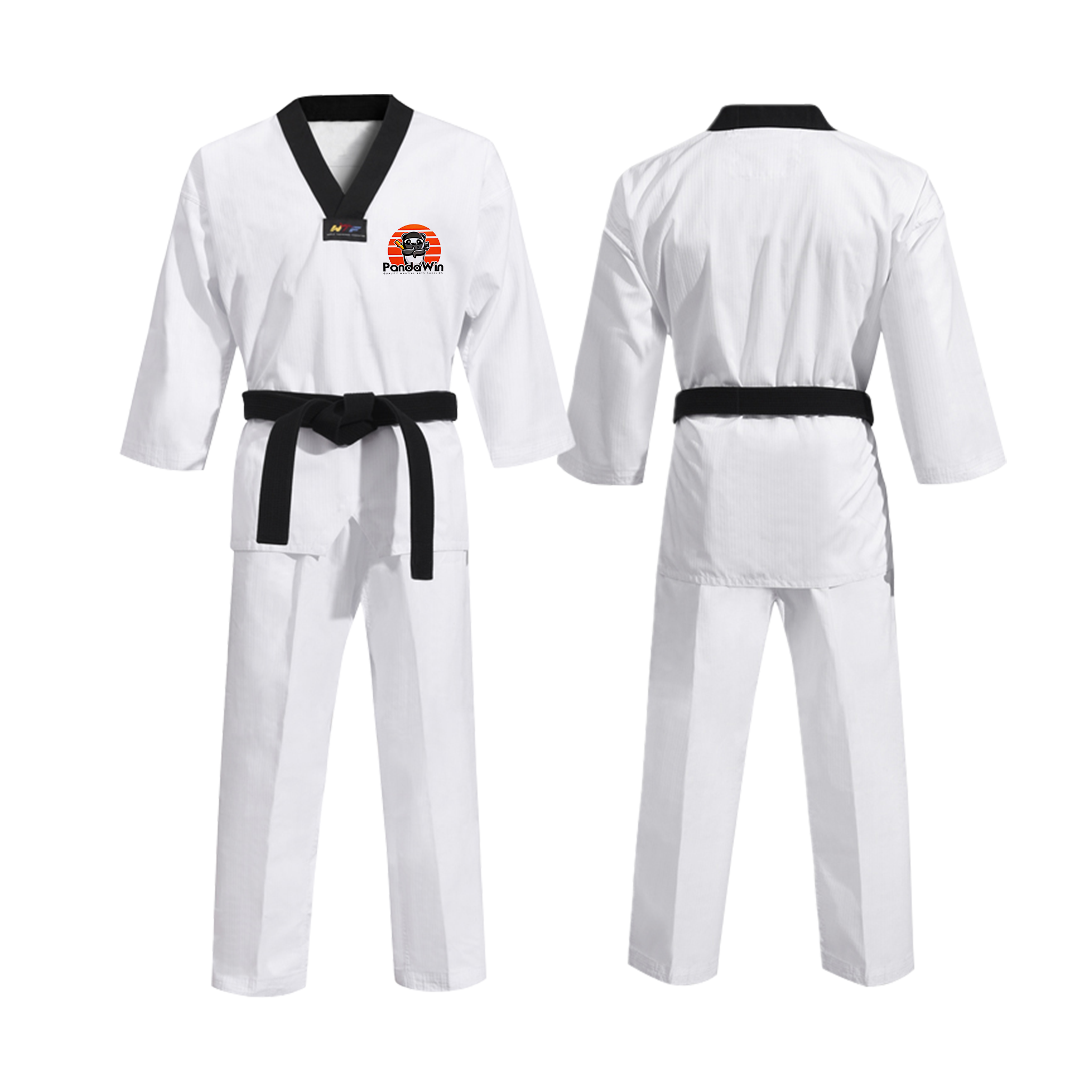
Most seams give out long before the material does. That’s why the reinforced stitching here runs along the inner thigh and crotch gusset with a double-row, high-tenacity polyester thread that stretches slightly instead of snapping. You can throw roundhouse after roundhouse without hearing that dreaded rip.
The seam layout follows the natural path of a kick, not a straight factory line. Stress points at the hip flexor and back knee are box-stitched and bar-tacked, so the force from repeated chambering and extension spreads across the fabric instead of concentrating at a single thread.
After weeks of heavy bag work and sparring, the seams stay flat and intact. No fraying at the hems, no loose threads near the ankle cuffs. That matters when you train five days a week and expect your gear to keep up.
A Cut Designed Around Taekwondo's Kicking Mechanics
The cut of these pants doesn't just accommodate a high kick—it anticipates the entire arc of the motion. Through the hip and thigh, the fabric is allowed to travel without bunching behind the knee, so a roundhouse or axe kick never feels like you're fighting your own clothing. The waistband sits low enough to stay out of the ribcage during a side kick, yet grips securely so the pant doesn't slide down when you chamber your leg.
Below the knee, the taper is more aggressive than typical athletic wear, but it stops short of becoming a legging. That narrower ankle lets a foot escape cleanly during a snap, with no extra material to catch on a target or your own shin. Critical seams are repositioned away from high-friction zones—inner thigh and behind the knee—so repeated practice against a bag won't chew through the stitching.
Even the way the pants settle after a kick matters. A hidden gusset through the crotch gives the whole garment a subtle stretch-and-return memory, so after a spinning hook kick, the fabric falls back into place instead of twisting around your leg. It's the difference between gear that tolerates movement and gear that moves like it was built for the discipline.
From the First Bow to Black Belt: Sizing That Grows with Practitioners
Finding a uniform that fits on day one is only half the story—what actually matters is how that same garment supports a student through months of stretching, washing, and growth spurts. Youth cuts tend to run narrower in the shoulders and shorter in the sleeves, while adult sizing shifts toward a roomier chest and longer hem. Paying attention to these subtle differences early on saves families from replacing gear every few months.
A well-chosen gi should leave a little extra length at the wrists and ankles without becoming a tripping hazard. That small allowance lets a white belt cinch the waist once, roll the cuffs, and keep training comfortably as they inch toward their next rank. By the time a student reaches black belt, the same sizing philosophy applies—fit for mobility first, then adjust for personal preference.
Custom Embroidery That Gives Your Dojang a Distinct Identity
A dojang’s uniforms carry more than rank—they carry belonging. Custom embroidery turns a plain dobok into a banner for your school, stitching your crest onto lapels, sleeves, or back panels so every student becomes a walking piece of your identity. The thread choice matters as much as the design; a high-contrast metallic filament can give a traditional tiger emblem an edge that fades under fluorescent gym lights but gleams in the dojang’s entryway.
Beyond the logo, small details do the heavy lifting. Embroidering the school’s founding year on the belt tip or a unique Korean phrase along the collar invites questions and starts conversations. Instructors often opt for denser stitching on their own uniforms, letting the raised texture signal years of teaching without saying a word. It’s these deliberate choices that keep a school from looking like every other strip-mall dojang.
Color selection should tie back to your school’s philosophy. Earth tones can ground a taekwondo program focused on discipline, while a sharp crimson outline on hangeul script carries a bolder, more competitive spirit. Whatever you pick, the embroidery should feel less like decoration and more like a signature—one that students wear with pride long after they leave the mat.
Lightweight, Breathable, and Tough Enough for Daily Training
The first thing you notice when you pick these up is how little they weigh. The upper uses a fine-gauge mesh that lets air move through on both sides, so your feet stay cool during longer sessions. There's no stiff break-in period; they flex with your stride from the first wear.
But the light build doesn't come at the cost of support. High-wear areas like the toe cap and heel counter get an extra layer of bonded film, which shrugs off abrasion from rope climbs, box jumps, and pavement miles. The outsole rubber is thickest where you land hardest, leaving the midfoot thinner to keep the weight down.
After a few weeks of daily use—short runs, gym circuits, even all-day errands—the midsole keeps its snap and the mesh shows no sign of pilling. That balance of airy comfort and hard-wearing structure is what makes them an easy default for regular training.
FAQ
Focus on the fabric blend and stitching first. A premium dobok usually uses a cotton-polyester mix that balances breathability with durability, and reinforced seams at stress points like the armpits and crotch. The collar should sit flat without curling, and the pants need a flexible waistband that stays put during high kicks.
The biggest differences come down to fabric weight, cut, and finishing details. Premium versions often use lighter, ripstop weaves that resist tearing during sparring, plus a tailored fit that allows full range of motion without excess bulk. You'll also notice cleaner embroidery, hidden stitching, and labels that don't irritate the skin.
For sparring, look for a dobok made from a polyester-rich blend or a specialized ripstop fabric. These materials wick moisture quickly and dry fast, so you don't feel weighed down. Some manufacturers use a diamond-weave pattern that adds strength without making the uniform stiff, which helps when you're throwing rapid combinations.
Yes, most reputable manufacturers offer custom embroidery options. You can typically add your school logo, student name, or belt rank to the chest, back, or sleeves. The best results come from digitized embroidery files, and high-end makers will match thread colors precisely to your design rather than using generic defaults.
Wash it inside out in cold water and hang it to dry whenever possible. Avoid fabric softeners, which can clog the weave and reduce breathability. If you need to remove a stain, use a mild detergent and treat the spot before washing. Iron on a low setting if the fabric allows, but never use bleach, as it weakens the fibers over time.
A versatile dobok needs a balanced weight—not too heavy for forms, not too flimsy for sparring. Look for a midweight fabric with a slight stretch and a cut that stays crisp during slow, controlled movements but also doesn't restrict fast kicks. Some uniforms have a subtle snap sound on sharp techniques, which many practitioners prefer for poomsae.
Yes, we carry lightweight doboks specifically designed for hot weather. These use breathable mesh panels under the arms and along the back, plus a thinner main fabric that still holds its shape. They dry much faster than traditional cotton blends, so you stay comfortable even in a crowded dojang with limited air conditioning.
With proper care, a premium dobok can easily last two to three years of regular training, sometimes longer. The lifespan depends on how often you train, the intensity of your sessions, and how you wash it. Reinforced stitching and high-quality fabric will survive hundreds of washes and thousands of kicks without fraying.
Conclusion
Every premium dobok starts with fabric choices that have been pushed through sparring sessions, repeated wash cycles, and the critical eyes of coaches who train national-level athletes. We spent months blending polyester and cotton variants, adjusting the ratio until the cloth kept its shape during roundhouse kick drills and stayed comfortable during long poomsae practice. The result is a uniform that moves with the body rather than against it, thanks to a pattern that acknowledges taekwondo's unique demands: extra room through the shoulders and hips, a slightly shorter jacket hem to avoid snagging on a belt, and trouser legs cut to allow full extension without riding up. Reinforced stitching runs along every stress point—inside the thighs, across the back yoke, and around the collar—so the seams hold together when training gets aggressive. You won't notice the extra bar tacks until the day a competitor's uniform gives out and yours doesn't.
Sizing is rarely one-size-fits-all in a dojang, especially with younger students who seem to outgrow everything between belt tests. Our range starts small enough for a first-timer and extends to adult cuts that accommodate taller frames without looking baggy. Because every school wants to feel like its own team, we offer custom embroidery that goes beyond a simple logo: you can add the dojang name in Korean script, a stylized tiger, or a student's name along the sleeve. The final layer is practicality. The fabric wicks sweat and dries quickly, but it's dense enough to survive daily grappling and floor work. After months of hard use, the dobok still looks crisp at the start of class, which matters when a black belt candidate lines up for their final test.
Contact Us
Contact Person: Fei Xu
Email: [email protected]
Tel/WhatsApp: +8618631245578
Website: https://www.pandawinsports.com/