

Top Aromatic Carbonyl Intermediate: Structure, Reactivity, and Applications
2026-09-24
Few intermediates command as much respect in organic synthesis as the top aromatic carbonyl intermediate. Its structure—a carbonyl group attached to an aromatic ring—hides a world of reactivity that chemists have learned to exploit for everything from pharmaceuticals to advanced materials. Whether you're designing a new cross-coupling or optimizing an industrial route, understanding how this intermediate behaves is the key to unlocking efficiency. At DSL Chemicals, we've seen firsthand how the right building block can turn a stubborn reaction into a scalable process. In this post, we'll break down the structure, reactivity, and real-world applications that make this intermediate indispensable—and show you where to find reliable supply.
What Structural Features Make Aromatic Carbonyls Unique
The carbonyl group in aromatic systems does not behave as an isolated functional unit. Its π orbital overlaps with the ring's delocalized electron cloud, forcing the C=O and the adjacent C–C bond into the same plane. This geometry is not accidental; it maximizes the resonance interaction that gives the carbonyl carbon a partial single-bond character with the ipso carbon. As a result, the carbonyl's electron deficiency is partially quenched, and the molecule adopts a more extended conjugated framework than a simple ketone or aldehyde.
Because of this extended conjugation, the electron-withdrawing or donating nature of ring substituents has a direct, sometimes dramatic effect on the carbonyl's reactivity. An electron-donating group in the para position can further reduce the positive character at the carbonyl carbon, making nucleophilic attack noticeably slower. Conversely, electron-withdrawing groups increase the electrophilicity, but still within the context of a conjugated system where the ring acts as a reservoir for electron density. This interplay changes how one predicts reactions compared to aliphatic counterparts.
Spectroscopic signatures reflect the same structural reality. The C=O stretching frequency shifts to lower wavenumbers because the bond has lost some double-bond character through resonance. UV-visible spectra show strong absorption bands due to π→π* transitions across the extended chromophore, and NMR of the carbonyl carbon often appears at a different chemical shift than for typical ketones. These are not independent observations; all stem from the planar, resonance-stabilized arrangement unique to aromatic carbonyls.
How Substituents Shift Electron Density and Reactivity
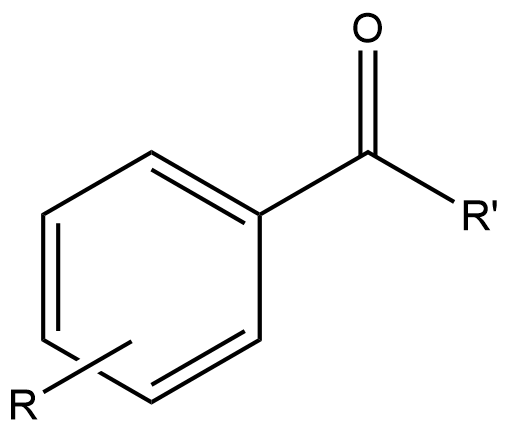
Substituents attached to a benzene ring do more than just occupy space—they actively push or pull electron density through sigma bonds and the π system. Electron-donating groups like alkyl chains, hydroxyl, and amino groups release electron density into the ring, which builds up most strongly at the ortho and para positions. This increased electron density makes those positions more attractive to electrophiles, so reactions proceed faster and often under milder conditions. For example, phenol brominates readily at room temperature without a Lewis acid catalyst, while aniline can react so vigorously that protecting groups are sometimes needed.
Electron-withdrawing substituents such as nitro, cyano, and carbonyl groups pull electron density away from the ring, deactivating it toward electrophilic attack. Their effect is strongest at ortho and para positions, leaving the meta positions relatively more electron-rich and therefore the primary sites for substitution. Nitrobenzene, for instance, requires harsh conditions to nitrate, and the product is predominantly meta-dinitrobenzene. Halogens represent an interesting middle ground: they withdraw electron density inductively, which slows reactions overall, but their lone pairs can donate into the ring through resonance, directing incoming electrophiles to ortho and para positions despite the deactivation.
Nucleophilic Addition versus Substitution Pathways
When a nucleophile approaches an unsaturated electrophile, the real question is whether the carbon center already carries a serviceable leaving group. With aldehydes and ketones, the tetrahedral intermediate formed after attack has no low-energy path to expel a hydride or alkyl group, so the pathway stalls at addition and the carbonyl oxygen simply picks up a proton. Carboxylic acid derivatives flip this logic entirely. Their tetrahedral intermediates contain a heteroatom such as chloride, alkoxide, or amine that can depart, allowing the carbonyl to reform and substitution to take over. The competition is never a rigid binary; it bends with the leaving group's basicity, the nucleophile's strength, and the steric congestion around the electrophilic carbon.
The contrast shows up clearly when an amine is paired with an acid chloride versus a ketone. The acid chloride readily forms a tetrahedral intermediate bearing both an amine and a chloride, and because chloride is a weak base, its expulsion is fast, yielding an amide. A ketone offers no comparable departure route, so the intermediate simply gets protonated to an alcohol. Even small structural shifts matter: thioesters lean toward substitution more readily than amides since thiolates are far better leaving groups than amide anions. Add an α,β-unsaturated system, and soft nucleophiles may bypass direct addition at the carbonyl entirely, favoring conjugate attack at the β-carbon instead.
In practical synthesis, reading the electrophile's structure beats memorizing a fixed rule. A built-in leaving group signals substitution; its absence points to addition, unless extended conjugation or a bulky nucleophile reroutes the attack. Solvent polarity, Lewis acid catalysts, and temperature can all tip borderline cases one way or the other. Weinreb amides are a useful exception: the tetrahedral adduct is stabilized by chelation, so over-addition is suppressed and the reaction stops cleanly at the ketone stage rather than racing onward.
Synthetic Routes That Start from Aromatic Carbonyls
Aromatic carbonyl compounds, particularly benzaldehydes and acetophenones, serve as remarkably versatile entry points in synthesis. Their carbonyl group can be exploited not only for direct nucleophilic addition but also for activating the adjacent α-carbon toward deprotonation and subsequent C–C bond formation. This dual reactivity allows chemists to assemble more elaborate aromatic and heteroaromatic frameworks without resorting to prefunctionalized, expensive intermediates.
A classic route involves condensing an aromatic aldehyde with an active methylene compound under Knoevenagel conditions, yielding α,β-unsaturated carbonyl derivatives. These electron-deficient alkenes are primed for cycloadditions or intramolecular Michael additions, enabling the construction of fused cyclic systems. For example, treatment of benzaldehyde with malononitrile followed by a suitable nucleophile can rapidly generate polysubstituted pyridines or pyrimidines in a single pot.
Alternatively, aromatic ketones can be converted to their corresponding enolates or enol ethers, which then undergo asymmetric α-functionalization with chiral auxiliaries or organocatalysts. Such strategies have been employed to install stereocenters adjacent to the aromatic ring, a motif common in pharmaceutical intermediates. Subsequent derivatization of the carbonyl—via reduction to the alcohol, reductive amination, or Wittig olefination—further extends the synthetic utility of these readily available starting materials.
Medicinal and Materials Applications of the Intermediate
Certain heterocyclic intermediates bearing a pyrimidine core have carved out a niche in kinase inhibitor synthesis. Their electron-deficient ring system allows for late-stage functionalization at multiple positions, enabling medicinal chemists to fine-tune selectivity against off-target enzymes. For example, a 4-chloropyrimidine intermediate can be sequentially substituted with an aniline and a secondary amine to yield clinical candidates targeting EGFR mutations. The intermediate’s stability under basic conditions also simplifies scale-up, avoiding the need for protecting groups that often complicate final deprotection steps.
Beyond pharmaceuticals, this same structural motif finds use in the fabrication of conjugated microporous polymers. The pyrimidine unit acts as a rigid, planar linker that promotes π-stacking and enhances charge transport in organic field-effect transistors. Researchers have exploited its ability to coordinate with palladium or copper during Sonogashira couplings, building networks with high surface areas for gas storage. Interestingly, the intermediate’s nitrogen atoms can be protonated to tune the material’s hydrophilicity, which proves handy when casting thin films from aqueous dispersions rather than toxic organic solvents.
A less obvious application lies in the construction of metal-organic frameworks for targeted drug delivery. By incorporating the intermediate as a ditopic ligand, one can create porous coordination polymers that degrade under mildly acidic conditions—such as those found in tumor microenvironments. This allows for the controlled release of encapsulated chemotherapeutics while minimizing systemic toxicity. The intermediate’s synthetic versatility means the same precursor can be diverted to either a covalent organic framework or a supramolecular gel, depending on whether the reaction is run under kinetic or thermodynamic control.
Practical Handling and Stability Concerns in the Lab
Anyone who has spent time at a bench knows that a compound’s stated shelf life rarely tells the whole story. The real challenge begins the moment a bottle is opened: hygroscopic powders absorb moisture from the air, static causes fine crystals to leap onto the balance pan, and repeated exposure to ambient oxygen quietly degrades what was once a pristine reagent. In our lab, we’ve made it a habit to aliquot light- and air-sensitive solids inside a glovebox, but even then, condensation on cold surfaces can undo hours of careful work.
Temperature and light are the two most underrated saboteurs. A reagent that looks stable on paper may fall apart after a single afternoon on a sunny bench. We now store riboflavin-containing buffers in amber bottles and remind new students that a cold room is not a freezer—repeated warming and cooling cycles create moisture films that accelerate hydrolysis. Documenting the actual time a solution spends at room temperature, rather than relying on the label’s generic “store at 4 °C,” has saved more than one experiment from unexplained variability.
Solution stability brings its own set of headaches. A buffer that reads pH 7.4 immediately after preparation can drift by half a unit after overnight storage, especially if it contains bicarbonate or primary amines. We’ve learned to check for fine precipitates before each use and to avoid leaving working solutions in plastic tubes for more than a few hours when trace metal contamination might matter. Ultimately, practical stability isn’t a number from a certificate of analysis—it’s the accumulation of small handling decisions that determine whether your assay runs the same way tomorrow as it did today.
FAQ
Benzoyl chloride has a planar structure with a carbonyl group attached to a phenyl ring and a chlorine atom. The aromatic ring provides resonance stabilization by delocalizing electron density from the ring into the carbonyl group, which mildly reduces the electrophilicity of the carbonyl carbon compared to aliphatic acyl chlorides. However, the electron-withdrawing nature of the chlorine still makes the carbonyl highly reactive toward nucleophiles.
Its versatility stems from the combination of an activated carbonyl and a stable aromatic leaving group. It readily transfers the benzoyl group to oxygen, nitrogen, sulfur, and carbon nucleophiles, enabling the formation of esters, amides, thioesters, and ketones. This broad reactivity, along with easy handling under anhydrous conditions, makes it a workhorse intermediate in both laboratory and industrial settings.
Benzoyl chloride hydrolyzes rapidly in water to produce benzoic acid and hydrogen chloride gas. The reaction is exothermic and produces corrosive fumes, so it must be handled in a fume hood with proper personal protective equipment. Storage should be in tightly sealed containers under inert atmosphere to avoid moisture contact.
Benzoyl peroxide is synthesized by treating benzoyl chloride with hydrogen peroxide in the presence of sodium hydroxide. It serves as a radical initiator for polymerizations, such as acrylic resins, and as an active ingredient in acne medications due to its antibacterial and keratolytic properties. Industrial production relies on high-purity benzoyl chloride to ensure consistent peroxide quality.
Acetyl chloride reacts faster with nucleophiles than benzoyl chloride because the methyl group in acetyl chloride is electron-donating, increasing electron density at the carbonyl carbon only slightly, but more importantly, the phenyl ring in benzoyl chloride can delocalize electron density from the carbonyl through resonance. This reduces the partial positive charge on the carbonyl carbon, making it less electrophilic. Thus, benzoyl chloride is more stable and less prone to violent hydrolysis than acetyl chloride.
Yes, benzoyl chloride is a common reagent for benzoylation of alcohols and amines. For example, an alcohol is treated with benzoyl chloride in the presence of a base like pyridine or triethylamine to form a benzoate ester, which serves as a protecting group due to its stability under acidic and oxidative conditions. Deprotection is achieved by basic hydrolysis or transesterification. This protection is valuable in carbohydrate and nucleoside chemistry.
Benzoyl chloride introduces the benzoyl moiety into target molecules, which can modify biological activity or color properties. For instance, it reacts with aromatic amines to form benzanilides, many of which are intermediates for azo dyes and analgesics. In pharmaceutical synthesis, benzoylation often protects functional groups or alters lipophilicity, influencing drug absorption and metabolism.
Conclusion
The aromatic carbonyl intermediate stands out because the carbonyl group's sp² carbon is directly conjugated with the π system of the ring. This conjugation lowers the electrophilicity compared to aliphatic ketones but also stabilizes transient negative charge during nucleophilic attack. Electron-donating or withdrawing substituents on the ring further tune this reactivity by redistributing electron density, often dictating whether a nucleophile adds to form a tetrahedral adduct or proceeds through an addition-elimination sequence when a suitable leaving group is present. The balance between these pathways hinges on both the ring's substitution pattern and the nature of the incoming nucleophile.
Synthetically, aromatic carbonyls serve as branching points for numerous routes. Reduction, organometallic addition, and Friedel-Crafts acylation can convert them into alcohols, tertiary carbinols, or extended ketones, which in turn feed into heterocycle construction. In medicinal chemistry, the intermediate appears in active pharmacophores and prodrug linkers, while materials applications exploit its photostability and metal-coordinating ability for polymer design. Handling these compounds in the lab requires care: many are moisture-sensitive or prone to aldol condensation under basic conditions, so storage under inert atmosphere at low temperature and avoidance of prolonged strong base exposure are common precautions to maintain integrity.
Contact Us
Contact Person: Wei Zhang
Email: [email protected]
Tel/WhatsApp: 862163529955
Website: https://www.dslchem.com