

Top Concrete Vibrator Makers Worth Considering for Your Next Project
2026-09-08
Choosing the right concrete vibrator can make or break your pour—too little consolidation leaves voids, too much creates segregation. While many suppliers promise reliability, only a handful consistently deliver on jobsites. From established global names to specialist innovators like Dynamic, this guide cuts through the noise to highlight manufacturers that actually earn their place in your next project.
Wacker Neuson’s Reputation for Surviving Pour After Pour
Ask any concrete crew that has worked a marathon foundation pour, and they’ll tell you the same thing: the vibrator that keeps humming after hour six is worth its weight in rebar. Wacker Neuson built its name on exactly that kind of staying power. Their internal vibrators don’t just survive the relentless dunking and vibration of a big pour—they keep delivering consistent compaction long after lesser machines have overheated or seized up.
A big part of that reputation comes from the little things that don’t show up on a spec sheet. Sealed bearings, oversized cooling fins, and cable strain reliefs mean the equipment takes the abuse of daily concrete work without flinching. Crews often forget to clean them until the next morning, but the next pour still starts without a hiccup. That’s the kind of reliability you can’t fake.
Contractors who switch to Wacker Neuson rarely go back. When a single pour can run ten or twelve hours, the last thing you want is a tool that quits halfway through. Wacker Neuson’s track record for surviving pour after pour has turned plenty of skeptics into loyal users, and it keeps their equipment on more job sites than any flashy marketing campaign ever could.
Oztec Heads That Don’t Bog Down in Stiff Mixes
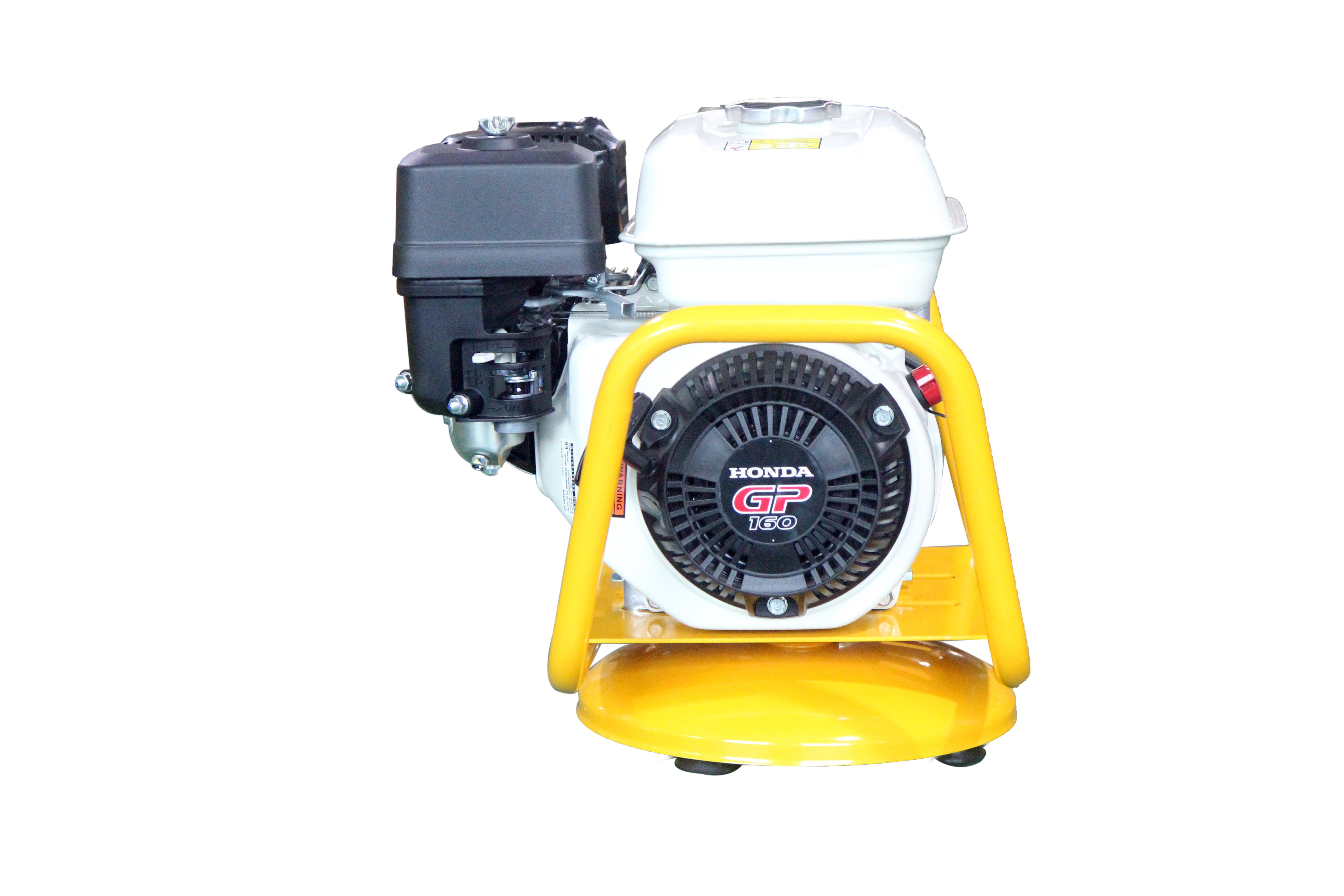
Most vibrator heads start to labor the moment the mix turns stiff. These Oztec heads don’t. The rubber shell and eccentric rotor are matched so tightly that the head keeps spinning at full speed even when the concrete barely moves. You can feel the difference when you pull it out: the mix around the head is still fluid, not stuck in a half-consolidated ring.
A big part of that comes down to the way the rotor is machined. Instead of relying on loose weights or a generic shaft coupling, the assembly transfers torque almost instantly, so there’s no lag before the head bites into a low-slump mix. Because of that, operators tend to work the head less and let the vibration do the work, which cuts down on wrist strain.
Field crews often notice the same thing on bridge decks and precast forms: the head doesn’t stall when the mix gets hot or starts to set. That consistency matters more than raw power. You aren’t fighting the tool to keep consolidation going; you’re just moving it along at a steady pace and watching the paste come to the surface without pushing aggregate around.
Multiquip’s Backpack Vibrators Built for Vertical Work
Vertical pours punish equipment that isn't set up for long reaches and tight form access. Multiquip’s backpack vibrators mount the engine and fuel tank on a padded pack frame, so the only weight in your hands is the flex shaft and vibrator head. On walls, columns, and stair cores, that means you can climb scaffolding, lean through rebar cages, or move from lift to lift without dragging a cart or fighting a power cord. The throttle is mounted on the shaft within thumb reach, so you can adjust speed while the head is buried in the form.
The units are set up for stiff, low-slump mixes common in vertical work, with enough frequency and amplitude to move concrete around congested reinforcement. Heads and shafts swap quickly for narrow forms or deeper placements, which reduces the chance of honeycombing or cold joints when a pour can’t stop for a tool change. Instead of two crew members managing a cart-mounted vibrator, one operator with the backpack can stay in the pour zone and consolidate from the bottom up. That matters most on tall retaining walls, elevator cores, and column forms where access changes every few feet.
Makita’s Cordless Lineup for Tight Corners and Quick Fixes
There’s a certain satisfaction in reaching for a tool that doesn’t make you dread the setup. Makita’s compact cordless tools seem built for those awkward moments—inside a cabinet, behind a water heater, or under a stair tread where a full-size drill just won’t fit. The sub-compact driver, for instance, weighs barely over two pounds but still drives three-inch screws without twisting your wrist. It’s not about raw power on paper; it’s about how naturally it slips into a tight gap and gets the job done before you’ve even thought about clearing more space.
Then there are the quick fixes. A loose hinge on a bathroom vanity, a rattling bracket on a shelf, a faceplate that needs swapping. You don’t want to drag out an extension cord or wait for a battery to charge for twenty minutes. Makita’s 12V and 18V lines share the same slide-style battery, so if you already have one platform, a spare battery is almost always within reach. The LED work lights on their drivers are angled to actually light the screw tip, not just cast a glow behind the chuck—which matters more than you’d think in a dim closet.
What stands out most is how these tools handle repeated small tasks without making your hand ache or your patience thin. The grip diameter is noticeably slimmer than older models, and the variable speed trigger lets you feather the power for delicate materials like particle board or soft brass hinges. If you’ve ever stripped a screw because a driver only had one speed, you’ll appreciate the control. For anyone who fixes things in tight spots rather than building decks all day, this lineup feels less like a compromise and more like the right tool for the job.
Husqvarna’s Low-Fuss Maintenance That Keeps Jobs Moving
Husqvarna machines are built so that routine upkeep doesn’t eat into the workday. The air filter pops out without tools, oil checks are a one-glance affair, and grease points are placed where you can actually reach them. That means a quick ten-minute once-over in the morning is usually all it takes to keep a saw or trimmer running until quitting time.
This low-fuss approach also shows up in the way components are protected. Sealed bearings, heavy-duty covers, and smart cable routing cut down on the kind of small failures that force a mid-job teardown. When something does need attention, Husqvarna’s layout makes it a matter of minutes rather than a shop visit, so you can get back to cutting instead of chasing gremlins.
Enar’s High-Frequency Units for Low-Slump Concrete That Needs Extra Consolidation
When stiff, dry mixes resist standard vibration, Enar’s high-frequency units step in with the kind of force that actually moves the material. These aren’t generic vibrators bolted onto any old frame—they’re tuned to deliver rapid, penetrating pulses that collapse trapped air in seconds. On jobs where the slump barely registers, you’ll notice the difference immediately: fewer surface voids, cleaner edges, and a mix that finally behaves like it’s supposed to.
What sets them apart is how they handle the stubborn zones other equipment skips. Low-slump concrete tends to lock up around rebar and corners, but the sustained high-frequency output drives consolidation deep without overworking the surface. Operators report less need for manual rodding or repeated passes, which saves time on every pour. You can feel the unit fighting back less, too—less bounce, less noise fatigue, more predictable results.
Maintenance doesn’t become a headache either. Sealed bearings and robust casings hold up when the mix is abrasive, and the frequency stays stable even as the motor heats up. For anyone tired of patching honeycombed spots after the forms come off, this approach turns extra consolidation from a chore into a simple, repeatable step.
FAQ
Wacker Neuson and Oztec often come up when crews talk about equipment that keeps running after years of concrete splatter and vibration. Milwaukee and Makita also have strong followings for cordless models that don't feel like a compromise.
Look beyond horsepower numbers—check the vibrator head's amplitude and how well the flex shaft holds up under continuous use. Brands like Husqvarna and Enar tend to design for sustained work rather than short bursts, which matters more when you're pouring all day.
Milwaukee and Makita lead the cordless pack because their batteries already fit other tools on the truck, and the vibrators are genuinely balanced. Hilti also has a niche following for tougher remote jobs, though you'll pay more upfront.
Wacker Neuson usually gets the nod for smoother starts and lower hand fatigue, while Oztec is known for bulletproof flex shafts that can take a beating. If you're doing walls and columns, the lighter Wacker heads are easier to maneuver; for heavy foundations, many crews lean Oztec.
Husqvarna and Multiquip have wide dealer networks, so getting a new head or switch on short notice isn't usually a headache. Wacker Neuson also has solid parts support, but in some regions you might wait longer for less common components.
Enar and Atlas Copco make backpack units that shift weight off your arms, which is a game changer for slopes or tight rebar. They're not cheap, but if your crew runs vibrators for hours, the fatigue reduction pays for itself.
Sometimes yes—regional makers can offer faster customization and lower shipping costs, but verify that replacement parts won't take weeks. If you only need one machine for a short job, renting from a major brand dealer may be the smarter move.
Conclusion
Choosing a concrete vibrator brand usually comes down to which one will still be running at the end of a long pour. Wacker Neuson has earned a reputation on that front, with units that get handed around the crew and keep going through pour after pour. Operators rarely treat these tools gently, yet the housings and switches hold up. When the mix turns stiff, Oztec becomes the name people mention. Its heads are built to keep spinning instead of bogging down, which matters more than some spec sheet number because a stalled vibrator leaves air pockets that nobody wants to patch later. These two brands cover a lot of ground for standard slab and footing work, but they aren't the only ones worth considering.
For vertical pours like walls or columns, Multiquip's backpack vibrators take the weight off your arms and put it on your shoulders, which is a small mercy on a long day. Makita's cordless lineup fills a different niche: tight corners, short repairs, or spots where dragging a cord creates more hassle than the pour itself. Husqvarna keeps things moving with simple maintenance, oil checks and occasional flex-shaft swaps, so the crew isn't standing around while someone fusses with a finicky engine. When the concrete has a low slump and needs extra consolidation, Enar's high-frequency units deliver the kind of vibration that actually travels through the mix. No single brand wins every job, but these six each solve a specific problem well enough that they show up on shortlists again and again.
Contact Us
Contact Person: Annie
Email: [email protected]
Tel/WhatsApp: 8613391442963
Website: https://www.dynamic-eq.com