

Top Energy Storage System Technologies for a Sustainable Grid
2026-09-02
As grids worldwide strain under the pressure of intermittent renewables, the race to store energy has never been more urgent. From advanced lithium-ion chemistries to flow batteries and beyond, the technologies shaping tomorrow’s grid are quietly rewriting the rules of power reliability. Among the innovators carving a practical path forward is Chang Song, whose work in energy storage systems offers a grounded glimpse into how sustainable infrastructure actually gets built. This post cuts through the hype to explore the top energy storage system technologies that are turning ambitious climate targets into everyday grid reality.
Why Lithium-Ion Still Dominates Grid Storage for Now
Walk into any utility-scale storage project these days and you'll almost certainly find racks of lithium-ion batteries humming quietly behind steel enclosures. That's not an accident. After more than a decade of breakneck manufacturing scale-up for electric vehicles and consumer electronics, the supply chain for lithium-ion cells is incredibly deep—suppliers, pack integrators, and service technicians are all readily available, which keeps upfront costs low and deployment timelines short. No competing chemistry can yet match that combination of mature logistics and bankable performance data.
Lithium-ion also offers a sweet spot of round-trip efficiency and energy density that grid operators have learned to trust. While flow batteries and sodium-sulfur systems have their niche advantages, they often require larger footprints, more complex thermal management, or higher maintenance budgets for the same amount of stored energy. The track record from thousands of installations gives project financiers confidence in degradation rates and warranty terms, something that emerging alternatives still struggle to provide with comparable certainty.
That said, the dominance isn't written in stone. As demand for longer-duration storage grows beyond the four-hour mark, lithium-ion's cost curve begins to flatten relative to the incremental capacity it can add. But for the near term—say the next five to seven years—the infrastructure, institutional knowledge, and pricing pressure from massive gigafactories will keep lithium-ion at the front of the pack, even as researchers race to scale up more exotic chemistries.
Flow Batteries Quietly Tackle Long-Duration Storage
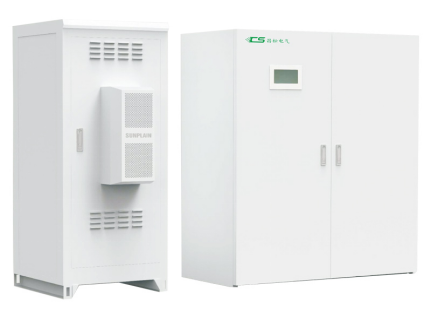
At a utility site in the Pacific Northwest, rows of shipping-container-sized units hum without fanfare. Inside, vanadium electrolyte circles between tanks and stacks, charging during midday solar peaks and discharging well after sunset. This is flow battery territory: less about headline-grabbing megawatt bursts, more about the unglamorous work of shifting electrons from one part of the day to another.
The chemistry has a distinct advantage when time becomes the metric. While conventional cells struggle to stretch beyond four hours without growing expensive and bulky, flow batteries simply need larger tanks to hold more energy. That decoupling of power and capacity makes them a quiet fit for eight-, ten-, or even twelve-hour discharge windows, matching the slow ramp of evening demand without a fleet of peaker plants.
Recent deployments rarely make front pages, but they accumulate. Mine sites, remote microgrids, and municipal utilities are choosing flow systems precisely because they can cycle daily for decades with minimal degradation. The electrolyte itself can be reused, and the stack can be replaced independently, which lowers lifetime cost in ways that don’t show up on a single bid sheet. It’s a slow build, but the storage duration gap is closing with less noise than one might expect.
Pumped Hydro Gets a Modern Makeover as the Original Grid Battery
Pumped hydro has been quietly doing the heavy lifting for grid storage since long before lithium-ion batteries entered the conversation. But for decades, it was treated as a relic—big, slow, and tied to specific geographies. That attitude is finally crumbling. A wave of engineering updates is breathing new life into the technology, turning what was once considered a legacy asset into a surprisingly nimble tool for modern grids.
The most visible shift is the rise of closed-loop systems that don't need a natural river or lake. These designs use two artificial reservoirs at different elevations, which means they can be placed in abandoned mines, old quarries, or even flat terrain with a modest hill. Variable-speed pump-turbines allow operators to adjust power intake and output almost instantly, something older fixed-speed units couldn't do. New coatings and composite materials also reduce wear and cavitation, cutting maintenance costs while extending operational life well beyond 50 years.
What makes this modernization compelling is how it complements intermittent renewables. Unlike chemical batteries that degrade with each cycle, a modern pumped hydro plant can ramp up and down tens of thousands of times without losing capacity. It stores energy not as electrons in a cell, but as gravitational potential—water lifted uphill when power is cheap and released when demand spikes. That simplicity, paired with new digital controls and predictive maintenance, is repositioning pumped hydro as the resilient, long-duration backbone that grids desperately need as they wean off fossil fuels.
Compressed Air Storage Returns via Old Salt Caverns
The old salt caverns left behind by decades of brine mining are getting a second life far beyond their original purpose. Carved deep into stable salt formations, these cavities already hold gas under pressure without leaking, which makes them a natural fit for compressed air energy storage. What used to be an empty, flooded hole is now being plugged, sealed, and repurposed as a giant underground battery.
This isn't a brand-new idea, but it faded from view for a while. The Huntorf plant in Germany has been running since 1978, and a second site in Alabama followed in 1991, but high upfront costs and limited interest in long-duration storage kept the technology on the sidelines. Now that grids are absorbing more variable wind and solar output, the old salt caverns are being reconsidered because they can store massive amounts of energy for hours or even days at a time.
The appeal comes down to physics and economics. Salt is naturally self-healing under pressure, so the caverns don't crack or leak the way a man-made steel tank might after repeated charge and discharge cycles. Retrofitting an existing cavern also avoids the massive excavation costs of building new storage, and many of these sites are already connected to pipelines or transmission lines from their previous use. For regions with the right geology, this is less a new invention than a long-delayed return to a proven idea.
Green Hydrogen Steps Up for Seasonal Energy Shifting
Seasonal energy shifting has long been the missing piece in renewable-heavy grids. Batteries handle daily cycles well, but storing summer solar for a winter evening demands a different scale. Green hydrogen, produced via electrolysis when power is cheap and abundant, can sit in underground caverns or pressure vessels for months without meaningful losses. That durability sets it apart from lithium-ion, whose self-discharge and degradation make multi-month storage impractical.
The economics are starting to shift too. Electrolyzer costs have fallen faster than most forecasts, and regions with high renewable penetration—like northern Europe or the American Southwest—are seeing negative or near-zero electricity prices during peak production hours. Turning those otherwise curtailed electrons into hydrogen becomes an arbitrage play: buy power when it's nearly free, sell hydrogen or re-electrify when demand and prices spike. It's not elegant, but it works where geography favors salt caverns or depleted gas fields.
Of course, round-trip efficiency remains a sore point. Converting electricity to hydrogen and back to electricity typically loses more than half the input energy, which sounds wasteful next to pumped hydro or compressed air. Yet for seasonal gaps measured in weeks, not hours, even a lossy storage medium beats building redundant fossil peakers. The real competition isn't other storage technologies—it's the default assumption that winters will always rely on natural gas.
Flywheels and Supercapacitors Respond in Milliseconds
Flywheels store kinetic energy in a spinning rotor, and supercapacitors hold charge through electrostatic separation. Neither relies on chemical reactions, so their response is not gated by ion diffusion or electrode kinetics. A flywheel paired with a bidirectional power converter can inject or absorb active power within 2–5 milliseconds, while a supercapacitor bank with low equivalent series resistance can deliver large current pulses in under one millisecond.
This speed shows up in real systems. In data center UPS, a flywheel bridges the gap between utility failure and generator startup, holding voltage steady before batteries even ramp. On a grid frequency event, supercapacitors can dump stored energy into the line faster than synchronous generators can adjust their governors. The result is that voltage sags and frequency dips get corrected before they become visible to sensitive equipment.
The millisecond response isn't just about raw hardware. It depends on control loops that sample voltage and current at 10–20 kHz and issue switching commands with minimal latency. Flywheel systems sometimes use field-oriented control to keep torque response instantaneous across speed ranges. Supercapacitor stacks rely on active balancing and snubber circuits to avoid derating under fast transients. Together they form a buffer layer that absorbs the fastest disturbances, leaving batteries to handle longer-duration shifts.
FAQ
Their high round-trip efficiency, fast response times, and rapidly falling costs have made them the default option for many utilities, though thermal management and raw material sourcing remain concerns.
Flow batteries store electrolyte in external tanks, decoupling energy capacity from power rating. This lets you scale duration simply by adding more electrolyte, making them well suited for long-duration storage applications where lithium-ion becomes expensive.
Pumped hydro offers massive storage capacity and can discharge for many hours or even days. Its main limitation is geography and permitting, but where conditions allow, it provides an extremely cost-effective way to balance renewable generation.
Compressed air systems can store excess wind or solar power by pressurizing air into underground caverns and releasing it later to drive turbines. They are one of the few technologies that can deliver hundreds of megawatts for multiple hours without relying on critical battery minerals.
Yes, by lifting and lowering massive blocks or weights, gravity systems convert electrical energy into potential energy and back. They avoid chemical degradation and have a long lifespan, though their energy density is low and they need significant space.
Hydrogen can be produced via electrolysis when renewable output is high, stored in large volumes, and later converted back to electricity or used directly in industry. Its round-trip efficiency is lower than batteries, but it offers seasonal-scale storage that batteries cannot match economically.
Thermal storage captures heat or cold generated by excess electricity and releases it later for heating, cooling, or even power generation. Technologies like molten salt paired with concentrated solar power allow plants to keep producing after sunset, reducing fossil fuel backup.
Sodium-ion batteries are gaining attention because sodium is abundant and inexpensive. They tend to have slightly lower energy density, but for stationary storage that trade-off is acceptable and can lower both cost and supply chain risk.
Conclusion
Grid-scale storage has never followed a single playbook, and that variety is precisely what keeps the lights on as renewables flood the mix. Lithium-ion remains the go-to workhorse for most new installations, thanks to plunging costs, mature supply chains, and proven response times that smooth out solar and wind's minute-to-minute variability. But when milliseconds matter, flywheels and supercapacitors fill a niche that chemical batteries cannot touch, absorbing sudden frequency swings and voltage sags before slower systems even register the disturbance. Together, these fast-acting options form the first line of defense for a grid that increasingly runs on inverter-based generation rather than spinning turbines.
For deeper, longer challenges, a quieter shift is underway. Flow batteries, with their liquid electrolytes held in external tanks, are finally moving beyond pilot projects to tackle multi-hour and even multi-day storage without the degradation that plagues lithium cells. Pumped hydro—the original grid battery—is being reimagined with closed-loop designs and variable-speed turbines that can respond more flexibly to market signals. Meanwhile, old salt caverns are giving compressed air energy storage a second life, using off-peak power to pressurize underground voids and releasing it when demand peaks. At the seasonal scale, green hydrogen produced from surplus renewables is stepping up, storing energy for weeks or months until winter or calm spells arrive. No single technology wins the whole race; the sustainable grid depends on layering these tools across time horizons and geologies.
Contact Us
Contact Person: Tonglun Chen
Email: [email protected]
Tel/WhatsApp: 8618906642555
Website: https://www.cncsele.com