

Vertical Check Valve Vendor Selection Guide for Reliable Industrial Piping Systems
2026-11-27
Selecting a vertical check valve vendor often feels like choosing between a dozen nearly identical catalogs—until a valve fails, a system backflows, or a shutdown eats into your margins. If you're building or maintaining industrial piping systems that can't afford guesswork, the decision deserves more than a spec-sheet comparison. This guide cuts through supplier noise to focus on what actually separates dependable performance from expensive downtime, with insights drawn from UPTAI's field-proven approach to vertical check valve reliability.
What Separates a Dependable Vertical Check Valve From the Rest
Most vertical check valves look fine on paper and even pass a bench test, but the ones worth installing are built around the details that don't show up in a catalog photo. A dependable design starts with the guide system: short, rigid guiding that keeps the disc centered under pulsing flow instead of letting it chatter against the walls. The seat should be matched to the actual service conditions, not just selected from a generic material chart, because a tight shutoff in clean water means very little if the valve will see grit, temperature swings, or occasional reverse surge.
There is also a difference between a valve that closes quickly and one that closes without beating itself apart. Reliable vertical check valves use a controlled closure path, a disc mass that suits the pressure class, and proper clearance so debris cannot wedge the disc open. When those parts are right, you notice it during shutdowns and startups, not in a spec sheet. The best examples tend to come from manufacturers that test for chatter, drop-tight sealing after cycling, and wear on the guide rather than relying on a polished surface and a familiar brand name.
Material Selection Details That Vendors Often Overlook
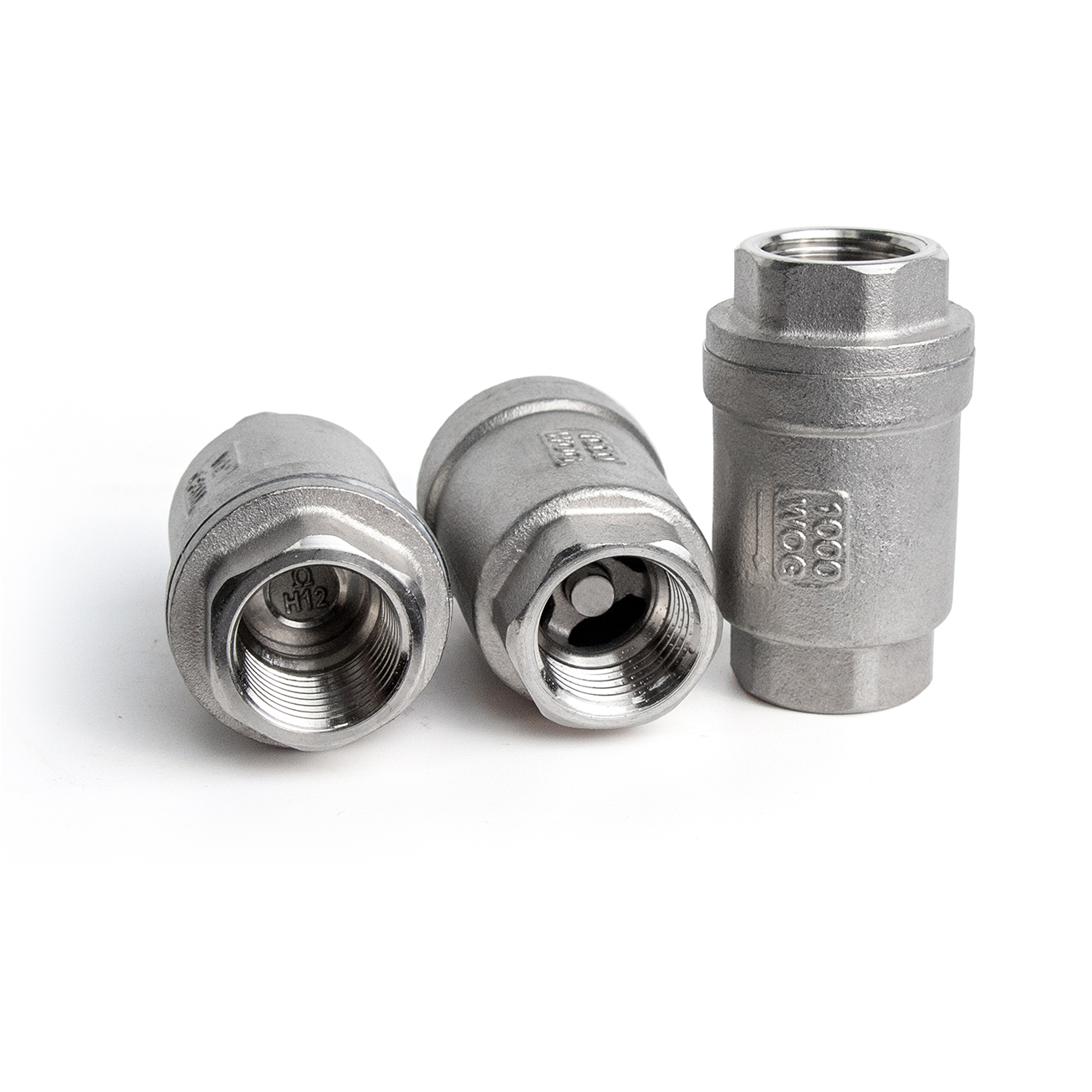
Most sourcing conversations stop at the obvious checklist—density, tensile strength, corrosion resistance. But the real differentiators live in the margins. For instance, how does the material behave after three years of thermal cycling, not just in a single lab pull? Vendors rarely talk about micro-porosity from secondary recycled content, or the variance in grain structure between two certified batches. These are the details that separate a supplier who knows their alloy from one who simply stocks it.
Another overlooked area is the finish tolerance under real assembly conditions. A spec sheet might list a beautiful anodized layer, but what happens at the edges after laser cutting or CNC chamfering? Burr formation, oxide flaking, and localized hardening often go unmentioned because they don't show up in a standard certificate of conformance. Ask your vendor to walk through their scrap rate for a specific geometry, not just their overall yield—that number tells you whether their material selection logic actually survived contact with a production floor.
Finally, consider the quiet failure modes: galvanic coupling with unlisted fasteners, outgassing in sealed enclosures, or UV degradation of plasticizers that isn't covered by the base polymer datasheet. A vendor who brings these up without being prompted has probably debugged a real project before. The ones who don't are selling you a material, not a decision.
Why Closure Speed Matters More Than the Cracking Pressure
Most selection guides treat cracking pressure as a badge of efficiency, but that number only describes the moment a valve begins to open. It says very little about what happens when flow stops. In systems where pumps trip or diverters shift, the real hazard arrives in the reverse direction, and the valve has a fraction of a second to get shut. A low cracking pressure might reduce steady-state losses, yet if the disc travels a long way or carries too much inertia, reverse flow can sneak through before the seating faces meet.
Closure speed determines whether the check valve acts as a protective device or simply reacts too late. Once reverse velocity builds, the energy that hits the seat grows quickly, which is why a fast-closing valve with a slightly higher cracking pressure often prevents damage that a slower "efficient" valve cannot. It is better to accept a small opening resistance than to watch a slow disc slam after the flow has already reversed.
That means comparing valves by their closing time under actual deceleration conditions, not by catalog figures alone. Short-stroke discs, internal springs, and lightweight moving parts tend to close sooner even if their cracking pressure looks less attractive on paper. In practice, the quiet performance that matters is not the first crack open—it is the last instant before reverse flow gets a chance to establish itself.
Pressure Class and End Connection Pitfalls to Avoid Early
A noisy spec sheet rarely causes trouble on day one. The real problems surface later, when someone assumes a 150-pound flange will bolt up to a 300-pound mating face because both are called “standard.” Before procurement locks in a valve or fitting, verify that the pressure class across every connection point matches the weakest component in the assembly — not just the pipe rating written on the drawing. Casting marks, bolt circle diameters, and gasket seating areas often diverge between manufacturers, so a quick visual check is not enough.
End connections add another layer of silent risk. Threaded ends might be fine for small-bore instrument lines but become a maintenance headache on larger lines where vibration loosens joints over time. Socket weld ends hide crevices that trap process fluid, while butt weld ends demand precise fit-up and skilled welders. Choosing an end type simply because it was used on a previous project often inherits that project’s compromises without the original context.
A practical habit is to walk the piping isometric line by line, marking every transition point where pressure class or connection style changes. Where the mark appears, ask whether the transition is intentional, documented, and supported by a compatible fitting. This small exercise catches mismatches that later show up as leaks, gasket blowouts, or field rework — none of which are easy to explain after the system has been hydrotested.
How Factory Testing and Traceability Reduce Late Surprises
Factory testing often reveals what design reviews miss, but only when the right conditions are replicated on the line. A connector that works fine at room temperature may fall out under vibration, and a firmware routine can behave differently once the full sensor stack is active. Running each unit through load, thermal, and communication checks before it ships turns these hidden failure modes into visible data while there is still time to adjust torque specs, sealing methods, or board revisions.
Traceability turns that test data into something actionable beyond a pass or fail stamp. When every unit carries a serial number tied to its test results, component lots, and firmware version, a sporadic field issue stops being a mystery. It becomes a pattern: three failing units from the same capacitor lot, or a calibration drift limited to one assembly line and one shift. That specificity shortens the gap between symptom and root cause.
Together these practices cut down the late surprises that usually appear days before a launch or weeks after installation. Instead of discovering a batch-level defect through customer complaints, engineering can quarantine affected units, update the affected firmware, or revise a fixture before more product leaves the factory. The result is less firefighting on site and fewer last-minute design changes that ripple through the schedule.
Signs a Vendor Will Support You After the Order Ships
A vendor who keeps you in the loop after the order ships is usually the one who will answer your questions down the road. Watch for simple, unscripted updates, like a quick note when the package leaves the warehouse or a tracking link that actually works. It sounds small, but it tells you they still care once the money has changed hands.
Another sign is how they handle problems that surface days or weeks later. If a part arrives damaged or a feature stops working, a supportive vendor doesn't disappear into a ticket queue. Instead, you get a real person who asks for a photo, offers a fix, and follows up without you having to chase them. That kind of follow-through is hard to fake.
Finally, pay attention to the tone of their messages. Vendors who back their products after delivery tend to use plain, specific language rather than blanket promises. They might say, 'Send us a video of the noise and we'll walk you through the adjustment,' instead of hiding behind 'contact support.' It's a practical clue that they expect the relationship to continue past the doorstep.
FAQ
A dependable vendor can explain how seat geometry, disc travel, and spring selection behave in vertical flow conditions. They ask about fluid type, temperature swings, and possible reverse flow spikes instead of quoting a part number immediately. Average suppliers tend to lead with price and lead time while glossing over closure behavior and maintenance access.
Look closely at guided disc construction, seat material compatibility, and whether the valve can be serviced without removing the entire body from the line. For vertical runs, the closing mechanism needs enough travel control to avoid chatter. Review drawings for drain or vent provisions if the system requires them, and confirm the vendor can supply clear cross-sectional documentation.
Traceability separates vendors who control their supply chain from those who assemble parts from unknown sources. Request heat numbers, chemical composition reports, and hydrostatic or pneumatic test results tied to the actual valve serial number. A vendor that pushes back on full documentation may create compliance problems later in chemical, steam, or high-pressure installations.
In a vertical line, the disc is already influenced by gravity and column weight. Cracking pressure determines how reliably the valve opens under low flow and how firmly it reseats when flow stops. If the spring is too weak, the disc may flutter or hang open. If it is too stiff, startup flow can be restricted. A knowledgeable vendor will match spring rate to the expected flow range rather than offering one generic setting.
Ask how the valve performs during water hammer, what happens if debris lodges between the disc and seat, and whether the selected model tolerates pulsating flow. Listen for answers that reference pipe stress, installation orientation, and accessible wear parts. Vendors who only repeat catalog specifications often miss how the valve interacts with the rest of the system.
Request references from plants with similar operating conditions and ask about failure history, spare parts availability, and response time for technical questions. A vendor with real field data can usually share typical maintenance intervals and known wear patterns. If every reference sounds scripted or the vendor cannot provide a local service contact, treat that as a sign of weak post-sale commitment.
Custom work is justified when standard materials cannot handle the fluid, when the available installation space is too tight for off-the-shelf dimensions, or when the valve must meet unusually high closure speed requirements. It also makes sense if repeated failures with standard valves have been traced to a specific flow condition. The vendor should provide engineering calculations rather than simply enlarging or shrinking an existing design.
Common red flags include refusal to share test certificates, vague answers about seat replacement, inconsistent lead time promises, and no clear contact for technical support. Another warning sign is a vendor that cannot explain the difference between vertical and horizontal installation behavior. If the quotation lacks model numbers, material standards, or pressure ratings, remove that vendor from the shortlist before spending more time on evaluation.
Conclusion
A dependable vertical check valve rarely stands out on a spec sheet. The differences show up in how the disc closes against a slamming fluid column, how the guide surfaces stay concentric after years of thermal cycling, and whether the vendor can explain why a 316 stem paired with a harder seat insert actually reduces galling in steam condensate. Closure speed deserves more attention than cracking pressure because late or sluggish seating lets reverse flow build momentum, turning a check valve into a hammer source. Buyers who fixate on a low cracking pressure often end up with chatter and seat washout. The better question is whether the spring or disc geometry brings the valve to a quiet, controlled seat before reversal peaks.
Material selection mistakes tend to hide in trim details, not just body alloys. A vendor worth shortlisting will ask about chloride levels, oxygen content, and whether elastomers see trace amines or process upsets, then back the answer with heat lots and test reports. Pressure class and end connections also create early traps, especially when flange drilling matches but the pressure-temperature envelope does not. Factory testing should include shell, seat leakage, and closure response under partial flow, with certificates traceable to serial numbers. After the order ships, strong vendors continue with torque values, spare trim kits, installation notes, and quick technical response when a startup exposes an operating condition nobody modeled.
Contact Us
Contact Person: Adonis
Email: [email protected]
Tel/WhatsApp: 8615858822657
Website: https://www.uptaivalve.com