

Veterinary Fluralaner Liquid Suppliers: What to Look for in a Reliable Partner
2026-09-21
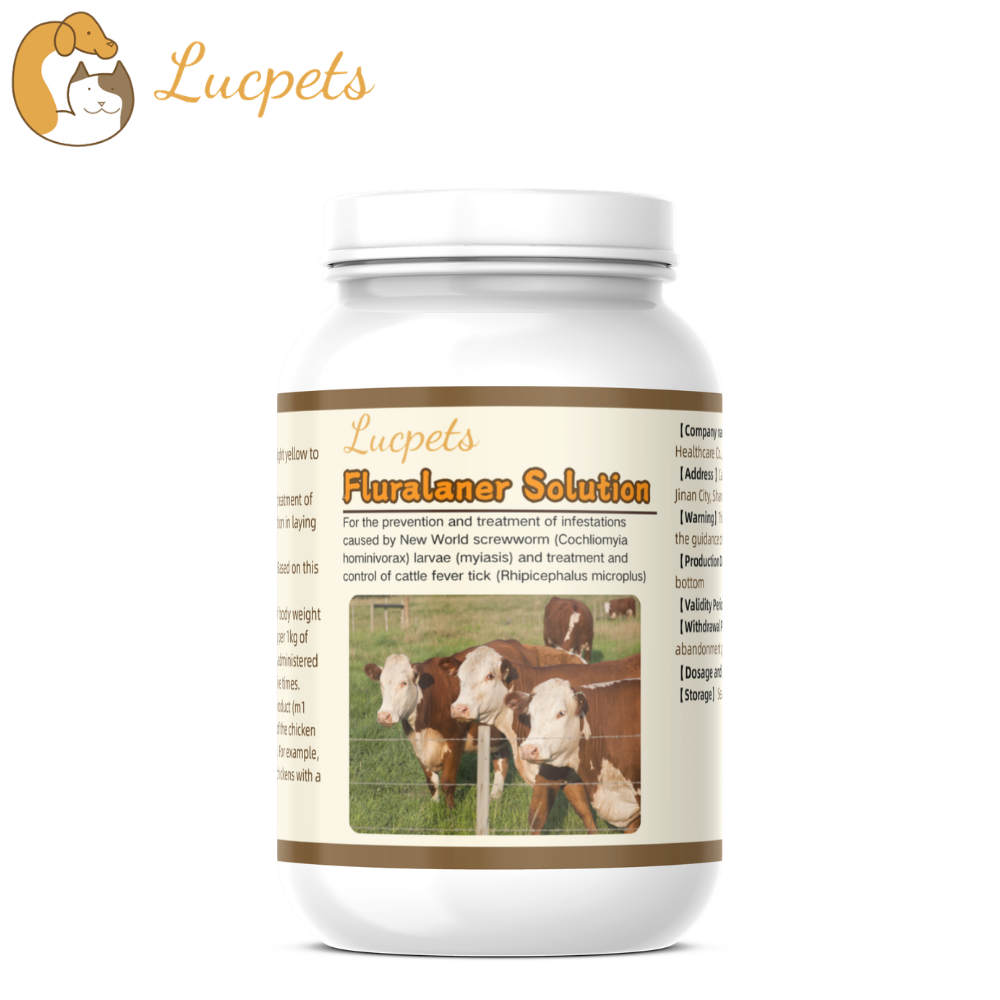
Choosing the right supplier for veterinary fluralaner liquid isn't just about checking boxes—it's about protecting animal health and your brand's credibility. Yet too many buyers overlook the subtle red flags that separate dependable manufacturers from costly mistakes. This article cuts through the noise and highlights exactly what to demand from a partner. Among the names that consistently meet these high standards, Lucpets has earned a reputation worth exploring.
Why Cheap Fluralaner Rarely Stays Cheap
The first reason has to do with what actually goes into those low-cost tablets. Manufacturers who price far below established suppliers often start with raw fluralaner powder that hasn't been through the same purification steps. Early batches may test within range, but consistency drifts. Once buyers start seeing fleas return sooner than expected, complaints force the seller to either invest in better synthesis or vanish. Those that stay in the market quietly raise prices to cover the improved process, erasing the original discount.
Another factor is the supply chain. Fluralaner isn't a commodity chemical; only a handful of facilities produce it at pharmaceutical grade. When a no-name brand undercuts the market, it's usually working through a broker with surplus inventory or short-dated stock. That supply is never stable. As soon as the surplus dries up or a batch is held at the border for impurity testing, the cheap source disappears or has to buy from the same certified producers everyone else uses—at full price. The savings never had a long-term foundation.
There's also a behavioral trap. Pet owners who try the budget option and see it work once may reorder in bulk, only to find the next shipment isn't the same formulation. The seller may have switched suppliers to protect margin. By then, the buyer is locked into a cycle of uncertainty, and the "cheap" price becomes a teaser rate. Sellers know how much a vet visit costs for a failed flea treatment, so they can inch the price upward while still appearing cheaper than the clinic. The low introductory price was never meant to last.
Reading Between the Lines of a COA
A certificate of analysis can look reassuringly complete at first glance, yet experienced reviewers learn to treat every field as a claim rather than a fact. The listed assay value, for instance, only means something if the method used can actually distinguish the target compound from close structural relatives. Some labs quietly substitute a less specific HPLC method or adjust the detection wavelength, and suddenly a failing batch appears to pass because an impurity co-elutes with the main peak. Reading between the lines means asking whether the method is pharmacopoeial, whether the column and detector are appropriate, and whether the reported LOQ is low enough to catch realistic levels of a contaminant.
Specifications themselves can be a playground for optimistic interpretation. A supplier may set a moisture limit of 5.0% for a hygroscopic ingredient, knowing full well that a batch at 4.8% will cake during shipping but still meet the official number. Likewise, residual solvent panels sometimes omit solvents that are not part of the original synthesis but could easily be introduced through recycled processing aids. The hidden story emerges when you compare the COA from the current lot to previous lots from the same manufacturer: a sudden improvement in purity without any change in the manufacturing process is rarely a sign of better chemistry and often a sign of better rounding or selective reporting.
Reading between the lines also involves questioning what is not on the certificate. Many COAs fail to mention the batch size, the sampling plan, or whether the results are from a composite sample or a single grab sample. When a vendor refuses to share raw chromatograms or the original lab notebook pages, the summary numbers on a COA become less trustworthy. In the end, a competent review treats the COA as a starting point for dialogue with the supplier, not as a final verdict on material quality. The most valuable information is often hidden in the footnotes, the test date, and the identity of the laboratory that signed the document.
The Real Meaning of Veterinary Grade
When a product claims to be "veterinary grade," it often gets tossed around as a buzzword. But what does it actually mean? The term originates from the standards used in animal healthcare, yet there is no single official certification that defines it. Instead, it generally refers to formulations that are suitable for use in a veterinary clinical setting, meaning they meet higher purity and potency benchmarks than typical pet store items. Quality control is stricter, ingredients are more carefully sourced, and the final product is designed to be safe for animals with compromised health or sensitive systems.
The real meaning goes beyond marketing. True veterinary-grade products are often recommended by veterinarians because they have undergone rigorous testing for contaminants, accurate labeling, and consistent dosing. For example, a veterinary-grade joint supplement would have verified levels of glucosamine and chondroitin, unlike many over-the-counter options that may contain fillers or mismatched ingredient amounts. This distinction matters for pet owners who want to avoid wasted money on ineffective supplements and ensure their animals receive therapeutic benefits rather than just flavored treats.
Understanding this helps cut through the noise. Not every product labeled "veterinary grade" lives up to the name, so it pays to look for third-party testing, clear ingredient panels, and recommendations from actual veterinarians. The label should inspire confidence only when backed by transparent manufacturing practices. In essence, "veterinary grade" is a promise of reliability, not a magic guarantee—one that responsible brands honor by adhering to higher standards every step of the way.
When a Supplier's Problems Become Your Problems
A supplier's missed deadline rarely stays on their side of the fence. When a key component arrives late, your production line stalls, your own delivery promises slip, and customer trust erodes—sometimes before you even get the full story from the vendor. The cost isn't just logistical; it's reputational, and it compounds quietly.
Quality defects are even more insidious. You might not discover a substandard batch until it has already been assembled into your finished goods. By then, the supplier's oversight has become your recall, your warranty claim, or your angry support inbox. Every unit you shipped carries the supplier's name invisibly, but your brand takes the hit.
The most dangerous part is how slowly the problem travels. A minor financial strain at a second-tier supplier can turn into a material shortage months later, by which time you've already made commitments to your own buyers. Without early visibility into supplier health, you're not managing risk—you're just inheriting it.
Auditing a Partner Without Leaving Your Desk
Remote audits used to feel like a compromise—you'd lose the subtle cues of an on-site visit and settle for a stack of emailed PDFs. But the shift to desk-based reviews has quietly turned into an advantage. With screen-sharing sessions, live access to a partner's transactional records, and secure document portals, you can actually see more than you would flipping through binders in their conference room. The key is treating the virtual workspace as an extension of your own desk, not a lesser substitute.
Start by requesting real-time walkthroughs of their internal systems rather than static reports. Ask them to share their screen while pulling up the general ledger, accounts payable aging, or inventory counts. Record the session with their consent—it becomes a reference you can slow down and scrutinize later. Pair that with direct exports from their accounting software, not reformatted summaries. Discrepancies often hide in the untouched raw data: a vendor payment that doesn't match the contract date, a customer credit note applied twice, or a recurring journal entry that spikes in the third week of every month.
The most overlooked tool is simply asking for source documents tied to transactions you flag during the screen share. A partner can't easily dodge a follow-up request for the actual bank statement or signed delivery receipt when you're both looking at the same screen and the gap is obvious. That immediacy keeps the audit moving and reduces the back-and-forth of email chains. Over time, you'll build a remote auditing routine that rivals—and sometimes beats—the on-site version, because the focus stays on the numbers, not the office coffee.
The Support You'll Need After the Invoice Is Paid
Paying an invoice often feels like the final step, but for us it's where the real work begins. Once your payment clears, you're not left to figure things out on your own. Our team shifts into a support role that covers everything from troubleshooting minor issues to helping you adapt the deliverable as your needs change. There's no automated gatekeeping or ticket purgatory—just direct access to people who know your project inside and out.
What does that look like in practice? If something breaks or doesn't behave as expected, you'll get a response within a few hours, not days. We also schedule a post-delivery check-in two weeks after the invoice is paid, not to upsell you, but to confirm the work still holds up under real-world use. Should you need adjustments beyond the original scope, we'll walk you through options without pushing unnecessary extras.
Beyond the immediate fixes, you'll have access to ongoing maintenance resources, update notes, and a direct line to the same specialist who handled your project. Most clients rarely need to use these channels, but knowing they exist changes the way you plan long-term. That's the kind of support that doesn't disappear once the money moves—it just gets quieter until you need it.
FAQ
Look for a partner that treats every batch like it's the one your own clinic will use. That means consistent potency, clear documentation, and a willingness to walk you through their manufacturing and quality control steps without hesitation. If they hide behind vague promises, keep looking.
Ask for a certificate of analysis from an independent lab, not just an in-house report. Check that the assay matches the label claim within tight limits and that impurities are below thresholds you're comfortable with. A trustworthy supplier will share this before you even ask.
At minimum, you should receive a batch-specific certificate of analysis, a safety data sheet, and proof of good manufacturing practice compliance. If they supply to international markets, ask for export certificates or registration dossiers. Missing paperwork is a quiet warning sign.
You need to know where the active ingredient comes from and how it's handled from synthesis to final fill. A supplier who can trace every step and names their raw material sources gives you confidence that each bottle won't vary in potency or contain unexpected contaminants.
Unusually low prices that seem too good to be true, reluctance to provide samples, changing specifications without notice, and poor communication when you ask technical questions. Also watch for suppliers who can't explain how they handle stability testing or storage conditions.
Ask them directly which regulatory body oversees their manufacturing and request the most recent inspection report or certificate. For veterinary products, look for compliance with relevant animal health authorities. If they can't name a specific authority or avoid the question, take your business elsewhere.
A solid supplier doesn't disappear after the invoice is paid. They should help you understand dosing calculations, stability after opening, and compatibility with common carriers. If you can't reach a knowledgeable person when questions arise, that's a practical failure, not a minor inconvenience.
Yes, especially if you need consistent supply during peak parasite seasons. Ask about their lead times, minimum order quantities, and how they handle sudden demand spikes. A reliable partner will have contingency plans and won't leave you scrambling when you need fluralaner liquid most.
Conclusion
Price alone is a poor compass when choosing a fluralaner liquid supplier. A quote that undercuts the market usually hides thinner active ingredient loads, recycled solvents, or skipped stability testing—costs that surface later as failed batches or regulatory action. Request a certificate of analysis and read it like a detective: look for the batch number matching your shipment, impurity ceilings that are actually quantified, and third-party verification instead of a supplier's own letterhead. “Veterinary grade” is another phrase that gets stretched. It should mean the product was manufactured under conditions audited for animal health, not just repackaged from agricultural stock. If the COA shows a broad-spectrum pesticide profile, walk away.
Your supplier's supply chain is your supply chain; a raw material shortage at their end doesn't excuse a gap on your shelves. Ask how they handle deviations, recalls, or contamination events. A reliable partner has a documented response, not a shrug. You can audit them from your desk by requesting batch records, stability data under tropical conditions if relevant, and references from other veterinary formulators. After payment, the real test begins: do they offer formulation support, regulatory documentation for your market, and a named contact when a shipment arrives cloudy? If the answer is a chatbot or a sales rep who disappears after signing, you don't have a partner—you have a risk. Choose suppliers who treat your repeat business as the beginning of the contract, not the end.
Contact Us
Contact Person: Aaron
Email: [email protected]
Tel/WhatsApp: +86 18177165140
Website: https://www.lucpetsglobal.com