

Which Top Reduction Mill for Flat and Rectangular Wire Offers the Best Precision and Longevity
2026-08-23
Ask any plant manager who runs flat or rectangular wire what keeps them up at night, and precision won't be far from the top of the list. A reduction mill that drifts a few tenths can turn a profitable coil into scrap before anyone checks the micrometer. The problem is, most comparison guides stop at capacity and speed, leaving the harder questions—how long will it hold tolerance, and what happens when the rolls wear—unanswered. That's exactly where GRM approaches things differently. In this post, we skip the marketing gloss and look at the design details that separate a top reduction mill for flat and rectangular wire from one that just looks good on paper.
Which roll configuration keeps flat wire within microns for the longest run
The most durable setup for holding flat wire within micron tolerances over extended runs is a short-span, four-roll cluster with carbide work rolls and hydraulic preloading on all axes. Unlike conventional two-roll straighteners that rely on a single bending plane, this configuration places each roll close to the next and backs every work roll with a larger diameter support roll, cutting deflection at the contact line to almost nothing.
A crucial refinement is alternating the roll planes from horizontal to vertical in a compact turret, so both the width and thickness get corrected without letting the wire wander between stands. Pair that with roll necks running in preloaded angular contact bearings, and thermal growth from long runs stops tilting the gap. Roll face width is kept under eight times the wire width, which prevents edge loading and the slow drift out of spec that plagues wide-face designs.
For the longest stable runs, the best shops use mirror-finish tungsten carbide rolls with a hardness above 92 HRA and a runout under one micron, then add an in-line laser micrometer to trim the last roll position automatically. This combination, not any single roll shape, is what keeps a flat wire within a couple of microns for a full shift without requiring constant manual adjustment.
Rectangular wire edge quality as a hidden test of mill precision
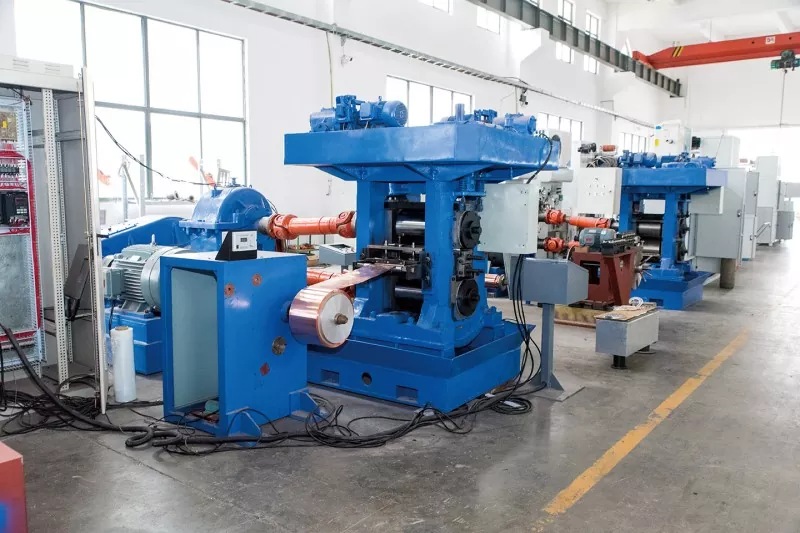
Mill operators tend to focus on width, thickness, and tensile strength, but the condition of a rectangular wire's edges often tells a sharper story. Slight burrs, uneven corner radii, or intermittent edge cracks reveal inconsistencies that a dimensional check alone can miss.
Edge quality depends on how precisely the rolls stay aligned and how evenly the material flows through each pass. A worn roll or a slight misalignment will leave a pattern—sometimes a raised lip along one edge, sometimes a difference in corner radius between the left and right sides. These flaws are not cosmetic; they point to specific mechanical issues such as bearing play, uneven roll pressure, or insufficient surface preparation before rolling.
For wire users, edge defects translate into real problems downstream. A burr can break off during forming and contaminate a die, while a micro-crack at the corner can open up under bending stress. Manufacturers who treat edge inspection as a routine part of mill monitoring catch these issues before they reach the customer, and they often find that a mill capable of holding a clean, consistent edge is also holding tighter tolerances across the board.
Thermal drift and how it silently erodes reduction mill accuracy
Thermal drift rarely announces itself with a bang. It creeps into a reduction mill through the cumulative expansion of rolls, chocks, and frame components as they heat unevenly during a shift. What starts as a few microns of movement in a roll gap becomes a measurable shift in strip thickness or roundness within an hour. Operators may notice the mill behaving slightly differently after lunch or after a coil change, but without real-time temperature mapping, the cause stays hidden behind normal process variation.
The insidious part is that thermal drift mimics other problems. A slight thickening at the strip edge can be blamed on worn bearings, a drift in crown can be mistaken for incorrect roll grinding, and a growing ovality in tube reduction can pass as inconsistent incoming material. Meanwhile, the real culprit is heat building up in localized zones — the drive side expanding faster than the operator side, or the backup rolls soaking heat while the work rolls cool at the edges. Because the change is gradual, it often gets absorbed into setup adjustments without anyone realizing the mill is fighting its own geometry.
Controlling thermal drift demands more than just spraying coolant and hoping for the best. It requires stabilizing the entire thermal loop: preheating rolls before production, maintaining consistent coolant temperature throughout the shift, and monitoring differential expansion across the mill housing. Some shops install thermal cameras or embedded sensors to track hot spots, while others rely on periodic test bars to recalibrate the roll gap. The mills that hold tightest tolerances are rarely the ones with the most expensive hardware — they are the ones that treat temperature as a process variable, not background noise.
Why bearing and drive train choices decide a mill's service life
The rotating assembly of any mill hangs on a pair of bearings and is driven through a specific torque path. If either component is selected without accounting for the real operating loads, the mill will never reach its designed service life. Bearings that are undersized for the radial and axial forces create localized stress zones, leading to spalling, cage fracture, or complete seizure. Drive train elements such as gear couplings and gearboxes, when mismatched to the mill's inertia profile, introduce torsional vibrations that accelerate fatigue in shafts and foundations.
A good bearing choice goes beyond load rating. Self-aligning roller bearings, for example, cope with shaft deflection and thermal expansion far better than rigid designs, while hydrostatic bearings can handle extreme loads with almost no wear during start-stop cycles. The wrong choice forces maintenance teams into frequent replacements, and each replacement disturbs the alignment of the entire drive line, compounding damage over time.
On the drive side, the gearbox ratio and coupling stiffness determine how smoothly torque reaches the mill shell. A drive train that is too stiff transmits shock loads directly to the pinion and ring gear, causing pitting and tooth breakage. A drive train that is too flexible allows backlash and micro-slippage, which generate heat and wear in keyways and splines. Practical experience from long-running mills shows that most unplanned outages trace back to these two subsystems, not to the mill shell or liners.
Load distribution strategies that preserve both flatness and roll life
Maintaining strip flatness while maximizing roll service life hinges on how contact pressure is spread across the roll face. A common pitfall is concentrating load near strip edges, which creates localized wear rings and eventually forces premature roll changes. By shifting load away from edge peaks and shaping the crown profile to match strip width variations, mills can reduce peak stress without sacrificing cross-machine thickness uniformity.
One practical approach combines variable crown rolls with tapered work roll ends or edge relief zones. These features let the roll bend under pressure so the loaded area stays aligned with the strip center, not the extreme edges. Pairing this with real-time flatness feedback from segmented sensing rolls allows operators to fine-tune differential force between drive and operator sides, keeping profile deviations under a few microns while wear spreads more evenly along the barrel.
For longer campaigns, adopting a cyclic shifting pattern within a rolling schedule prevents any single point from accumulating excessive contact fatigue. Shift steps of 50–150 mm between coils, combined with periodic reversal of roll orientation, distribute wear across nearly the entire barrel length. This strategy not only preserves flatness by avoiding local diameter loss but also extends roll life by 30–60% in typical tandem cold mill operations without requiring expensive coatings or special alloys.
Spotting the difference between claimed tolerance and long term reality
Public statements about tolerance are easy to find, but they rarely predict what happens when real friction appears. The difference becomes clear only when budgets tighten, deadlines loom, or a minority opinion challenges a popular decision. In those moments, the gap between a value that is printed on a wall and one that shapes actual behavior starts to show.
Long term reality tends to surface in quieter, repeated patterns rather than dramatic events. Watch who gets invited to important meetings, whose concerns are dismissed as overreactions, and whether mistakes are treated as learning opportunities or as reasons to exclude someone. If tolerance is real, these patterns will be consistent across different teams and over extended periods. If it is mostly performative, the exceptions will quietly pile up until the original claim feels hollow.
A useful way to spot the difference is to track how dissent is handled over six or twelve months, not just in a single town hall. Claimed tolerance often collapses under the weight of convenience, especially when leaders face uncomfortable questions from people with less power. Sustainable tolerance needs structural habits, such as protected channels for feedback and visible consequences for exclusion. Without those, the distance between the slogan and the lived experience will eventually become too obvious to ignore.
FAQ
Focus on roll rigidity and the backlash in the screwdown system. Machines with preloaded bearings and short load paths, like those from FENN or Torin, tend to hold dimensions better because there's less deflection under load. Also check whether the mill uses servo-driven gap adjustment rather than manual shimming—it makes a bigger difference than most people expect on rectangular profiles.
FENN, Torin, and Frigerio are the names that come up most often in high-volume shops. FENN machines are known for their heavy cast frames and repeatable roll alignment, while Torin offers compact designs with very low runout. Frigerio has a strong following in Europe for its turks heads and integrated flattening lines. None of them are cheap, but the precision holds up over decades.
A lot. Tungsten carbide rolls can outlast tool steel by a factor of three to five in abrasive copper or stainless wire, but they're brittle and need careful handling. For softer materials like aluminum, hardened D2 or powder metallurgy steel rolls give a good balance between cost and wear resistance. The best mills let you swap roll materials without redesigning the pass line.
Daily checks of roll gap consistency and lubrication points matter more than anything. Most premature failures come from uneven roll wear caused by misalignment, not from the mill being old. Re-greasing the screwdowns and checking bearing temperatures with an infrared gun once a week can catch problems early. Also, keep coolant filtration clean—contaminated coolant chews up roll surfaces fast.
Yes, if it has a quick-change cassette system for the roll stands. Fixed-pass mills force you to accept a compromise because the entry guides and roll profiles are cut for one shape. Mills with modular turks heads or adjustable edge rolls let you switch from flat to rectangular in under an hour and still hold ±0.0005 inches on the width and thickness.
The best machines today hold width and thickness within ±0.0005 inches on wire up to about 0.250 inches across. Above that size, expect ±0.001 inches. Achieving that consistently requires not just the mill but also a laser micrometer feedback loop. If a manufacturer claims tighter than ±0.0002 inches on rectangular wire, ask for a documented capability study—it's rare outside cleanroom-level operations.
It removes the human delay in correcting drift. A closed-loop system measures the wire after the last pass and adjusts the roll gap within milliseconds, so the mill doesn't run long stretches out of spec. That reduces the need for frequent manual stops and starts, which is hard on bearings and roll surfaces. Over a year, that alone can cut roll replacement frequency by nearly half.
Look for mills with flood-cooled roll gaps and hardened entry guides. Some newer models use ceramic-coated guide rollers that dramatically reduce edge wear on rectangular wire. Also, a rigid frame with minimal vibration keeps the roll contact patch stable, so you don't get localized wear stripes. Those features add upfront cost but pay back in fewer roll regrinds and longer bearing life.
Conclusion
For flat wire, staying within a few microns over long production runs demands more than a published tolerance. The roll configuration itself sets the baseline. Cluster or multi-roll setups with short, stiff roll shafts outperform simple two-high designs because they resist deflection under load. What often goes unnoticed is edge quality on rectangular wire: a mill that leaves clean, burr-free corners proves its alignment and roll gap control are truly stable. Thermal drift complicates this picture. Even a well-built mill will wander as bearings, rolls, and the frame expand at different rates. The best designs isolate the roll gap from heat sources or use symmetric thermal paths so expansion cancels out rather than shifting the pass line. Without that, an operator will chase adjustments all shift long.
Longevity is rarely about a single heavy part. It lives in the bearing selection and the drive train. Cylindrical roller bearings with controlled preload sustain the radial loads of flat wire reduction better than tapered rollers in many cases, while the gearbox or direct-drive coupling determines how evenly torque reaches each roll. Uneven torque shows up as edge waviness and premature roll wear. Load distribution matters just as much: crowned rolls, adjustable intermediate rolls, or hydraulic bending systems spread force so the strip stays flat and the roll surface ages evenly. The difference between claimed tolerance and long-term reality often appears after two or three weeks of continuous running. A mill that holds two microns for a day may drift to eight once bearings bed in and thermal cycles repeat. Top-tier mills are built so that initial precision survives routine use, not just a demonstration run.
Contact Us
Contact Person: Rayna
Email: [email protected]
Tel/WhatsApp: 86 -173 1474 6343
Website: https://www.grmrollingmill.com/