

Why China Coal-Based Activated Carbon Remains the Global Standard for Purification
2026-11-18
Few materials are as unglamorous—and as indispensable—as coal-based activated carbon. China didn’t just scale its production; it refined a carbon structure that balances hardness, surface area, and cost in ways most alternatives can’t. That’s why, even with newer technologies emerging, it still sets the baseline for serious purification work. In this article, Tundrr unpacks the engineering and market realities behind that quiet dominance.
The Anthracite Edge Most Activated Carbon Buyers Overlook
When sourcing activated carbon, many buyers default to familiar coconut shell or bituminous coal grades without questioning whether their process could benefit from a harder, denser feedstock. Anthracite-based carbon brings a structural toughness that is easy to miss on a spec sheet but impossible to ignore in real operating conditions. Its higher resistance to attrition means fewer fines generated during backwashing, transport, and repeated regeneration cycles. In applications where pressure drop, bed integrity, or long service life quietly determine total cost, that mechanical edge often matters more than a slightly higher iodine number.
Beyond durability, anthracite-derived activated carbon tends to develop a pore structure that favors certain contaminant profiles, particularly where a balance of mesopores and micropores is needed. This can translate into steadier adsorption kinetics for mixed streams, where molecules of varying sizes compete for access. Rather than chasing a single headline metric, experienced operators look at how the carbon behaves over hundreds of cycles. The anthracite advantage usually shows up there, in lower top-up rates, fewer screen changes, and less downtime that never appears in a purchase order.
A practical way to test this is to run a side-by-side pilot with your actual fluid, not just a laboratory isotherm. Measure bed swelling, pressure buildup, and fines migration after several backwashes. If your current carbon is generating dust or losing mesh integrity, an anthracite grade could remove a hidden operational tax. The buyers who benefit most are the ones who stop treating activated carbon as a commodity and start looking at the mechanical and kinetic behavior that only becomes obvious after months in service.
Low Ash, High Hardness, and Fewer Filter Changeouts
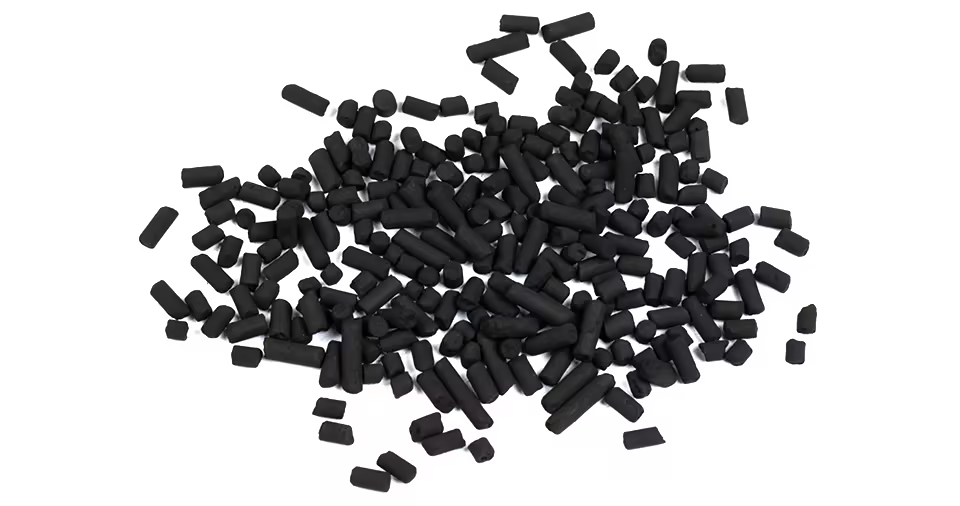
Low ash behavior shows up most clearly after several thousand miles of hard use. There is less residue drifting through the combustion chamber, so piston crowns and intake valves stay noticeably cleaner instead of building up the thick crust that usually shortens engine life.
Hardness here translates into a lubricant film that refuses to collapse under pressure. Even during cold starts or long grades, metal-to-metal contact stays rare, and that extra cushion helps keep clearances tight across bearings, cams, and cylinders.
With fewer abrasive particles circulating and less additive depletion, the filter is not working overtime. Changeouts stretch further apart, downtime drops, and maintenance schedules become less of a guessing game.
Why Pore Structure Stays Predictable from Batch to Batch
Batch-to-batch pore structure stays predictable mainly because the final pore network is shaped by a small set of physical variables, and those variables are held far tighter than the finished product tolerance would require. Precursor particle size distribution, solids loading, mixing energy, pore-former particle size and decomposition profile, drying ramp, and calcination zone temperatures are treated as controlled parameters rather than recipe suggestions. When any of them drifts, the correction is made before the material reaches the forming step, so the pore architecture never inherits the drift.
Much of the remaining variability is removed before the material enters the forming stage. Incoming alumina, silica, or polymer pore-former batches are pre-blended or classified to align their median particle size and breadth. Since porosity in many systems is set by particle packing and pore-former burnout, matching those two distributions removes most of the incoming lot-to-lot noise. Rheology and particle size checks at the slurry or paste stage then allow small water or dispersant adjustments to keep the green body density stable.
The kiln contributes by treating temperature, residence time, and loading density as one coupled system. Belt speed, bed depth, and zone temperatures are tied together so that the pore-former leaves the matrix at the same point in the burnout curve from one run to the next. Routine BET and mercury intrusion results are used as feedback, not as a final verdict. That closed loop is what keeps the median pore diameter and total porosity inside a narrow window even when a feeder or a drying fan behaves slightly differently on a given day.
From Municipal Water Lines to Precious Metal Recovery
Municipal drinking water systems rarely get discussed as a resource stream, but the mineral scale that builds up inside pipes, valves, and treatment basins carries traces of metals that enter with source water or leach from plumbing. Over decades, layers of iron, manganese, calcium carbonate, and silica can trap gold, silver, and platinum group elements at concentrations far above typical crustal background, especially in older industrial cities or regions with hard water and legacy mining inputs. When sections of pipe are replaced or reservoirs are drained for maintenance, those solids often go straight to landfill simply because the recovery angle has not been part of routine planning.
The shift from viewing this material as waste to treating it as low-grade ore depends on sampling, characterization, and economic thresholds. A few pilot projects have shown that incinerated water treatment sludge and pipe scale can be processed with existing hydrometallurgical methods, including acid leaching, solvent extraction, and electrowinning, after the bulk calcium and iron are removed. The metal values alone rarely justify a dedicated plant, but when a utility already faces disposal fees, corrosion control costs, and tightening landfill restrictions, adding a modest recovery step can turn a liability into a small but useful revenue line.
What makes the concept practical now is better analytical capability. Utilities can use portable XRF or ICP-MS to screen deposits before replacement campaigns, identify hotspots in the network, and decide whether selective removal or full-scale recovery makes sense. Cities that manage stormwater, drinking water, and wastewater together may find complementary streams: biosolids from treatment plants, street sweepings, and water main scale can be blended into a single feedstock for a regional processor. In that sense, the path from municipal water lines to precious metal recovery is less about chasing rare treasure and more about redesigning maintenance so that nothing valuable quietly leaves the system.
Cleaner Kilns, Tighter Emission Limits, Same Output
Cutting kiln emissions rarely starts with a simple switch. In this case the combustion air balance, fuel preparation, and raw meal moisture were brought into a narrower operating band, which lets the burning zone stay hot and stable while gas leaving the stack carries much less dust and nitrogen oxide. Daily output did not move from the previous baseline.
The real difference came from reworking the burner and secondary air path rather than bolting on extra filtration. A tighter fuel spray and lower excess air mean the flame does more useful work before heat escapes into the exhaust. The result is a cleaner plume and fewer emission excursions during normal starts and stops, without pushing the kiln feed rate down.
Production stayed put because the kiln speed, feed rate, and cooler airflow were recalibrated around the new flame shape instead of being reduced. Operators still follow the same throughput targets, and the cleaner burn has kept the riser duct from building up as quickly, so planned cleaning holds are shorter than they used to be.
The Supply Chain Logic Behind Shanxi and Ningxia Hubs
Shanxi's position rests on rail corridors such as the Daqin line, which move coal from Datong to Qinhuangdao with almost conveyor-belt regularity. Ningxia's Ningdong energy and chemical base does something different: it compresses coal into electricity, methanol, and polymer resins, so downstream customers receive higher-value inputs instead of bulky raw fuel.
The inventory logic is also shaped by geography. Shanxi can serve Beijing-Tianjin-Hebei and the Yangtze delta without holding large buffer stocks because rail cycles are short enough. Ningxia, farther from coastal demand, avoids high outbound freight by building local industrial chains that consume power and raw materials on site, including data center clusters in Zhongwei that turn cheap electricity into computing capacity.
Together they act as complementary pressure valves. When coastal power demand spikes, Shanxi's rail network can adjust coal flows quickly. When rail capacity is tight, Ningxia's local conversion reduces the volume that has to move. That balance between movement and transformation is the core supply chain logic holding both hubs together.
FAQ
It comes down to a rare combination of abundant high-carbon coal, mature activation infrastructure, and the ability to supply very large volumes without drifting in specification. Buyers in water treatment, air purification, and industrial processing keep returning to Chinese coal-based grades because they deliver a predictable balance of hardness, pore volume, and adsorption capacity that is difficult to replicate at the same scale.
The starting coal is not a uniform material, so producers blend and mill it to control hardness and activation behavior. During steam activation, the carbon matrix develops a mix of micropores for small organic molecules and mesopores that handle larger contaminants. That balance is why the material works across both drinking water and industrial effluent rather than being limited to one narrow contaminant.
Many plants are vertically integrated from mine to kiln, which lets them lock in feedstock chemistry and manage activation temperature, steam flow, and residence time with tighter control. Because they are built around very large rotary kilns and multiple production lines, a buyer can receive repeatable iodine number, ash content, particle size, and hardness values across multiple shipments.
Cost matters, but it is not the main reason large treatment plants standardize on the material. Coal-based carbon offers high density and durability, so it survives regeneration cycles better than many softer alternatives. When a facility calculates media loss, replacement frequency, and adsorption life together, the total cost of ownership is often lower even if the upfront price is not the sole deciding factor.
It is widely used for municipal drinking water, industrial wastewater, flue-gas mercury removal, solvent recovery, and gold recovery. The common thread is that these systems need a robust carbon with stable backwash characteristics and a wide enough pore distribution to remove a range of target compounds without frequent media change-outs.
Many producers have added acid washing, deep rinsing, and magnetic separation to reduce iron, ash, and leachable content. At the same time, larger facilities have upgraded flue-gas treatment and heat recovery systems. The result is a range of low-ash, low-iron grades that can meet drinking water and food-contact standards without losing the mechanical properties buyers expect.
Ask for a full specification sheet covering iodine number, molasses or methylene blue number, hardness, ash, moisture, and particle size distribution. Then match that data with third-party testing, batch traceability, a factory audit, and proper sealed packaging. Small variations in moisture or packing density can change the actual weight and volume delivered, so clear commercial terms matter as much as the adsorption numbers.
Conclusion
China’s coal-based activated carbon holds its position not because of price alone, but because anthracite from Shanxi and Ningxia offers a combination of hardness, density, and controlled impurities that buyers often fail to notice until they compare changeout cycles. Low ash content reduces the risk of mineral leaching, while high mechanical hardness keeps particle breakdown low during backwashing and reactivation. As a result, water plants and industrial users replace media less frequently and see fewer pressure-drop swings across long filtration runs. The pore structure also remains unusually stable from one batch to the next, since raw coal seams in these hubs are mined from consistent geological layers and processed under tight kiln profiles.
That consistency matters across very different applications, from municipal drinking water lines to gold recovery circuits where carbon losses and desorption performance directly affect operating cost. Cleaner kiln retrofits and stricter emission limits have not reduced output; if anything, they have pushed producers toward more uniform activation conditions, which strengthens repeatability. The geographic concentration of carbonization, activation, and washing capacity around Shanxi and Ningxia shortens material movement, lowers rejected lots, and gives technical buyers a more traceable supply chain than many alternative sources can offer. That is why procurement teams increasingly treat this material as a reliability purchase rather than a commodity swap.
Contact Us
Contact Person: Ellen Zhang
Email: [email protected]
Tel/WhatsApp: +86(21) 2287 6756
Website: https://www.tundrr.com/en/